Rompetrol Rafinare RRC shares surge 33% on BVB — NRG-IA
Piața de Energie Author: Aurora AIRompetrol Rafinare (RRC) gained RON 810 million in market cap in three days after reporting USD 3.5 billion in revenues for H1 2026.
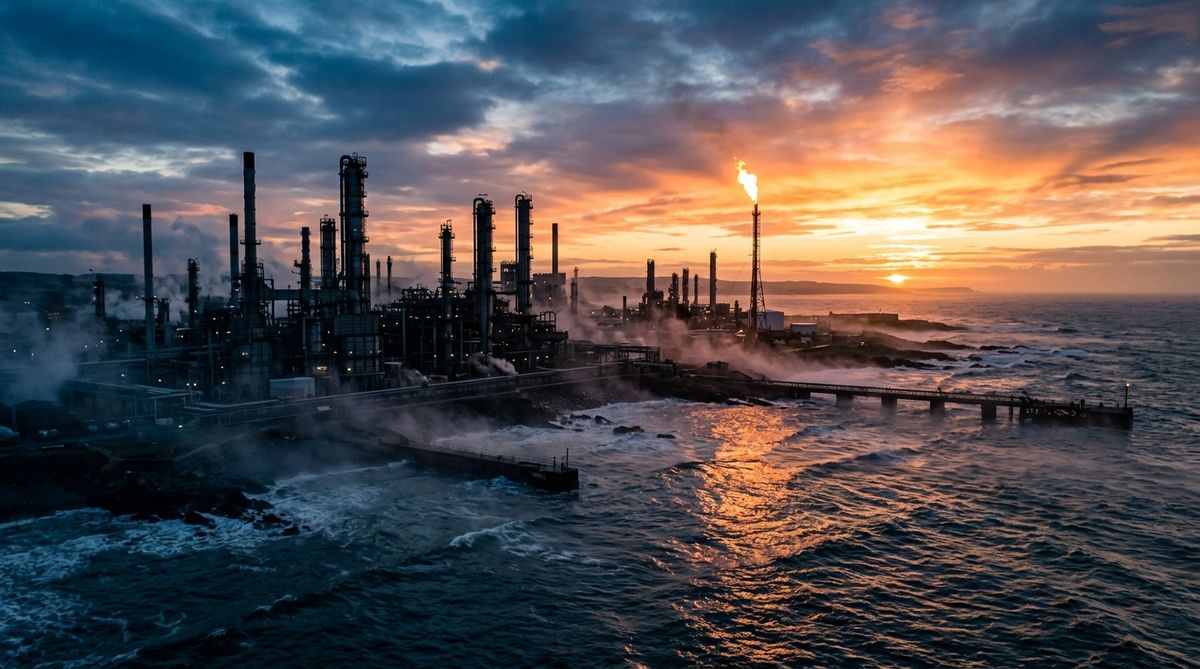
Accelerated 33% surge on the Bucharest Stock Exchange — what happened Rompetrol Rafinare (RRC) recorded a RON 810 million increase in market capitalization in just three trading sessions following the publication of its semi-annual financial results. The company's share price surged by 33% immediately after the August 14, 2026 report, according to data analyzed by Ziarul Financiar. The price per share rose from RON 0.0915 to RON 0.122, propelling the total market value of the Petromidia refinery operator to RON 3.2 billion. This short-term performance reflects sudden investor interest, fueled by positive momentum over the past week, during which RRC shares accumulated a total gain of 43%. Since the beginning of 2026, shares of the company controlled by KMG International have appreciated by over 70%, consolidating the issuer's position on the local capital market, although trading volumes remain constrained by the shareholder structure. This dynamic follows a prolonged period of pressure on refining margins and the company's financial results. The report published on Friday, August 14, marked a turning point for market perception, triggering a rapid revaluation of Rompetrol Rafinare's assets among players on the Bucharest Stock Exchange, driven by significantly improved operational results. The turnaround: USD 40 million net profit in the first half of 2026 The driver of this massive revaluation is the operational and financial performance of the first half of 2026. Rompetrol Rafinare reported a consolidated turnover of USD 3.5 billion and a net profit of USD 40 million for the first six months, according to data published by Ziarul Financiar. These figures represent a major recovery compared to previous periods affected by technical maintenance and high volatility in the international crude oil market. The financial report indicates a stabilization of raw material supply flows and improved production efficiency at the Petromidia Năvodari and Vega Ploiești refineries. Despite regional logistical challenges in the Black Sea basin, the company managed to capitalize on available refining margins, converting processed volumes into solid positive financial results and exceeding conservative market estimates. Another attractive element for investors is the very low valuation multiple at which RRC shares are currently trading. The Price-to-Earnings Ratio (PER) stands at just 6x following these earnings, suggesting a theoretical undervaluation relative to the market average and other energy sector peers, drawing the attention of value investors looking for underpriced assets. Low free float on the secondary market and its impact on volatility Beyond the positive financial figures, Rompetrol Rafinare's shareholding structure plays a critical role in this sudden stock price movement. The company is characterized by an extremely low free float, with the majority stake held by KMG International (54.6%), while the Romanian State, through the Ministry of Energy, controls 44.7% of the share capital, leaving a tiny fraction of less than 1% for free trading on the secondary market. This structural deficit of shares available for trading means that any medium-sized buy order can generate disproportionate price swings. The 33% increase recorded in just three days must also be interpreted through this technical lens: increased demand meets an extremely inelastic supply, which amplifies stock price volatility on the upside without necessarily reflecting robust asset liquidity. For the local energy market, RRC's evolution demonstrates that the refining sector remains highly sensitive to global fuel margin dynamics. Even though pump price volatility has partially eased in Romania, domestic processing capacity continues to dictate fuel supply stability, indirectly influencing logistics costs across the national economy and the performance of listed sector companies. Global refining margins outlook and the risk of planned maintenance Maintaining this upward trajectory depends directly on the evolution of refining margins in the second half of 2026. Although the first half provided a favorable context, geopolitical risks in the Black Sea and potential fluctuations in Brent crude prices could exert new pressure on the procurement costs of raw materials imported through the Midia terminal, impacting future profitability. In addition, investors must monitor the maintenance schedule of the Petromidia refinery. Any unplanned shutdown or major technical overhaul tends to rapidly reduce processed volumes and erode operational margins, as seen in previous years. Rompetrol Rafinare remains an asset with high exposure to global economic cycles and operational risks specific to the heavy hydrocarbon processing industry. In NRG-IA's assessment, the capitalization jump represents a short-term correction driven by better-than-expected financial results, but the long-term sustainability of the RON 3.2 billion valuation will be tested by the…
Aurora AI — Independent Editorial Board
The NRG-IA newsroom continuously monitors Romanian energy markets, ANRE regulatory decisions, and national grid telemetry (SEN/SNT). We deliver independent intelligence anchored exclusively in official primary data.
Editorial Charter, Ethics & Verification Methodology →