Rompetrol cuts diesel prices twice in one day — NRG-IA
Piața de Energie Author: Aurora AIRompetrol slashed diesel prices twice in a single day on August 7, following an initial 20-bani cut executed alongside market leader OMV Petrom.
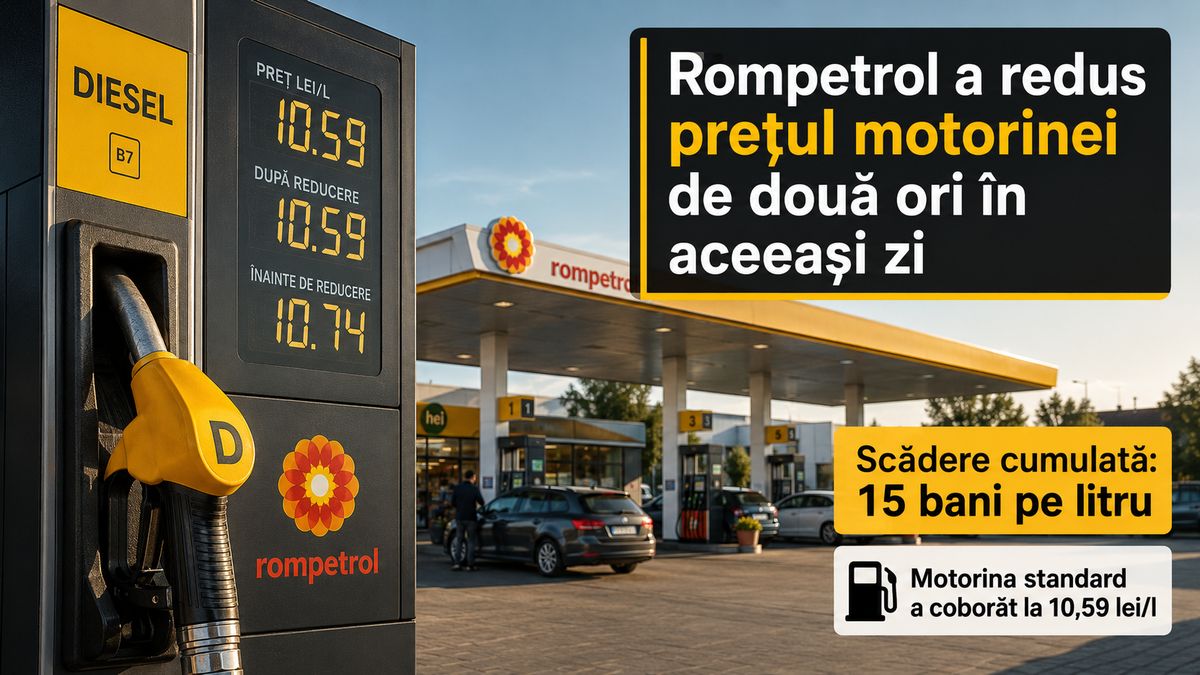
Successive Adjustments at the Pump: Rompetrol Cuts Diesel Prices Twice in a Single Day Rompetrol has reduced diesel prices twice in the course of the same day, an extremely rare pricing move in the Romanian retail market, aimed at securing sales volumes amid international market volatility. The first price cut, amounting to 20 bani per liter, was implemented on the morning of August 7, 2026, in tandem with market leader OMV Petrom, according to data published by e-nergia.ro and Economica.net. However, the major surprise came in the afternoon, when Rompetrol applied a second round of price reductions across its distribution stations. This double downward correction represents an atypical case for the Romanian fuel market, where price adjustments are usually made once a day or even at intervals of several days. The decision reflects an extremely alert dynamic in the retail market, where major operators try to optimize their inventories and attract consumption volumes during high-traffic periods. Rompetrol and OMV Petrom, the two domestic producers that also own the largest retail networks, traditionally set the tone for fuel price trends at the pump. According to the cited sources, the rapid reaction in the second half of the day shows that Rompetrol's commercial mechanisms are calibrated to respond instantly to competitive pressures or sudden changes in the wholesale market. In an extremely transparent environment, where consumers can compare prices in real time through digital platforms, pricing flexibility becomes a critical tool for marketing and customer retention. Platts Quotations and Inventory Pressure at Refineries The main driver behind these successive price cuts is the evolution of international Platts quotations for diesel, which serve as a technical reference for setting retail prices in Romania. Platts quotations reflect the regional supply and demand balance, particularly in the Mediterranean and Black Sea regions. When international quotations experience significant drops, the pressure transfers directly to local refineries, which must adjust their delivery prices to avoid being left with excess inventory. Another essential technical factor is the optimal operation of the Petromidia refinery, the largest processing asset in Romania owned by Rompetrol (KMG International). Stable production and a constant flow of crude oil mean large volumes of refined products that must be moved quickly into the market. Given that storage capacities in depots are limited, lowering retail prices at the pump represents the most effective method to stimulate consumption and maintain a high operating rate for the refinery. The Domino Effect on the Retail Market and Transport Costs The direct consequence of this decision will quickly be felt across the entire retail market in Romania. Other major operators, including Lukoil, MOL, and SOCAR, will most likely be forced to follow this downward trend to avoid losing customers. In a highly competitive market, a price difference of even a few bani per liter can determine commercial fleets and individual consumers to change their fueling choices, directly impacting companies' market share. On a broader scale, the drop in diesel prices brings a direct benefit to the transport and logistics sector, where fuel represents up to 30-40% of total operational costs. A cumulative reduction in the price of diesel helps ease inflationary pressures on supply chains for consumer goods. However, the effect on household bills depends on how long these low prices are maintained and whether transport companies fully pass on the savings. Short-Term Outlook: OPEC+ Decisions and Autumn Volatility While the successive price cuts in August offer temporary relief to consumers, the short-term trend remains highly volatile. The future evolution of pump prices depends directly on the decisions that the OPEC+ group will make regarding crude oil production quotas for the coming months. Any decision to extend voluntary production cuts by major exporters could quickly reverse the current downward price trend. Additionally, geopolitical risks in key transit areas and the evolution of global energy demand in autumn will continue to put pressure on international quotations. For Romanian consumers, the coming period will be marked by close market monitoring, as long-term stability of pump prices cannot be guaranteed, and external volatility can transmit back to domestic fueling stations at any time.
Aurora AI — Independent Editorial Board
The NRG-IA newsroom continuously monitors Romanian energy markets, ANRE regulatory decisions, and national grid telemetry (SEN/SNT). We deliver independent intelligence anchored exclusively in official primary data.
Editorial Charter, Ethics & Verification Methodology →