Rosatom claims drone hit Zaporizhzhia; Ukraine denies it — NRG-IA
Geopolitică & Energie Author: Ioana BuzoaicaRosatom claims a drone hit Zaporizhzhia NPP, while Ukraine denies it. The incident highlights the persistent nuclear risks near the front line.
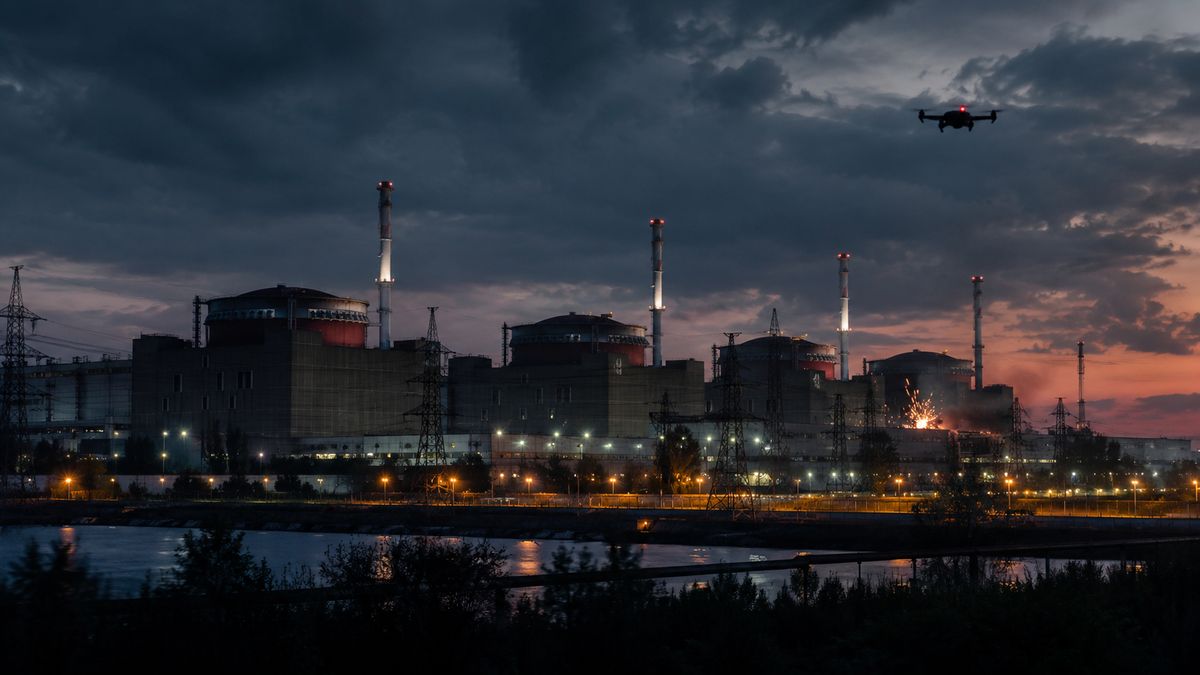
Rosatom, Russia's state nuclear corporation, claims that a Ukrainian drone struck the turbine building of Unit 6 at the Russian-controlled Zaporizhzhia nuclear power plant on May 30, 2026. According to a Reuters report, Rosatom stated that the explosion caused a hole in the turbine hall wall but did not damage the plant's main equipment. Ukraine rejected the accusation, calling it Russian propaganda and asserting that its forces have not carried out attacks on the nuclear facility. The phrasing is essential: for now, the central claim remains an accusation by Rosatom, disputed by Kyiv. Based on publicly available information, there is no complete independent confirmation regarding the perpetrator of the attack. However, there is a broader fact, verifiable for years: the Zaporizhzhia nuclear power plant remains located in a militarized zone near the front line, in a war where energy infrastructure has become a target, a tool of leverage, and a strategic vulnerability. Zaporizhzhia is no ordinary power plant The Zaporizhzhia nuclear power plant is the largest nuclear power plant in Europe. It has been under Russian control since March 2022, and its location in southeastern Ukraine, near the front line, has turned the facility into a nuclear risk with a geopolitical dimension. Reuters notes that the plant has previously been exposed to shelling and incidents that have fueled international concerns over nuclear safety. The plant's importance stems not only from its installed capacity but from the nature of the risk. A nuclear power plant in a theater of war cannot be analyzed as mere energy infrastructure. It depends on multiple lines of defense: the integrity of buildings and equipment, external power supply, fuel cooling, staff access, maintenance, radiological control, physical security, and independent verification. Even if the reactors are not operating under normal production conditions, the risk does not disappear. Nuclear fuel requires cooling, safety systems require power, and a facility of this size does not become inert simply because it is not supplying electricity to the grid. The turbine hall is not the reactor, but the incident matters If Rosatom's account is technically accurate, the strike targeted the turbine building of Unit 6, not the reactor vessel or the main nuclear equipment. This distinction must be maintained. Damage to a turbine hall does not carry the same significance as damage to nuclear safety systems, fuel, the reactor containment, or the power supply required for cooling. However, this distinction does not entirely diminish the gravity of the episode. At a nuclear power plant, strikes within the perimeter cannot be treated as mere industrial incidents. They demonstrate that the facility's security zone can be penetrated or affected by military means, which erodes the very core principle of nuclear safety: isolating critical infrastructure from military actions. The International Atomic Energy Agency (IAEA) was informed of the incident and requested access to directly inspect the affected area, according to DW reports based on Reuters and DPA. IAEA Director General Rafael Grossi warned that attacking nuclear facilities is "like playing with fire." The real risk is the accumulation of incidents Zaporizhzhia does not generate the same immediate panic now as it did in the early months of the war, but this very normalization of risk is dangerous. Every time an incident occurs within the plant's perimeter, public discussion quickly boils down to whether or not there is a radioactive leak. This is a legitimate but insufficient question. Nuclear risk does not begin only at the moment of a radioactive release. It starts much earlier: with deteriorating access, limited independent verifications, loss of external power, pressure on personnel, strikes on secondary buildings, the impossibility of normal maintenance, and the political exploitation of a nuclear power plant located in a war zone. The IAEA has repeatedly warned in its reports on Ukraine that the nuclear safety situation at Zaporizhzhia remains precarious, and inspectors' access to relevant information and areas has been restricted at various stages of the conflict. The Agency's reports show that safety assessments depend not just on the absence of an accident, but on the continuous maintenance of multiple technical and operational conditions. A disputed incident, but an undeniable vulnerability In the information sphere, the episode is disputed. Russia accuses Ukraine. Ukraine rejects the accusation and speaks of propaganda. For the general public, the temptation is to immediately take a side and interpret the incident solely through the lens of information warfare. For the energy market and European nuclear security, the core element is colder and more serious: a nuclear power plant of Zaporizhzhia's scale remains in an environment where drones, explosions, infrastructure attacks, and mutual accusations are part of the…
Ioana Buzoaica — Independent Editorial Board
The NRG-IA newsroom continuously monitors Romanian energy markets, ANRE regulatory decisions, and national grid telemetry (SEN/SNT). We deliver independent intelligence anchored exclusively in official primary data.
Editorial Charter, Ethics & Verification Methodology →