Russia Western Crude Exports Hit 2.8M Bpd Amid Attacks — NRG-IA
Geopolitică & Energie Author: Ioana BuzoaicaRussia is set to ship record crude in June as drone attacks sideline refineries, causing domestic fuel shortages despite ample crude supply.
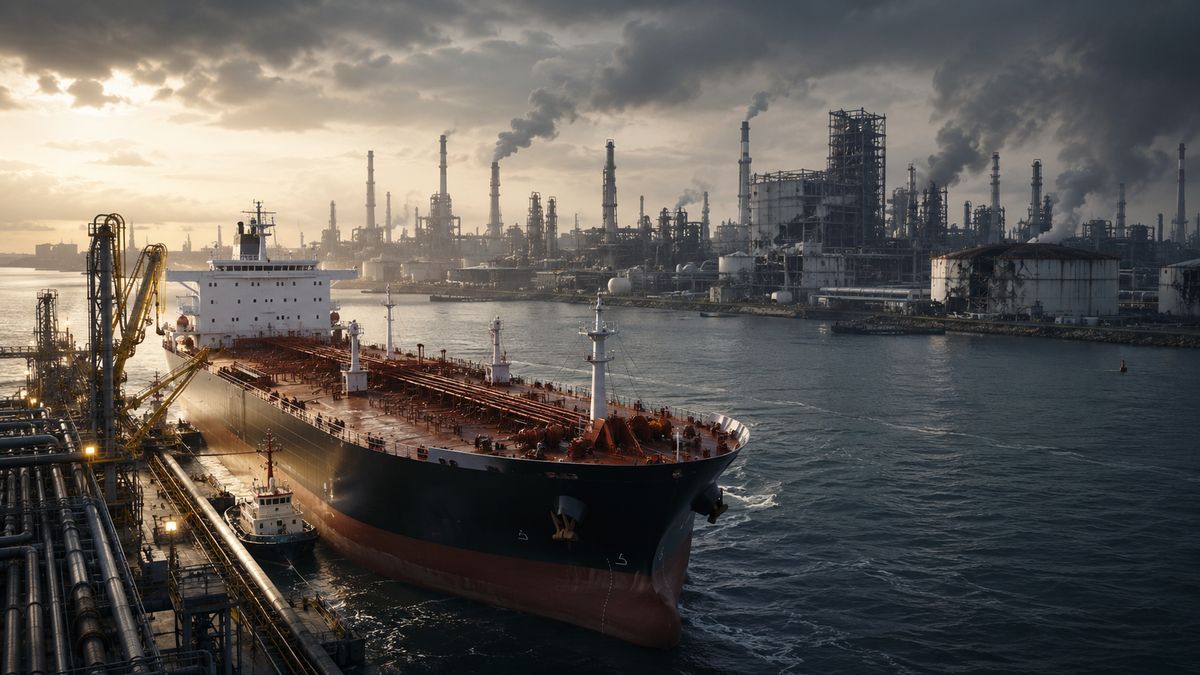
Russia is preparing to ship approximately 2.7 million barrels of crude oil per day in June from its Baltic Sea ports of Primorsk and Ust-Luga, as well as Novorossiysk on the Black Sea. One trading source cited by Reuters estimates that loadings could rise to 2.8 million barrels per day (bpd), which would represent a record high for these three major export hubs. This volume is higher than the roughly 2.5 million bpd shipped from the same ports in May and exceeds preliminary estimates for June by about 1 million bpd. The increase does not indicate a revival of Russian refining, but rather the opposite effect: damaged refineries are processing less oil, and a larger share of the available crude is being redirected to export markets. 2.7–2.8 million barrels per day from three key ports Primorsk, Ust-Luga, and Novorossiysk are the main exit points for seaborne Russian crude bound for foreign markets. Together, they connect Russia's pipeline system and production to markets in Asia, the Mediterranean, Africa, and other destinations that have absorbed significant volumes of Russian oil following the shift in trade flows triggered by sanctions and the war in Ukraine. In April, exports through these ports stood at around 2.2 million bpd. In May, they rose to 2.5 million bpd, the highest level since September 2023. For June, the estimate of 2.7 million bpd would represent a further acceleration, coming at a time when export infrastructure is nearing its own operational limits. This growth has a structural limit. Traders cited by Reuters pointed out as early as May that Transneft's pipeline and port system is operating near capacity, restricting room for additional volumes. Russia can divert unprocessed crude to export, but it cannot indefinitely use this solution as a substitute for domestic refining. Damaged refineries push crude oil to export The oil supply chain explains this apparent paradox. Russia can simultaneously have more crude oil for export and less gasoline or diesel for its domestic market. Crude oil is the raw material extracted from fields. Gasoline, diesel, jet fuel, and other petroleum products are obtained through refining. When refineries scale back operations or shut down key units, crude oil remains in the system, but the capacity to process it into fuel decreases. Reuters reports that repeated attacks on refineries have prompted Moscow to send more crude to export markets to limit production cuts. At the same time, the International Energy Agency (IEA) notes that Russian crude exports have risen amid attacks that reduced domestic refinery feedstock consumption. This move partially protects export revenues and limits the need to shut in production. However, it does not resolve the shortage of refined products within Russia. The domestic market needs gasoline and diesel, not just crude oil. The Moscow refinery becomes a test of Russia's resilience The most significant damage is at the Moscow refinery, operated by Gazprom Neft. Reuters reports, citing two industry sources, that the facility could remain offline for at least six months following drone attacks in June. The refinery is a major fuel supplier for the Moscow region. In 2024, the refinery processed 11.6 million tons of crude oil, producing around 2.9 million tons of gasoline and 3.2 million tons of diesel. The temporary loss of such capacity does not fully explain the nationwide situation on its own, but it demonstrates why refining disruptions have become a domestic supply issue rather than just an isolated industrial problem. Attacks have repeatedly targeted other energy and refining assets. Reuters previously reported that several refineries in central Russia were forced to halt or reduce fuel production, and western crude exports rose precisely to absorb the volumes that could no longer be processed. Moscow attempts to cover the fuel shortage Pressure on the domestic market is already visible in production data and measures adopted by the authorities. Russia's gasoline production last week was approximately 90,000 tons per day, about 25% below the daily average from June 2023, according to industry sources cited by Reuters. Seaborne exports of refined products also fell by about 15% in the first half of June compared to the first half of May. This trend confirms that Russia is exporting more crude oil but fewer refined products. The Russian parliament has approved tax changes aimed at increasing fuel availability on the domestic market. The measures include subsidies for fuel imports, benchmarked against prices and delivery costs from India, as well as the option to use lower-quality blends to boost available gasoline volumes. Russia has already banned exports of gasoline and jet fuel. Deputy Prime Minister Alexander Novak stated that the government is also considering a potential ban on diesel exports. Sales restrictions, shortages of certain grades, volume limits, and queues at filling stations have emerged in several regions.…
Ioana Buzoaica — Independent Editorial Board
The NRG-IA newsroom continuously monitors Romanian energy markets, ANRE regulatory decisions, and national grid telemetry (SEN/SNT). We deliver independent intelligence anchored exclusively in official primary data.
Editorial Charter, Ethics & Verification Methodology →