Russia Strikes Ukraine's Energy Grid: 550,000 Homes Affected — NRG-IA
Geopolitică & Energie Author: Ioana BuzoaicaRussia launched back-to-back strikes on Ukraine's energy grid, leaving 550,000+ homes without power. On Oct 20, Ukrenergo reported outages in 12 regions.
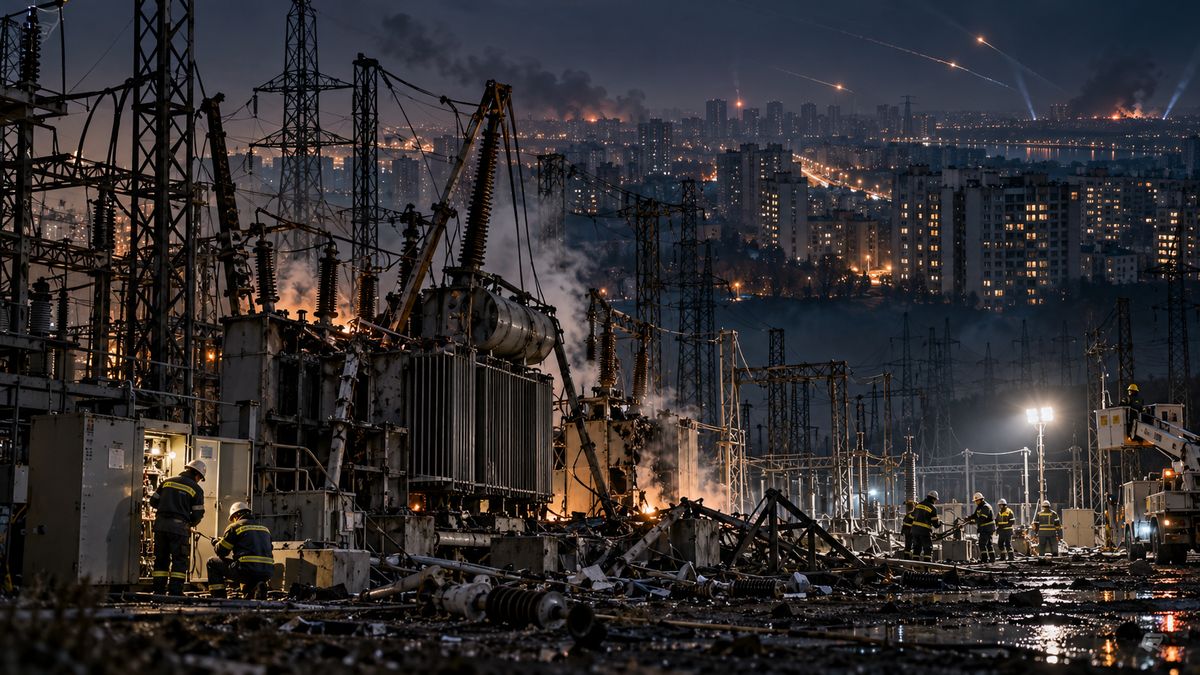
Russia launched two consecutive nights of strikes against Ukraine, causing extensive damage to energy infrastructure and power outages for hundreds of thousands of households. Following the overnight attack on October 18–19, 2026, at least 550,000 households were left without electricity, according to figures released by Ukrainian President Volodymyr Zelenskyy. A subsequent assessment by Kyiv authorities indicates that 28 substations and other critical energy assets were damaged. The strikes continued overnight on October 19–20, hitting additional energy facilities, including in the Odesa and Ternopil regions. On Tuesday morning, transmission system operator Ukrenergo reported fresh power outages across 12 regions, while industrial power supply restrictions remained in force nationwide. Scheduled rolling blackouts were also introduced for certain consumer categories to protect damaged equipment from further strain. This barrage amplifies the vulnerability of Ukraine's energy system ahead of the cold season. Repeated damage to substations and transmission lines can prevent power delivery to certain regions even when electricity is available elsewhere in the country. Under these circumstances, restoring supply depends both on repairing damaged facilities and on the grid's capacity to transmit power to end-users. Over 550,000 Households Impacted and 28 Energy Assets Damaged The attack overnight on October 18–19 was one of the largest recent strike waves targeting Ukrainian infrastructure. According to information released by Kyiv authorities and reported by Reuters, Russia launched 16 ballistic missiles at the capital and surrounding region, along with over 200 drones aimed at targets across multiple parts of the country. Casualties and damage to both civilian and energy infrastructure were reported. Initial assessments released on the morning of October 19 indicated damage to more than ten energy facilities and power disruptions for at least 550,000 households. Later, Zelenskyy provided an updated figure, stating that 28 substations and other critical energy assets had been damaged. This figure includes facilities serving various grid functions rather than the total number of destroyed power plants. Further strikes were reported the following night. In the Ternopil region, local authorities reported hits on energy assets in the Kremenets district. In the Odesa region, damage disrupted power supplies, requiring backup generation for certain critical infrastructure facilities. Damage was also reported at a gas distribution facility in the Dnipropetrovsk region, indicating that the attacks targeted multiple components of the broader energy sector. The scope of October's strikes extends beyond these two nights. On October 18, Zelenskyy stated that Ukraine's power, oil, and gas infrastructure had been targeted by 76 attacks over the preceding week. Just days earlier, another wave of strikes had damaged approximately 30 energy assets. This relentless cadence forces grid operators to execute repairs at a pace dictated not only by engineering complexity, but also by the persistent risk of follow-up attacks. Ukraine Has Available Power in Some Regions, but Damaged Grids Constrain Transmission to Consumers One of the most critical consequences of attacks on electrical substations is the degradation of power transmission capacity. In a power system, generation from power plants must be transmitted via high-voltage networks to consumption centers. Substations step voltage up or down, interconnect lines, and route power flows between different regions. When such a facility is severely damaged, power available elsewhere in the system becomes difficult to transmit to affected consumers. A power plant may continue generating electricity while certain towns remain blacked out because key grid interconnections have been severed or are operating under technical constraints. Ukraine's Ministry of Energy previously noted that the eastern, southern, and central regions face significant supply vulnerabilities, whereas a substantial portion of generation assets and import entry points from Europe are located in the west. Transmission infrastructure damage constrains power transfers between these zones, even when generation capacity remains available. This bottleneck explains why consumption restrictions persist even after power is restored to some affected consumers. Grid operators must establish alternative routing paths, verify protection systems, and prevent overloading remaining active infrastructure. Scheduled rolling blackouts temporarily relieve grid stress, allowing available capacity to be safely redistributed. On October 20, Ukrenergo confirmed that industrial power restrictions apply across all regions during scheduled hours, while rolling blackouts for other consumers are implemented based on local grid conditions. Reports detailing outages in 12 regions refer to specific zones experiencing new disconnections, rather…
Ioana Buzoaica — Independent Editorial Board
The NRG-IA newsroom continuously monitors Romanian energy markets, ANRE regulatory decisions, and national grid telemetry (SEN/SNT). We deliver independent intelligence anchored exclusively in official primary data.
Editorial Charter, Ethics & Verification Methodology →