Russia Eyes Japanese Jet Fuel Imports Amid Refinery Crisis — NRG-IA
Geopolitică & Energie Author: Ioana BuzoaicaRussia prepares to import Asian jet fuel as domestic bans fail to ease refining pressures, signaling a growing crisis in the sensitive aviation sector.
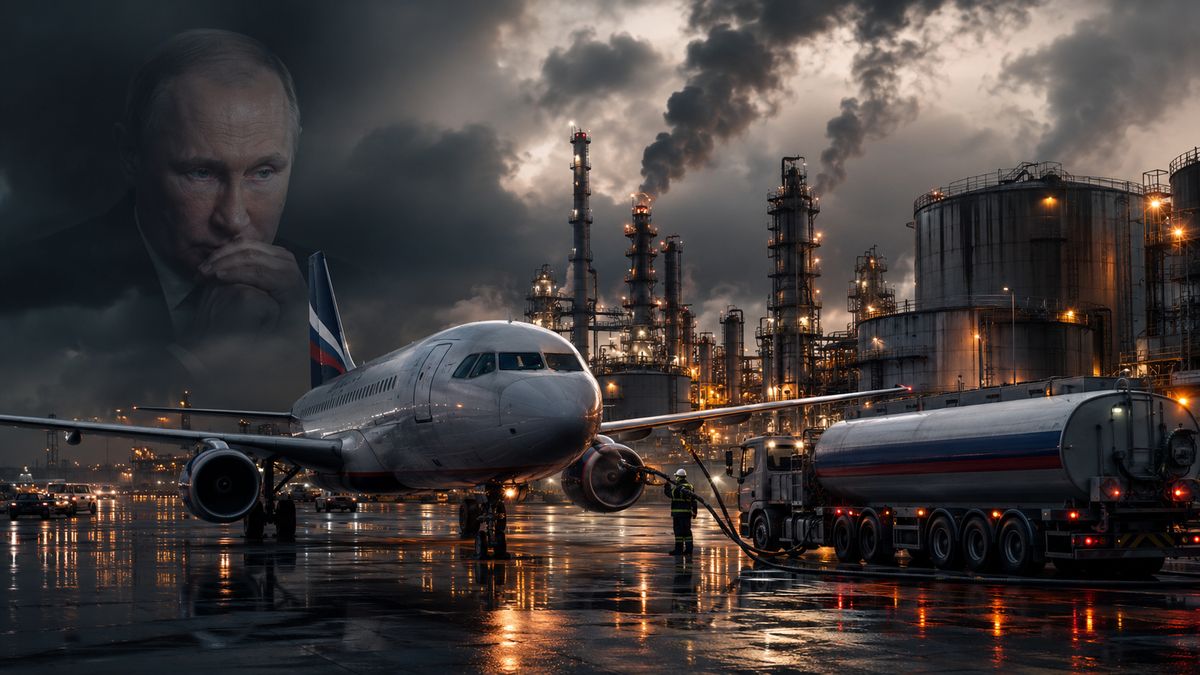
Russia is preparing to import at least 200,000 barrels of jet fuel originating in Japan, in a commercial operation expected to transit through South Korea before reaching the Russian market. The issue has come to the fore following reports of growing pressure on Russia's refined fuel market. According to Reuters, the cargo is scheduled to depart from Chiba in the first half of July, initially bound for South Korea, and then transferred, likely ship-to-ship, off the port of Yeosu before heading to Russia. The final destination was not publicly known at the time of the report, and the Russian Ministry of Energy did not respond to a request for comment. This is the detail that changes the significance of the news: Russia has not yet confirmed receipt of the fuel. This is a prepared shipment, not a completed delivery. However, the mere organization of an import route for kerosene through an Asian commercial chain indicates pressure that has exceeded the usual level of logistical adjustments. Russia has oil, but no longer has the same refining security Russia remains one of the world's major oil powers. Its current problem is not a lack of crude oil, but the ability to consistently process that crude into gasoline, diesel, jet fuel, and other refined products in the volumes and regions required by the domestic economy. Ukrainian drone attacks have hit refineries, storage facilities, and petroleum product transport infrastructure. Reuters reported in May that refineries with a cumulative capacity of over 83 million tons annually were shut down or significantly reduced operations in central Russia, equivalent to about a quarter of the country's total refining capacity. The Moscow Refinery, operated by Gazprom Neft, is one of the most relevant examples. The facility was hit twice in June and shut down, with industry sources indicating that repairs could take at least six months. In 2024, the refinery processed 11.6 million tons of crude oil and produced 2.9 million tons of gasoline and 3.2 million tons of diesel. There is no verified public figure that allows the current kerosene deficit to be directly attributed solely to the Moscow refinery. However, shutting down a facility of this size reduces the flexibility of the entire refining system and forces the domestic market to redistribute available fuels among road transport, agriculture, industry, logistics, and aviation. This is Russia's real vulnerability: a country can have large oil reserves, pipelines, terminals, and port access, but the economy does not run on crude oil. The economy runs on finished products, delivered on time, to the right region, at a bearable cost. Export ban is no longer enough On June 1, the Russian government banned jet fuel exports until November 30, explicitly citing the need to stabilize the domestic market. Russia had already restricted gasoline exports, and authorities subsequently considered limiting diesel exports as well. The ban on kerosene exports should have kept more fuel on the domestic market. However, Kpler data cited by Reuters shows that Russian jet fuel exports fell to approximately 13,000 barrels per day in 2026, compared to around 30,000 barrels per day in 2025. The reduction in outbound flows confirms that Russia had already begun protecting domestic availability before resorting to imports. The Asian cargo of at least 200,000 barrels must be viewed in this proportion. It is a relevant volume for a targeted intervention, equivalent to more than 15 days of Russia's current average jet fuel export rate in 2026, but it does not represent the domestic consumption of Russian aviation and cannot single-handedly fix a structural refining and distribution problem. Moscow has thus shifted from protecting the domestic market through export restrictions to supplementing supply through imports. The same shift is visible in gasoline. Russia has discussed imports from Kazakhstan, prepared maritime imports from Asia, and adopted fiscal measures to subsidize fuel imports. Aviation becomes the most sensitive sector Jet fuel has a different strategic function than motor gasoline. In the case of road fuels, authorities can limit sales, introduce temporary quotas, prioritize agriculture or public transport, and partially offset the deficit through regional deliveries. In aviation, fuel must be constantly available, meeting strict technical standards and in predictable volumes, directly at airports. Russian airline Azimuth warned in June that its main supplier had reduced deliveries by about a third compared to contracted volumes, citing difficulties at refineries. The carrier indicated that alternative sources could not cover the gap, and jet fuel costs at Russian airports rose, on average, by over 17% since the beginning of June. These data do not prove that all Russian airlines are in the same situation, nor do they confirm a nationwide halt in air traffic. However, they show that pressure has entered the aviation commercial chain:…
Ioana Buzoaica — Independent Editorial Board
The NRG-IA newsroom continuously monitors Romanian energy markets, ANRE regulatory decisions, and national grid telemetry (SEN/SNT). We deliver independent intelligence anchored exclusively in official primary data.
Editorial Charter, Ethics & Verification Methodology →