Russia Attacks Ukraine Energy Grid Ahead of Winter — NRG-IA
Geopolitică & Energie Author: Ioana BuzoaicaOn September 30, Russia launched a massive combined attack on Ukraine's energy infrastructure, hitting power grids and public services ahead of winter.
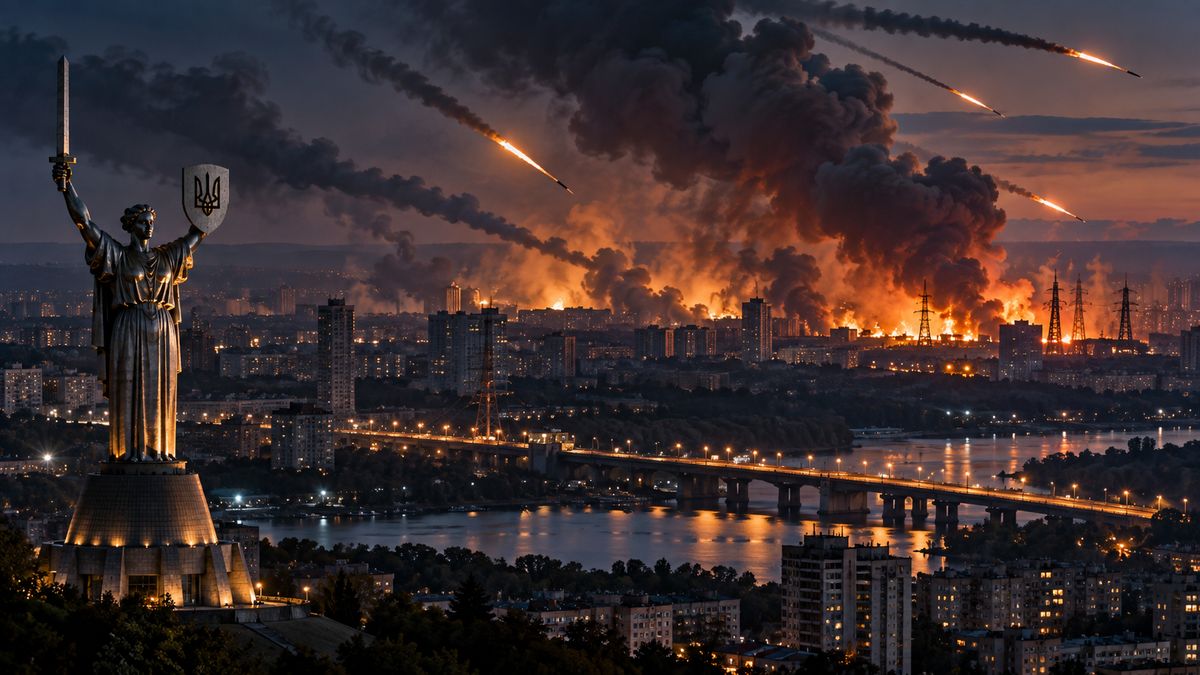
On September 30, Russia launched its largest attack in months on Ukraine's energy infrastructure, bringing back emergency power outages to Kyiv and surrounding regions just as the cold season begins. The assault combined hundreds of drones with ballistic missiles, damaging critical infrastructure across ten regions, according to Ukrainian authorities. The Ukrainian Air Force reported the launch of 285 drones , of which 254 were reportedly intercepted. Some of the deployed aircraft were fast, jet-powered drones, and the attack also included ballistic missiles—a combination that places significantly higher pressure on air defenses than waves consisting predominantly of slow-moving drones. The consequences were immediately felt across the capital. The power grid operator introduced emergency blackouts in Kyiv and several neighboring regions, halting some trams and trolleybuses, while water supply was disrupted due to drops in network pressure. The attack also resulted in civilian casualties: seven people were killed, including a child, and the Associated Press reported 24 injured nationwide. The First Energy Attack of This Scale Since Last Winter Ukrainian Prime Minister Sergii Koretskyi described the attack as the first combined strike of this scale since the end of the previous heating season. Reuters characterized it as the most extensive blow to Ukraine's energy infrastructure in months, placing it in the context of a new pre-winter campaign against the power grid. The difference compared to the repeated attacks during the summer lies in the scale of the operation and its simultaneous impact on multiple system components. According to President Volodymyr Zelenskyy, critical infrastructure was damaged in five regions, with further damage reported in five others, extending the impact of the attack far beyond the capital area. Russia presented its own list of targets. The Russian Ministry of Defense claimed the strikes targeted energy facilities in the Kyiv region, a communications center in the capital, and port infrastructure in Izmail on the Danube. Moscow also listed power generation and transmission facilities among its targets. However, Reuters noted that the exact list of targets and the effects claimed by Russia could not be independently verified. This distinction is essential for assessing the energy impact. While the emergency blackouts and infrastructure damage are confirmed, there is not yet a complete public assessment showing how much generation or transmission capacity was knocked offline and for how long. Ukraine Was Preparing the Grid for This Exact Scenario The attack followed weeks of explicit efforts by Ukrainian authorities to accelerate preparations for the cold season and protect energy infrastructure. On September 9, the government noted that several regions were lagging behind on physical protection works and the connection of essential equipment, demanding that projects be expedited ahead of the heating season. Three days later, Prime Minister Koretskyi identified winter as the country's primary challenge and announced the acceleration of energy infrastructure protection measures. The government was also preparing a war risk insurance mechanism, with a preliminary allocation of $1 billion, aiming to cover 40–50% of losses caused by attacks, supported by international partners. On September 15, the Ukrainian presidency announced additional measures to protect critical infrastructure: expanding electronic warfare capabilities, increasing procurement of protection systems, and reorganizing mobile air defense groups and defensive lines. Discussions explicitly focused on critical infrastructure, logistics, and facilities deemed high-priority targets for Russian strikes. The September 30 attack tested these measures before the cold season had even fully begun. Fast Drones Increase Pressure on Grid Defenses The shift is not just about the number of deployed units. Russia is increasingly using jet-powered drones, which fly faster and at different altitudes compared to the slower models used in the early phases of the war, combined with ballistic missiles. The Associated Press points out that this tactic forces Ukraine to deploy more sophisticated interception assets and strains air defense ammunition stockpiles. The number of drone attacks had already risen sharply before September 30, making the defense of energy infrastructure an explicit priority for Kyiv. For the energy system, the effect is cumulative. Every strike that breaches air defenses can mean transformers, substations, power plants, or transmission lines temporarily knocked offline, followed by emergency repairs, backup equipment deployment, and new protective works. Infrastructure repaired after one attack can be targeted again before the entire system returns to its normal configuration. In this context, following the attack, the Ukrainian Prime Minister called for audits of backup power systems for critical infrastructure…
Ioana Buzoaica — Independent Editorial Board
The NRG-IA newsroom continuously monitors Romanian energy markets, ANRE regulatory decisions, and national grid telemetry (SEN/SNT). We deliver independent intelligence anchored exclusively in official primary data.
Editorial Charter, Ethics & Verification Methodology →