Russia June oil exports drop to 1.7 million bpd — NRG-IA
Piața de Energie Author: Aurora AIRussia cuts June seaborne crude exports to 1.7 million bpd, redirecting flows to domestic refineries amid Ukrainian drone strikes and maintenance.
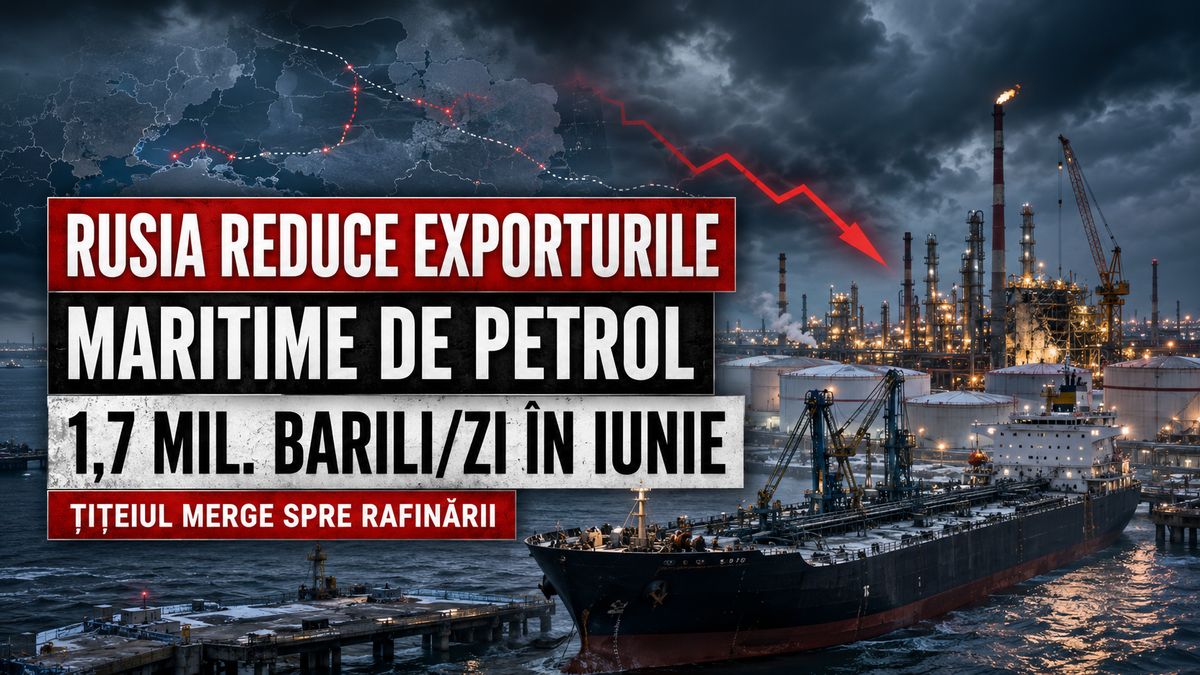
Redirecting crude to domestic refineries — what happened Russia is reducing its seaborne crude oil exports by 32% in June, according to industry sources reported by Reuters. Shipments through the country's key western ports—Primorsk, Ust-Luga, and Novorossiysk—are projected to fall to just 1.7 million barrels per day (bpd), compared to 2.5 million bpd recorded in May. This sharp decline of 800,000 bpd represents a major logistical reconfiguration driven by the need to supply the domestic market. The data, obtained from industry sources by Reuters and reported by Agerpres, points to an emergency strategic decision by Moscow. Instead of shipping raw crude to international markets to secure foreign currency, the Kremlin is redirecting massive volumes of crude to domestic processing. Market estimates suggest Russia will attempt to increase domestic refining runs in June by 250,000 to 400,000 bpd. This move aims to cover fuel deficits registered in several regions of the country amid high seasonal demand. While Russian exporters struggled to maintain steady outbound shipments in the early part of the year, a decline in total production became inevitable. Russian Deputy Prime Minister Alexander Novak recently confirmed that national oil output has declined since the start of the year, citing unplanned refinery maintenance. Ukrainian drone strikes and emergency maintenance Ukraine's military campaign targeting Russia's refining capacity is the primary trigger for this logistical crisis. Since March, Ukrainian drones have systematically struck Russian port infrastructure, pipelines, and key refineries. These attacks successfully disabled critical crude distillation units, severely reducing domestic processing capacity and causing local gasoline and diesel shortages. In addition to the direct damage from drone strikes, the Russian energy system has faced a compounding series of setbacks. Scheduled maintenance turned, in many cases, into highly complex emergency repairs, slowed down by Western sanctions that limit access to modern technological equipment. Completing these repairs is now a top priority for the Kremlin. Another major constraint was the suspension of transit through the only direct pipeline transporting Russian crude to Europe. This logistical bottleneck forced a costly reorganization of trade flows. Crude that can no longer be exported via pipelines or processed immediately in damaged domestic refineries puts immense pressure on storage capacities, ultimately forcing production cuts at the wellhead. Declining Kremlin revenues and global market pressure This drastic cut in crude exports directly hits the primary funding source of the Russian federal budget and its war effort. Official data indicates that Russia's oil and gas revenues fell by approximately 30% year-on-year in the first five months of the year, totaling nearly 3 trillion rubles. The drop in exported volumes in June will further widen this budget deficit. This trend challenges the sustainability of Moscow's financial planning. The Russian state budget estimates total hydrocarbon revenues of 8.92 trillion rubles for the reference year of 2026, a target that becomes extremely difficult to achieve when physical export volumes drop significantly, even if global prices remain relatively high. On the international stage, removing 800,000 bpd from the Baltic and Black Sea physical spot markets reduces Urals crude liquidity. While global prices have been partially buffered by other economic dynamics, this tightening of Russian supply could keep Brent benchmarks elevated. For the European Union and Romania, this context means continued indirect pressure on retail gasoline and diesel prices. Logistical risks and short-term production recovery Fully restoring Russia's production and refining capacities will take considerable time, extending well past June. Industry sources cited by Reuters warn that while refining capacity is gradually recovering as damaged units are brought back online, returning oil production to previous levels is a slow and technically complex process. The major uncertainty for the coming months remains Ukraine's capability to launch new drone waves against Russian infrastructure. If these attacks persist through July and August, Russia could be forced to extend export restrictions or face physical refined product shortages domestically, despite cutting seaborne deliveries. For European and regional consumers, this development indicates that crude market volatility will remain high this summer. Although Romania no longer imports Russian crude due to the European Union embargo, it remains exposed to Brent benchmark fluctuations, which dictate regional prices for refined petroleum products.