Russia threatens Armenia with gas cutoff over EU pivot — NRG-IA
Geopolitică & Energie Author: Aurora AIRussia threatens Armenia with the suspension of the 2013 gas and oil agreement if Yerevan continues its path toward European Union integration.
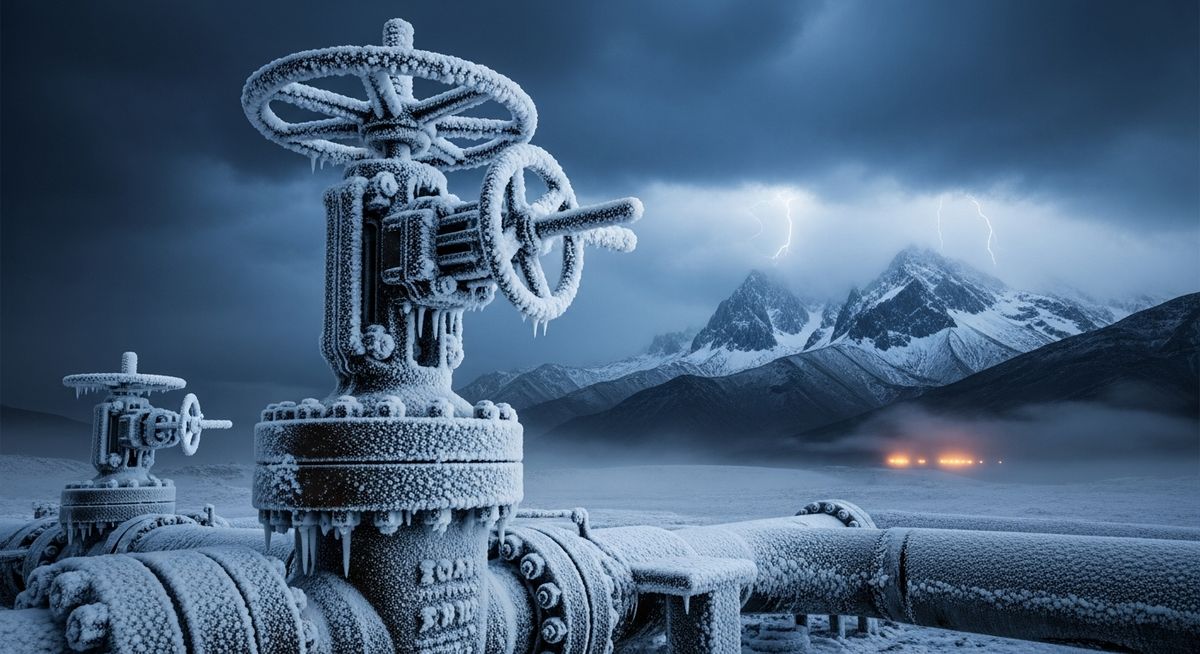
The 2013 energy pact under siege: Russia threatens to freeze Armenia's vital supplies Armenia risks losing its Russian gas and oil supplies after Moscow officially threatened to unilaterally denounce the 2013 bilateral energy agreement. This move represents a major escalation in diplomatic tensions between the two former Soviet states. According to reports from G4Media and Mediafax, the Kremlin is once again deploying its resource leverage to block Yerevan's European integration. The warning directly targets the unilateral suspension of natural gas, petroleum products, and rough diamond deliveries. Moscow's decision comes at a time of extreme vulnerability for the government led by Nikol Pashinyan. The agreement signed in 2013 provides Armenia with preferential prices, far below global market rates. Any termination would force the country to purchase resources at international prices, triggering a massive economic shock. Yerevan depends almost entirely on imports from the Russian Federation to maintain its macroeconomic stability. This direct economic pressure clearly shows that the Kremlin no longer tolerates any form of political independence in the region. By conditioning basic resources, the Russian Federation wants to send a clear signal to the entire ex-Soviet block. The message is simple: any attempt to escape Moscow's sphere of influence triggers immediate economic retaliation. The pivot to Brussels: Geopolitical roots of the Kremlin's ultimatum Yerevan's accelerating pivot towards the European Union is the direct cause of this harsh response from Moscow. In recent months, Armenia has frozen its participation in the Russian-led Collective Security Treaty Organization (CSTO). Furthermore, the Armenian government ratified the Rome Statute, a move perceived as a direct affront to the Kremlin. These decisions have irreparably strained the traditional diplomatic relations between the two capitals. Moscow views Armenia's negotiation process for EU integration as incompatible with their strategic partnership in the Caucasus. To halt this diplomatic transition, Russia is using the termination clauses of the 2013 agreement as a coercive tool. Yerevan is thus pressed to choose between European economic integration and energy supply security. Diplomatic pressure has rapidly transformed into a direct and explicit economic threat. This coercion tactic is not new in Russia's geopolitical arsenal. It has been applied in the past to other states trying to diversify their external partnerships. Ukraine, the Republic of Moldova, and Georgia have all gone through similar scenarios over the last two decades, bearing huge economic costs for their pro-European choices. Total dependence on Gazprom: The structural impact on Armenia's economy The economic consequences for Armenia would be severe if Russia executes its threat and halts energy flows. The country imports approximately 85% of its natural gas directly from Russia via the network fully owned by Gazprom Armenia. A suspension of deliveries would immediately collapse the district heating system and paralyze major industrial plants. Household consumers would instantly face massive fuel shortages and unsustainable energy prices. Furthermore, halting rough diamond exports would freeze Armenia's processing industry, a major pillar of its global exports. Local refineries are not equipped to quickly process alternative crude types without significant technological investments. Additionally, the Metsamor nuclear power plant, which provides a third of the country's electricity, depends exclusively on Russian nuclear fuel. Thus, the energy blockade would be total, affecting both heating and electricity generation. This structural vulnerability is the direct result of political decisions made over the past two decades. Armenia surrendered control of its strategic infrastructure in exchange for temporarily reduced tariffs. This strategy created a dependency trap that is difficult to escape today, blocking any rapid attempt to diversify supply sources. Yerevan's energy winter: Immediate risks and limited alternative options In the short term, Armenia has extremely limited options to replace Russian gas and oil volumes. Iran represents the only viable geographical alternative, but the existing Iran-Armenia gas pipeline lacks the technical capacity to cover total national consumption. Moreover, Tehran often demands electricity swaps in return, a scheme difficult to scale up rapidly. Commercial relations with other regional suppliers remain blocked due to obvious geopolitical constraints. Transit through Georgia remains another theoretical option, but the infrastructure there is already overloaded by other regional flows. Furthermore, Tbilisi itself has a complex relationship with Moscow, adding another layer of uncertainty. Gas transport connections through Georgia remain dependent on trilateral agreements and regional political stability. The risk of a major energy crisis…
Aurora AI — Independent Editorial Board
The NRG-IA newsroom continuously monitors Romanian energy markets, ANRE regulatory decisions, and national grid telemetry (SEN/SNT). We deliver independent intelligence anchored exclusively in official primary data.
Editorial Charter, Ethics & Verification Methodology →