Danube & Cernavodă: Bala Intervention, 200 MW Demand Cut — NRG-IA
Piața de Energie Author: Ioana BuzoaicaLow Danube flows have forced Romania to intervene in water distribution and cut industrial demand, exposing a decades-old hydrotechnical vulnerability.
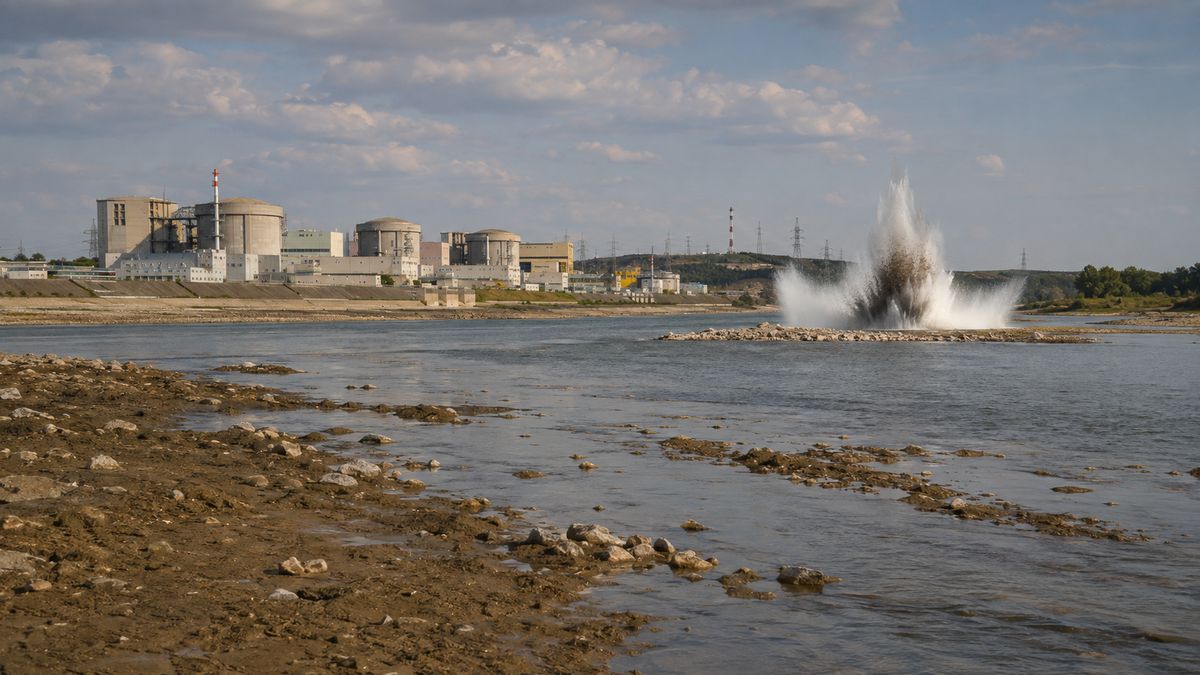
Romania is attempting to secure both water and megawatts simultaneously in an energy system strained by the extremely low flow of the Danube. In the Bala–Old Danube sector, the Romanian naval forces carried out a controlled detonation, and authorities are preparing a temporary dam to redirect part of the flow toward the route that helps supply water to the Cernavodă nuclear power plant. In parallel, Prime Minister Ilie Bolojan states that halting production at the Dacia and Ford plants until August 19 reduces national electricity demand by approximately 200 MW. The two measures target different sides of the energy balance. The hydrotechnical intervention attempts to keep as much nuclear generation available as possible. Meanwhile, the reduction in industrial consumption lowers the amount of electricity the system must supply during a period when a significant portion of domestic generation is constrained. However, this episode goes beyond the current drought. Older official documents show that the distribution of water flow between the Bala branch and the Old Danube has been a known hydrotechnical issue for decades. The extremely low flow in the summer of 2026 did not create this vulnerability, but it made it directly relevant to the operation of the power system. The Bala issue has been documented for over two decades Government documentation published in 2003 already described the influence of the Pârjoaia submerged rock formation on currents in the Danube bifurcation area. The document showed that the formation favors the flow toward the Bala branch and mentioned the consequences of failing to carry out the hydrotechnical works needed to control flow distribution between Bala, Borcea, and the Old Danube. The issue continued to appear in subsequent technical documentation. Assessments associated with the development of the Cernavodă plant planned for works such as rock excavation in the Pârjoaia area, the construction of a bottom sill, and a guiding dike, all aimed at influencing water distribution in that sector. The River Administration of the Lower Danube also describes the effect of the local configuration on currents. At low and very low flows, the geometry of the bifurcation and the specific features of the Pârjoaia sector favor the diversion of a larger portion of the current toward Bala and the lower Borcea, to the detriment of the Old Danube. This distribution becomes far more critical when the river's total flow drops sharply. Under normal hydrological conditions, there is more water to be shared among the branches. During a severe low-water episode, every change in the flow proportion can matter for navigation, ecosystems, and downstream water supply. The Danube has dropped to about one-third of its July average On July 27, the National Institute of Hydrology and Water Management measured a flow of approximately 1,650 cubic meters per second at the Danube's entry point into Romania at Baziaș. The multi-annual average for July is approximately 4,700 cubic meters per second . The flow was thus at about 35% of the multi-annual monthly average. Hydrological forecasts indicated a continued decline toward early August. Reuters reported that the flow could reach around 1,500 cubic meters per second on August 4 , very close to the historical lows cited for the Romanian sector. This value represented a forecast, not a confirmed measurement for that day. At Cernavodă, the River Administration of the Lower Danube had reported a water level of minus 194 centimeters as early as July 28, while the water temperature was around 27°C. The combination of the extremely low flow and the specific characteristics of water distribution between the Danube's branches has thus transformed a long-standing hydrotechnical issue into an immediate energy constraint. Danube water cools the plant, not the reactor directly The relationship between the Danube's flow and the operation of Cernavodă is often oversimplified. The river water does not enter the reactor's primary circuit and is not the heavy water used in the nuclear system. It is required for the plant's technological cooling systems, including turbine condensers and heat exchangers. Nuclearelectrica's documentation shows that the cold water source is connected to the Danube via Pool I of the Danube–Black Sea Canal and the bypass canal. Under normal operation, most of the water withdrawn is subsequently returned to the hydrographic system. Therefore, the current issue is not that the reactor would directly run 'out of water,' but rather that the available level and flow may limit the proper supply of the open-loop cooling system on which the plant's operation depends. This is why the local distribution of the Danube's flow has come to have direct consequences on electricity generation. Emergency intervention is no substitute for long-term hydrotechnical works The operation currently underway in the Bala area aims for a rapid modification of the local water…