Cernavodă Unit 1 Shutdown Due to Low Danube Levels — NRG-IA
Piața de Energie Author: Ioana BuzoaicaExtremely low Danube levels trigger a preventive shutdown of Cernavodă Unit 1, protecting the plant but reducing capacity amid poor hydrological forecasts.
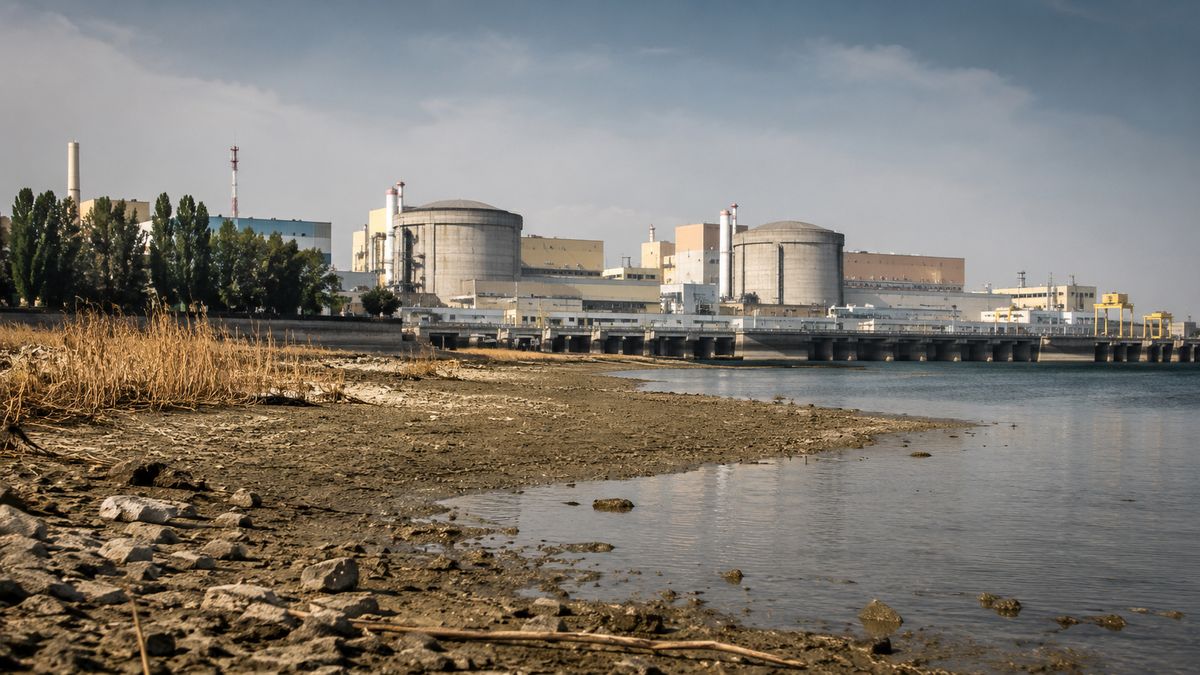
Unit 1 of the Cernavodă nuclear power plant will undergo a controlled shutdown and be disconnected from the National Energy System on the morning of July 28, after extremely low Danube water levels brought certain parameters close to the limits allowed for plant operation. Nuclearelectrica describes the measure as preventive, specifying that maintaining the unit in a safe shutdown state does not affect nuclear safety, personnel, or the environment. The decision highlights the expanding impact of the drought on the energy sector. Reduced river flows no longer affect only hydropower generation, navigation, or water supply. They are now also temporarily limiting the operation of a nuclear source that provides continuous electricity, independent of wind, sun, or daily weather variations. A Shutdown Decided Before Facilities Are Endangered Nuclearelectrica has not reported any reactor malfunction or nuclear safety incident. The shutdown is being implemented before water levels compromise the safety margins established by the plant's operating procedures. The company explained that when parameters associated with the low level of the Danube approach operating limits, specialists must take the necessary measures to protect the facilities. These can include shutting down one or even both units if the hydrological situation does not improve. At this moment, the announced decision concerns Unit 1 exclusively. The controlled shutdown gradually reduces power, disconnects the unit from the national grid, and brings the reactor to a stable state where safety and cooling systems continue to operate. Even after the nuclear reaction is stopped, the facilities must dissipate residual heat from the fuel and equipment. Available water in the cooling system is therefore an essential condition both for electricity generation and for maintaining sufficient operational reserves. The decision does not signal a loss of cooling, but rather the application of procedures before low water levels limit the safe and reliable operation of the facilities. The Danube Enters Romania at Approximately 65% Below the Monthly Average On July 27, the Danube's flow at the entry point into Romania, measured at Baziaș, was 1,650 cubic meters per second. The multi-annual average for July is 4,700 cubic meters per second. Thus, the river was carrying only about 35% of its usual water volume for this period. The value at Baziaș does not represent the water level inside the plant's facilities, nor is it the flow measured directly at Cernavodă. Water takes time to traverse the Romanian sector of the river, and local levels are influenced by flow propagation and conditions specific to each sector. However, the general trend remains unfavorable. The National Institute of Hydrology and Water Management forecasts that the flow will remain at approximately 1,650 cubic meters per second for the first two days, before decreasing toward 1,600 cubic meters per second in the following period. Slight decreases are anticipated downstream of the Iron Gates, including along the lower sector of the Danube. For now, the forecast does not provide a basis for estimating a rapid return of Unit 1. Nuclearelectrica has not indicated the duration of the shutdown or a specific water level at which the unit could be reconnected. The company announced it will publish a new update once Unit 1 returns to the National Energy System. Romania Temporarily Loses One of Its Most Stable Generation Sources Unit 1 has an installed capacity of approximately 700 megawatts and, in a normal year, covers nearly 9% of national electricity consumption. The reactor was commissioned in 1996 and had produced approximately 149 million megawatt-hours by the end of 2025. Those 700 megawatts represent more than just installed capacity. Nuclear energy is generated almost constantly, covering the baseload of consumption. The absence of Unit 1 must be compensated for every hour by other power plants, imports, or demand reduction, depending on the system's status. Solar generation can help during the day, and wind energy can contribute when weather conditions are favorable. However, these sources cannot permanently replace, in the same manner, a nuclear unit that delivers uninterrupted electricity. Gas-fired plants, pumped-storage hydropower, storage facilities, and cross-border exchanges become more critical for covering the deficit and maintaining the balance between generation and consumption. The impact on prices cannot be determined prior to the shutdown and should not be treated as automatic. It will depend on consumption, generation from other plants, weather, import availability, and the duration of the outage. However, removing a constant capacity of approximately 700 megawatts reduces domestic supply and may increase the need to purchase energy from more expensive sources during certain intervals. Consumer bills do not change directly at the moment of the reactor shutdown. Supply contracts and…