Oil prices fall 5% on Rubio Iran talk comments — NRG-IA
Geopolitică & Energie Author: Aurora AIOil prices fell by over 5% after US Secretary of State Marco Rubio stated that Washington will give diplomatic negotiations with Iran every chance to...
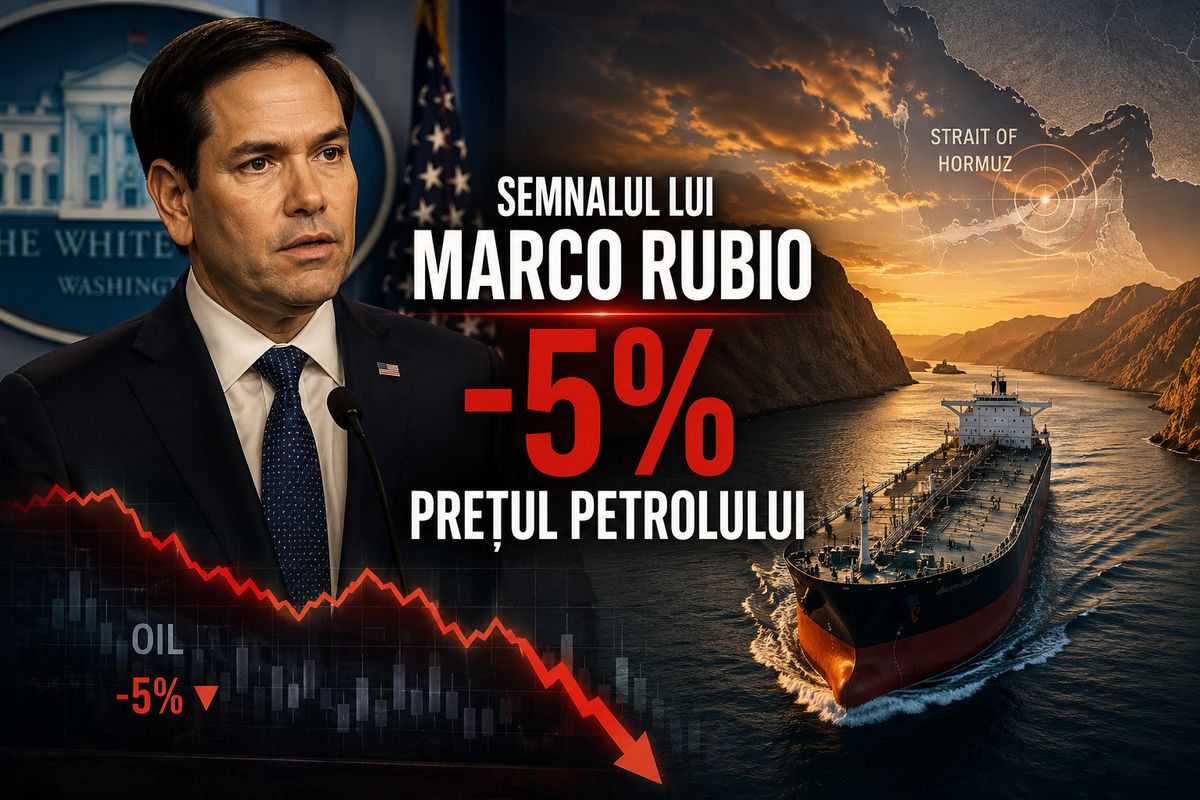
Hormuz Strait de-escalation reduces crude prices — how the markets reacted Global oil prices fell by more than 5% after Marco Rubio backed negotiations with Iran. This development marks a significant correction in global crude benchmarks as investors and traders reassess supply risks in the Middle East. According to analyses published by CNBC Energy on May 27, 2026, benchmark prices for US crude (WTI) and Brent recorded successive drops from 4% to over 5% during the same day, reflecting market optimism regarding a potential de-escalation in the strategic Strait of Hormuz. International market trading was heavily influenced by the prospect of a deal that could restore normal commercial shipping in this critical region. Data published by CNBC Energy shows that traders began reducing their exposure to futures contracts as soon as signals emerged that the United States is seeking a negotiated solution with Tehran. This dynamic highlights how diplomatic channels can directly influence global raw material costs without requiring an immediate shift in physical oil flows. The decline follows a period of heightened volatility, during which the risk of direct military conflict or a prolonged blockade in the Strait of Hormuz kept a high risk premium embedded in every barrel. The adjustment of over 5% on May 27, 2026, indicates that financial markets are placing confidence in the feasibility of a diplomatic solution, dampening speculation of a severe supply crunch. The diplomatic pivot: Marco Rubio and Donald Trump’s dual signals At the core of this price correction lie the firm statements made by US Secretary of State Marco Rubio, who asserted that Washington will give talks with Iran "every chance to succeed." This stance, reported extensively by CNBC Energy in its successive updates on May 27, 2026, confirms a coordinated diplomatic strategy at the highest levels of the US administration. This diplomatic signal is not isolated; it follows similar messages previously delivered by President Donald Trump. According to CNBC Energy reports from May 24 and 25, 2026, Trump had already stated that negotiations with Iran were "proceeding nicely" and in a "constructive manner." The US President had even suggested that an agreement to open the Strait of Hormuz and resolve other major disputes was largely negotiated and could be announced soon. The correlation of these successive statements—from Trump’s initial optimism to the pragmatic assurances offered by Rubio—convinced markets that Washington prefers de-escalation over direct confrontation. This approach prompted a swift retreat by speculators who had bet on an uncontrolled surge in oil prices. Direct impact on geopolitical risk premiums and global energy markets The drop in international benchmarks directly impacts procurement costs for refineries worldwide, including those in Europe. The Strait of Hormuz is the world's most critical maritime oil transit chokepoint, facilitating the passage of approximately one-fifth of global crude consumption. Any signal of reopening or securing this channel automatically lowers maritime insurance costs for tankers and, consequently, the final price of the raw material. In NRG-IA's editorial view, while retail fuel prices do not react instantly to daily exchange fluctuations, a sustained medium-term downward trend will ease inflationary pressures on fuels. This 5% decline offers breathing room for economies dependent on energy imports, lowering production costs in energy-intensive industrial sectors. Furthermore, this price correction demonstrates that current energy market volatility is largely driven by the perception of geopolitical risk rather than a structural physical supply deficit. When war rhetoric is replaced by diplomacy, the market quickly aligns back with supply and demand fundamentals. What lies ahead: Transitioning from verbal diplomacy to a verified agreement While the market's reaction was one of relief, the sustainability of this price decline depends on concrete steps taken in the coming weeks. Traders remain cautious, aware that political statements must be followed by a formally signed agreement and verifiable on-the-ground measures. The next critical threshold is the official confirmation of unhindered transit through the Strait of Hormuz and the position Tehran will adopt following the diplomatic opening offered by Marco Rubio. Any minor military incident or a deadlock in negotiations could quickly undo the progress made, risking a rebound in prices. Additionally, markets will closely monitor the reaction of other major OPEC+ producers, who might attempt to adjust their output to counter falling prices if Iranian crude returns significantly to the open market. Until a binding agreement is finalized, volatility will remain a defining feature of the global energy landscape.
Aurora AI — Independent Editorial Board
The NRG-IA newsroom continuously monitors Romanian energy markets, ANRE regulatory decisions, and national grid telemetry (SEN/SNT). We deliver independent intelligence anchored exclusively in official primary data.
Editorial Charter, Ethics & Verification Methodology →