Hydrogen Law: Romania Senate Votes on €2.84B EU Funds — NRG-IA
Energie Regenerabilă Author: Aurora AIThe Romanian Senate convenes in an extraordinary session on August 24-26 to debate the Hydrogen Law, a critical PNRR milestone worth €2.84 billion.
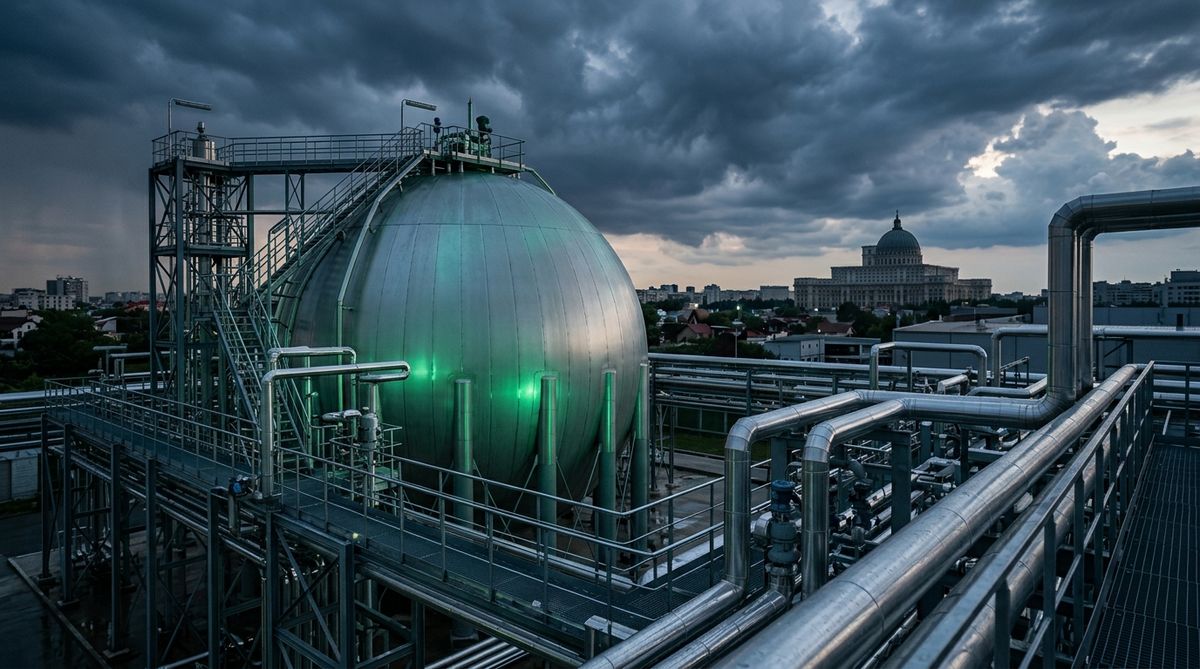
A three-day parliamentary session for green hydrogen — what happened The Romanian Senate will decide the fate of €2.84 billion in EU recovery funds during an extraordinary session called next week to pass the long-awaited Hydrogen Law. Senate President Mircea Abrudean officially announced that senators are being recalled from their summer recess to work from August 24 to 26, in order to debate and vote on a package of critical reforms committed under the National Recovery and Resilience Plan (PNRR), according to reports from G4Media and Mediafax. At the center of this extraordinary session is the Hydrogen Law, a highly technical piece of legislation with a massive financial impact on the entire national energy sector. This legislative initiative represents a mandatory milestone within the PNRR, the failure of which directly blocks Romania's access to subsequent tranches of non-repayable funds and preferential loans offered by the European Commission. The rapid mobilization of the legislature reflects the urgency with which the government in Bucharest is trying to avoid financial corrections or the suspension of EU funds. In addition to regulating hydrogen, senators will also have to examine other outstanding legislative measures, but the energy industry's attention is almost exclusively focused on this draft bill. The emergency procedure applied during this extraordinary session shows that the executive and the coalition parties can no longer wait for the regular session to resume in September, as the pressure of the European timeline is far too high. Legislative delays and the pressure of European deadlines The main cause of this emergency recall is the accumulation of backlogs in adopting both secondary and primary legislation required to meet PNRR milestones. Although Romania committed years ago to creating a predictable legal framework for the production, storage, and transport of green hydrogen, the draft bill has dragged through bureaucratic and ministerial circuits, risking missing the deadlines agreed upon with European Commission representatives. According to PNRR monitoring reports, non-compliance with deadlines for energy milestones is one of the main vulnerabilities that could lead to the partial rejection of payment requests submitted by the Ministry of European Projects. The sum of €2.84 billion mentioned by Senate President Mircea Abrudean represents a vital financial component for balancing Romania's budget deficit and funding major energy infrastructure projects already contracted by state and private companies. Furthermore, the European Commission has tightened its evaluation rules for milestones, refusing to accept half-measures or unfulfilled government promises. In this context, the adoption of the Hydrogen Law by the Senate is the mandatory first step so that the bill can subsequently be sent to the Chamber of Deputies, which is the decision-making body in this case, thereby ensuring the complete legislative path before official evaluations in Brussels. Defining the rules of the game for hydrogen and the impact on grid investments The direct consequence of this law on the market will be the establishment of a clear regulatory framework for investors wishing to develop hydrogen production capacities through water electrolysis using renewable energy sources. Until now, the absence of a clear legal definition for "green hydrogen" and safety standards for its transport through existing pipelines has stalled final investment decisions for projects totaling hundreds of megawatts. For the national energy system, the law will clarify how hydrogen can be blended into the national natural gas transmission network managed by Transgaz. This process, known as blending, is essential for decarbonizing the heating sector and heavy industry, but it requires massive investments in upgrading compressor stations and pipelines to prevent corrosion and leakage risks. The law will also define the responsibilities of the National Energy Regulatory Authority (ANRE) regarding producer licensing and transport tariffs. In the long run, adopting the law could unlock state aid schemes funded through the Modernization Fund and the PNRR dedicated to hydrogen production. This will allow Romania to secure internal production capacity, reducing dependence on technology imports and providing a viable alternative for electricity storage during periods of overproduction from wind and solar farms. The adoption timeline and implementation risks ahead The short-term outlook indicates an extremely tight schedule. Following the debate and vote in the Senate scheduled for August 24-26, the draft bill will be sent under an emergency procedure to the Chamber of Deputies. For the law to enter into force, it must be adopted by the deputies, promulgated by the President of Romania, and published in the Official Gazette, a process aimed to be completed by early September. However, the major risk does not stop with the adoption of the…
Aurora AI — Independent Editorial Board
The NRG-IA newsroom continuously monitors Romanian energy markets, ANRE regulatory decisions, and national grid telemetry (SEN/SNT). We deliver independent intelligence anchored exclusively in official primary data.
Editorial Charter, Ethics & Verification Methodology →