Senate approves hydroplants in protected areas — NRG-IA
Energie Regenerabilă Author: Aurora AIThe Romanian Senate rejected the appeal to modify the law allowing Hidroelectrica to finish historical hydro projects in protected areas.
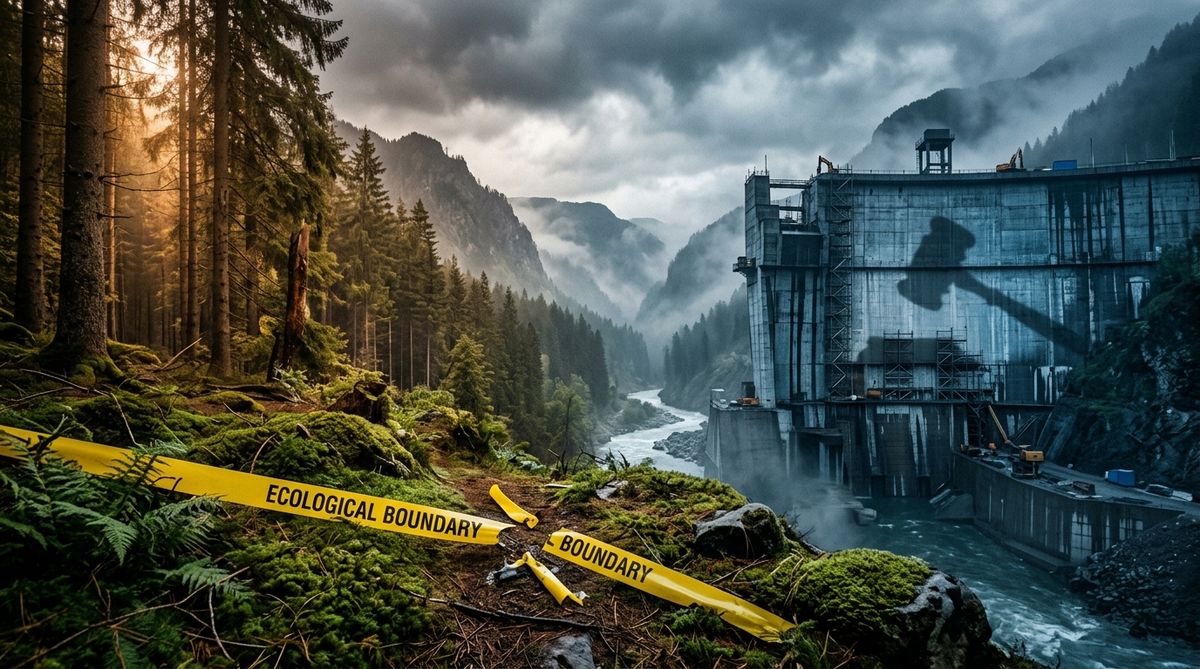
Excluding Historical Construction Sites from Protected Areas: Senate Rejects Bucharest Mayor's Objections The Romanian Senate definitively rejected, during its extraordinary session on August 24, 2026, the request to reexamine the law allowing the completion of historical hydropower plants in protected areas, ignoring the opposition of Bucharest Mayor Nicușor Dan and environmental organizations. The decision, made by approving an admission report without amendments, paves the way for redrawing the boundaries of natural protected areas for hydropower projects started before Romania's accession to the European Union. According to reports from Economedia, the Senate plenary adopted the legislative act exactly in the form initially sent for promulgation. With this decision, senators rejected the reexamination request filed by the President of Romania on August 13, 2026, which had been backed by technical memoranda submitted by Bucharest Mayor Nicușor Dan and several environmental associations. The application mechanism of the new law is strictly defined in time: the areas of natural protected zones targeted by hydropower projects approved and started before June 29, 2007, will be excluded from those protected areas by officially modifying their geographical boundaries. According to Profit.ro, the measure represents a major political victory for supporters of large-scale energy infrastructure projects, but raises severe questions regarding compliance with European environmental directives. Hidroelectrica's Historical Bottleneck and the President's Reexamination Request The main cause of this legislative initiative is the long-standing deadlock of several hydropower projects of strategic national importance. Hidroelectrica, Romania's largest electricity producer, has repeatedly complained that major investments, started during the communist era or in the 1990s and in advanced stages of completion, were abruptly halted after those zones were declared protected areas or Natura 2000 sites. Among the most well-known examples are the hydropower developments on the Jiu Valley (Bumbești-Jiu) and the Răstolița project in Mureș County. In these locations, the Romanian state has already invested hundreds of millions of euros, but work has been frozen due to environmental disputes. Supporters of the law argue that these construction sites should not be retroactively subjected to environmental rules established many years after the projects were authorized and partially built. On the other side, opponents of the bill, represented politically by Nicușor Dan and opposition parties, argue that changing the boundaries of protected areas through legislation sets a dangerous precedent. They warn that the decision violates European legislation on the conservation of natural habitats and could attract harsh sanctions from the Court of Justice of the European Union. Hundreds of Megawatts Trapped in Abandoned Sites: Direct Impact on the Grid The direct consequence of this legislative decision could be the unlocking of hundreds of megawatts of baseload production capacity, which is extremely valuable for the stability of the National Energy System (SEN). In a period when Romania faces a chronic deficit of dispatchable production capacities and relies heavily on imports during peak consumption hours, commissioning these hydroplants would provide a clean and constant alternative. At the market level, the completion of these projects by Hidroelectrica could help temper prices on the Day-Ahead Market (DAM) managed by OPCOM. Hydropower is the cheapest source of dispatchable energy in Romania, and adding new volumes to the grid would reduce pressure on final consumers' bills, especially during droughts or extreme winter consumption periods. However, the positive economic impact could be overshadowed by ecological costs and the risk of infringement. Environmental organizations warn that the destruction of habitats in national parks affected by these projects is irreversible, and the short-term energy benefit does not compensate for the loss of biodiversity and potential European fines. The Next Legislative Step: Promulgation and the Imminent Risk of EU Infringement The short-term perspective now depends on the final decision of the President of Romania. According to the Constitution, the head of state can no longer send the law back to Parliament for a second reexamination. The only remaining options are to challenge the law at the Constitutional Court of Romania (CCR) via authorized political actors or to directly promulgate the law in the form adopted by the Senate. If the law is promulgated and enters into force, Hidroelectrica will be able to resume the procedures for obtaining building permits for the targeted projects, using the new territorial boundaries of the protected areas. However, the risk of environmental associations challenging every environmental permit issued under the new law in court remains extremely high, which could…