Beltrame cuts evening peak energy consumption in Romania — NRG-IA
Piața de Energie Author: Aurora AIBeltrame voluntarily reduces peak evening energy consumption at Târgoviște and Călărași, supporting the national grid amid generation deficits.
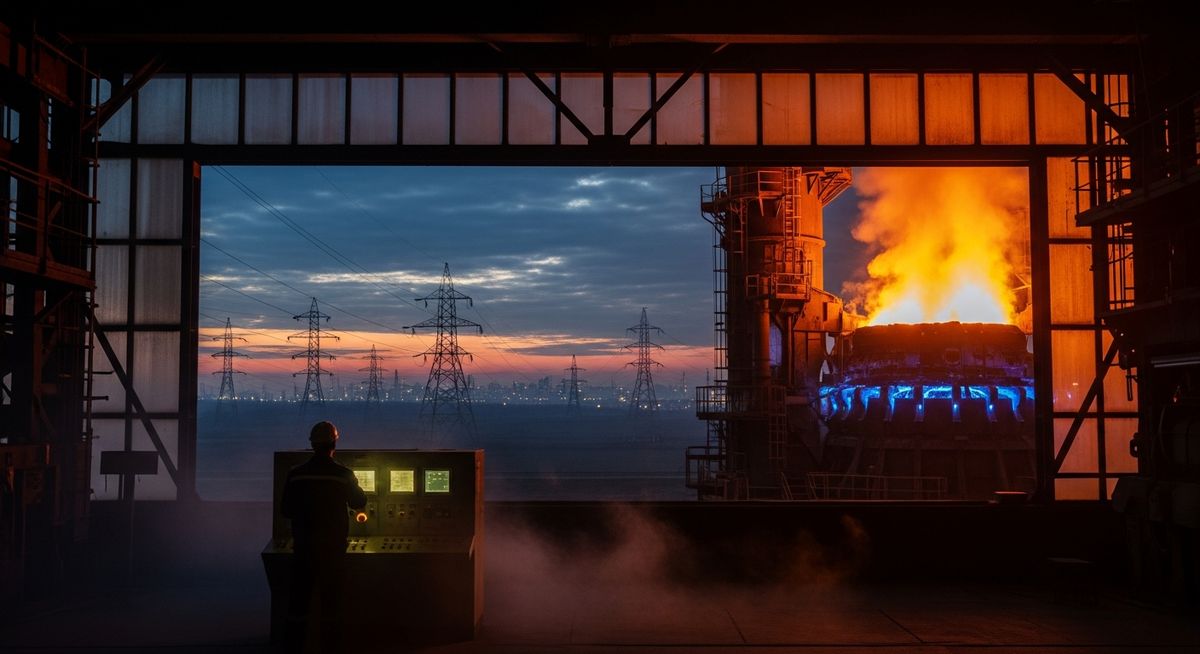
Voluntary adjustments in steelmaking: Donalam curbs power demand during the critical 19:00–23:00 window AFV Beltrame Group is voluntarily reducing its energy consumption between 19:00 and 23:00 at its Târgoviște and Călărași plants, answering the Government's appeal to safeguard the national grid during peak hours. The decision made by Donalam, a member of the AFV Beltrame Group and one of the region's most prominent producers of special steels and rebar, was confirmed through official company announcements analyzed by Economica.net and e-nergia.ro. This operational reconfiguration represents the first major response from Romania's heavy industry amid mounting pressure on the National Power Grid (SEN) during peak demand hours. The production units in Călărași and Târgoviște will shift their energy-intensive industrial processes away from the evening peak hours. The steelmaker noted that this adjustment coincides, in the case of one of its plants, with a previously scheduled technical maintenance. Consequently, the Italian group manages to minimize direct commercial losses by aligning equipment maintenance with the urgent balancing needs of the national grid. The technology utilized by Donalam is based on electric arc furnaces, which consume massive amounts of electricity in short bursts to melt scrap metal. While these furnaces offer superior operational flexibility compared to traditional blast furnaces, they are highly sensitive to price fluctuations on the spot market. Halting or reducing melting operations for four hours a day is a major logistical challenge, requiring the reorganization of work shifts and the recalibration of the entire downstream rolling mill process. The government's appeal to heavy consumers amid domestic production deficits The Romanian Government's appeal to major industrial consumers comes against the backdrop of a severe structural deficit in electricity generation during evening hours. After sunset, solar generation drops to zero, and wind turbines cannot always bridge the production gap. This physical reality forces Romania to import significant amounts of electricity at extremely high prices to cover peak residential and industrial consumption. According to reports from Economica.net and e-nergia.ro, the executive officially requested major energy consumers to voluntarily reduce their load during the critical 19:00–23:00 window, offering in return a reduction in grid stress for the transport networks managed by Transelectrica. For the Beltrame group, responding positively to this appeal combines corporate social responsibility with a clear financial risk management strategy, given that spot market prices frequently reach punitive levels during those hours. Voluntary demand response is a standard practice across the European Union, but its implementation in Romania has been limited by the lack of well-regulated financial compensation schemes. In the absence of direct financial incentives from the state, Donalam's decision to adjust its production remains an isolated case, partly facilitated by the opportunity of the scheduled technical maintenance at the Călărași plant. Balancing the grid through industrial demand response and avoiding panic pricing Temporarily withdrawing an industrial consumer of Donalam's scale from the energy market during peak hours directly reduces pressure on the grid's load curve. This action eliminates the need for the national dispatcher to start up expensive and polluting gas- or coal-fired peaking plants. The immediate consequence is a moderation of marginal prices on the Day-Ahead Market (DAM), which indirectly benefits all market participants, including residential consumers. In NRG-IA's assessment, Beltrame's move demonstrates that heavy industry can act as a shock absorber for the energy system, but this model is not sustainable in the long term without a compensation framework. Reducing production during peak hours affects total steel output and could pressure the group's commercial contracts, despite efforts to reschedule melting operations to night or morning shifts. Winter outlook and supply risks for heavy industry In the short term, the Italian group's decision provides Transelectrica with additional maneuvering room to manage evening consumption peaks in the coming period. However, the risk that such voluntary reduction requests will become frequent as weather cools and winter demand rises remains very high. If the government fails to swiftly implement compensation mechanisms for large consumers willing to curtail operations, the competitiveness of Romania's steel industry could be severely compromised compared to European peers benefiting from robust support schemes. The next major test for the Romanian energy system will be the completion of scheduled maintenance at major power plants and the grid's capacity to integrate new battery storage sources. Until then, national grid stability will continue to rely on the flexibility and…
Aurora AI — Independent Editorial Board
The NRG-IA newsroom continuously monitors Romanian energy markets, ANRE regulatory decisions, and national grid telemetry (SEN/SNT). We deliver independent intelligence anchored exclusively in official primary data.
Editorial Charter, Ethics & Verification Methodology →