Simtel completes 200 MWh storage battery in Romania — NRG-IA
Tehnologie & Inovație Author: Aurora AISimtel completed the 200 MWh battery storage facility at Iaz (Caraș-Severin), the largest project in Banat, developed for the Turkish group Güriș.
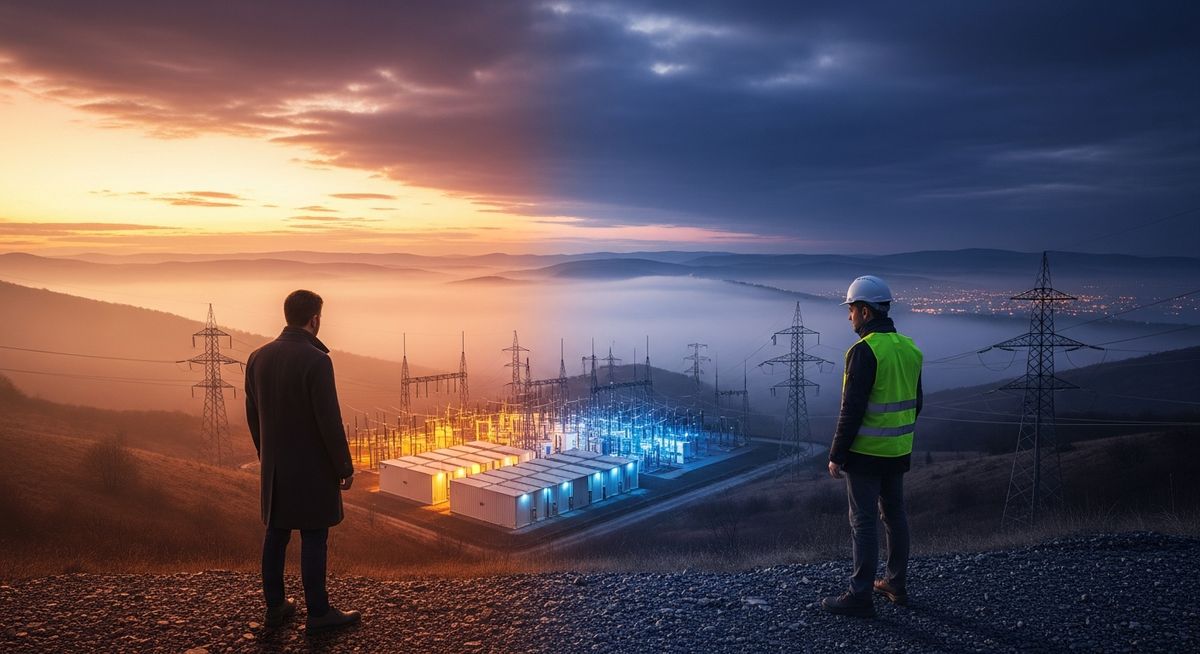
The Iaz storage system is completed — Simtel delivers the 200 MWh project to Turkish investors Simtel completed a 200 MWh battery storage facility in Caraș-Severin, securing the Banat grid. The battery energy storage system (BESS) at Iaz is officially completed and represents the largest storage capacity commissioned in western Romania. The project was executed by the Romanian engineering and technology group Simtel Team S.A. for the beneficiary Energy Capital Group, a company owned by Mogan Bucharest, part of the Turkish industrial giant GÜRİŞ. This large-scale storage unit marks a significant milestone in the development of regional energy infrastructure. The site in Caraș-Severin county was strategically chosen to capture renewable energy flows from an area with substantial wind and solar resources. Construction and technological integration work were completed on schedule, and the system is now ready for commercial operation. The investment made by the Turkish-Saudi consortium through Energy Capital Group confirms the strong interest of foreign capital in Romania's balancing assets. In a national power system increasingly dependent on intermittent generation sources, having a rapid reserve of 200 MWh provides a major competitive edge in the energy market. Spot price volatility and decarbonization targets accelerated the investment The decision to develop a storage project of this magnitude at Iaz is closely linked to the current configuration of the Romanian energy market. Data shows that Romania frequently records the highest spot electricity prices in Europe, a phenomenon driven by structural generation deficits during peak hours and a lack of storage capacity. This commercial reality creates an highly attractive business model for battery storage based on price arbitrage. On the other hand, the rapid integration of solar and wind farms in recent years has put massive pressure on the transmission grid managed by Transelectrica. Without systems capable of absorbing excess production during midday hours, grid operators risk imposing curtailment limits on green energy producers. The Iaz project emerged as a direct technical solution to this issue, providing the flexibility needed to avoid wasting clean energy. The partnership between Simtel and the investors from GÜRİŞ Group also reflects a maturing local market. Developers are no longer relying solely on simple energy generation; they are investing heavily in assets capable of providing system services, where profit margins are significantly higher due to the chronic shortage of reserves in the national grid. Balancing the regional grid and dampening consumption peaks The commissioning of the 200 MWh battery at Iaz will have a direct impact on the stability of the distribution grid in the Banat region. The unit will act as an energy shock absorber: absorbing electricity during periods of wind or solar overproduction when spot prices tend toward zero or turn negative, and injecting it back into the grid during peak consumption hours when the system is strained. For industrial and residential consumers in the region, this balancing mechanism translates in the long run into a reduced risk of blackouts caused by voltage fluctuations. Furthermore, the presence of large storage capacities in the market helps flatten price peaks on the Day-Ahead Market (DAM), limiting the extreme costs that ultimately end up on final consumers' bills. From a technical standpoint, the Iaz battery offers response times in the millisecond range, making it ideal for primary and secondary frequency control services. These services are essential for Transelectrica in maintaining the permanent balance between production and consumption nationwide, reducing reliance on old, polluting coal or gas-fired power plants. Transitioning from paper project boom to the test of real profitability While the completion of the Iaz project represents a major success for Simtel and its partners, Romania's energy storage sector is facing a turning point. Currently, there are hundreds of megawatts of BESS projects in various permitting stages, but only a small fraction manage to secure the necessary financing to enter the actual construction phase. The main short-term challenge remains the volatility of revenues from arbitrage and system services. As more storage capacity is connected to the grid over the next two years, price spreads on the spot market could narrow, reducing the profitability initially estimated by developers. Only projects optimized in terms of capital costs and with smart charge-discharge cycle management will remain viable. In this context, the Iaz project offers a major competitive advantage to its investors simply because it is already completed and operational, allowing them to capture high balancing tariffs before the market becomes saturated. The commercial success of this facility will largely dictate the pace at which commercial banks will agree to finance future storage…
Aurora AI — Independent Editorial Board
The NRG-IA newsroom continuously monitors Romanian energy markets, ANRE regulatory decisions, and national grid telemetry (SEN/SNT). We deliver independent intelligence anchored exclusively in official primary data.
Editorial Charter, Ethics & Verification Methodology →