Oil Terminal strike on August 24 threatens imports — NRG-IA
Piața de Energie Author: Aurora AIThe Oil Terminal Union will launch a collective labor dispute on August 24, 2026, after failed wage negotiations at Romania's largest oil terminal.
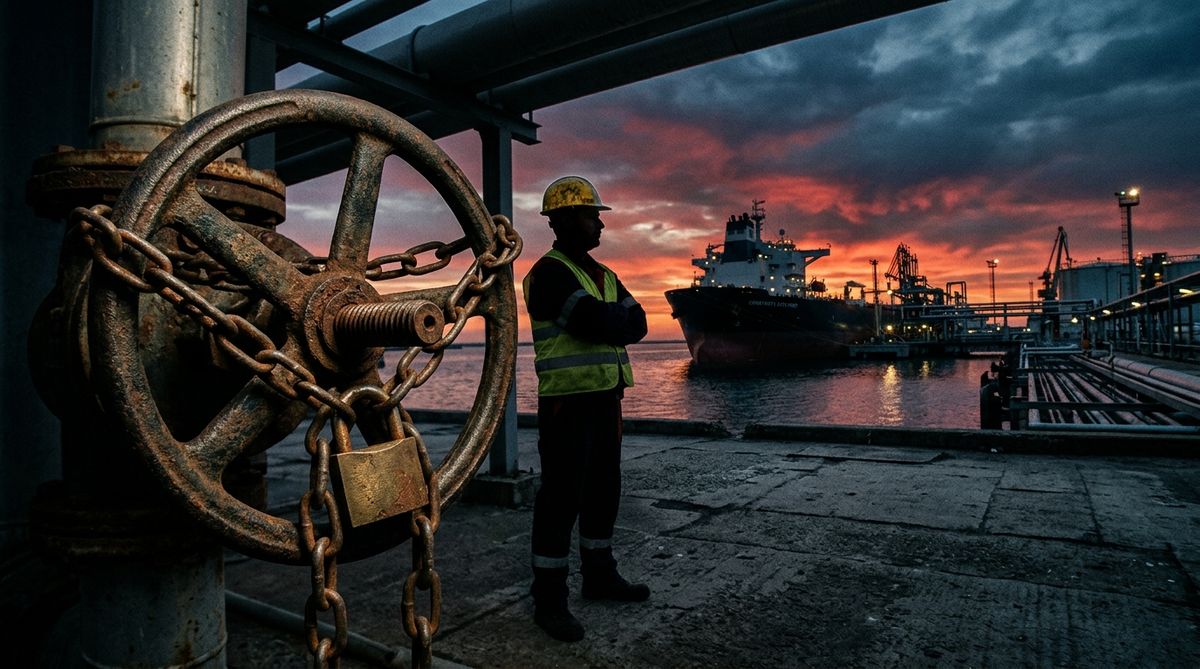
Bottleneck at the Import Gates: Oil Terminal Union to Launch Labor Dispute on August 24 The Oil Terminal Union will launch a collective labor dispute on August 24, 2026, threatening to disrupt Romania's largest oil hub. The decision was officially communicated to the Bucharest Stock Exchange by the state-controlled operator's management after successive rounds of wage negotiations failed. According to official reports analyzed by NRG-IA, the tensions at the Constanța-based company come at a time of maximum logistical pressure in the Black Sea region. Oil Terminal Constanța plays a strategic role in national energy security, serving as the primary gateway for Romania's crude oil and finished petroleum product imports. A potential work stoppage or operational slowdown by the unions could severely disrupt the direct logistical flow to the country's major refineries. Both e-nergia and Economica.net confirmed that the official notification regarding the collective labor dispute has already been transmitted to shareholders and investors. The company's administration stated that all legal procedures were initiated following the collapse of negotiations for a new collective labor agreement. Union members are demanding wage indexation correlated with real inflation and adjustments to bonuses for special working conditions—demands that management has so far rejected due to current budgetary constraints. The company operates seven berths in the Port of Constanța, with a total storage capacity of approximately 1.4 million cubic meters, making it an indispensable logistical pillar. Failed Wage Negotiations in a Company 87.7% Controlled by the State The primary cause of this looming bottleneck is the failure of wage negotiations within a rigid budgetary framework dictated by the company's ownership structure. The Romanian Ministry of Energy holds a majority stake of 87.7579% in Oil Terminal S.A., subjecting the operator to strict public sector rules regarding personnel expenses and wage increases. According to notifications sent by the Oil Terminal Union, the successive offers presented by management were deemed insufficient to offset the loss of purchasing power experienced by employees. The terminal's workforce includes highly specialized personnel trained in handling hazardous liquid chemicals, whose retention is becoming increasingly difficult without salary scales competitive with the private port logistics sector. Recent financial results show stable revenues, a point leveraged by the union to demand a fairer distribution of profits. In this context, the Ministry of Energy was officially informed on August 19, 2026, of the union's decision to resort to extreme measures. The Romanian state now faces a double constraint: adhering to fiscal discipline targets imposed on state-owned enterprises while avoiding a major logistical crisis in the Port of Constanța. Supply Chain Vulnerability: From Refineries to Fuel Stations The consequences of a prolonged strike at Oil Terminal extend far beyond the Port of Constanța, directly threatening the fuel market in Romania and the wider region. The terminal is vital for supplying crude oil to the Petrobrazi refinery (operated by OMV Petrom) and has tight logistical links to the Petromidia refinery (Rompetrol), ensuring the unloading of oil tankers and subsequent transfer to the national pipeline network operated by Conpet. If the import flow of crude oil is interrupted even for a few days, refineries will be forced to scale back processing capacity or draw from emergency strategic reserves. Furthermore, Oil Terminal is a critical node for diesel imports, a fuel where Romania faces a structural deficit traditionally covered by maritime shipments. The terminal handles not only crude oil but also gasoline, diesel, fuel oil, and liquid chemicals. Any disruption to unloading and storage operations quickly translates into higher logistics costs for traders, risking additional pressure on pump prices for final consumers. In a total bottleneck scenario, the lack of supply predictability could trigger inventory corrections across distribution networks nationwide, also impacting transit corridors to neighboring countries. The August 24 Deadline and the Ministry of Energy's Bargaining Room August 24, 2026, represents the final deadline for Oil Terminal's management and the Ministry of Energy to avert a strike by reaching a compromise. From a legal standpoint, launching a collective labor dispute requires mandatory conciliation stages at the Territorial Labor Inspectorate before transitioning to an actual strike. National labor law dictates that in public utility and critical infrastructure sectors, unions must ensure the operation of at least one-third of normal capacity to prevent accidents or technical failures. However, even a reduction to 33% of unloading capacity at Oil Terminal would generate massive delays for tankers in the Constanța port roadstead and substantial commercial…
Aurora AI — Independent Editorial Board
The NRG-IA newsroom continuously monitors Romanian energy markets, ANRE regulatory decisions, and national grid telemetry (SEN/SNT). We deliver independent intelligence anchored exclusively in official primary data.
Editorial Charter, Ethics & Verification Methodology →