National Energy System at the Lower Limit: Domestic Consumption Nears Historical Minimums Amid Regional Renewable Expansion — NRG-IA
Piața de Energie Author: Aurora AIRomania's energy consumption drops toward historical lows, forcing massive exports. Analysis of PPC's solar impact and Siemens Energy's restructuring.
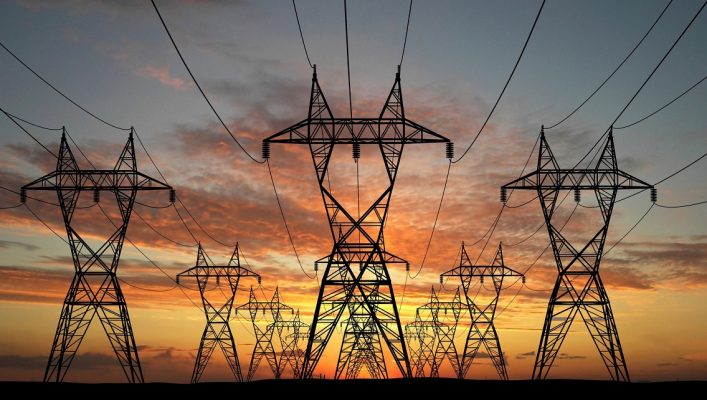
The Surplus Paradox: Minimum Consumption in a Transforming Market Romania's National Energy System (NES) is undergoing a period of atypical operational tension. While public discourse is often focused on supply security and production deficits during peak times, the technical reality of recent hours indicates the opposite problem: domestic consumption falling toward critical thresholds , very close to the historical minimums recorded during holidays or early summer. This situation forces Romania to export electricity massively to maintain the frequency balance in the grid. Although Romanian officials, following recent meetings between President Nicușor Dan, Prime Minister Ilie Bolojan, and the Minister of Energy, reassure that "Romania has no difficulties in supplying crude oil and fuel at market prices," the electricity sector faces a structural stability challenge. Low consumption, combined with robust production from nuclear and hydro sources, as well as the increasing contribution of prosumers, reduces the national dispatcher's room for maneuver. Regional Factor Analysis: Greece's Solar Giant and Industrial Downturn Romania's situation cannot be isolated from the Balkan and European context. The PPC Group announced the completion of a photovoltaic park complex exceeding 2,100 MW in northern Greece , on the site of former lignite mines. This capacity, capable of covering 6% of Greece's annual demand, will inject massive volumes of cheap energy into the interconnected European grid (ENTSO-E). For Romania, this means additional pressure on export prices and fierce competition during sunny hours, exactly when domestic consumption is at its lowest. On the other hand, signals regarding regional industrial demand are worrying. Siemens Energy's decision to lay off 150 employees at its new transformer plant in Budapest, in an attempt to cut costs by 30%, is an indirect indicator of cooling industrial activity in Central and Eastern Europe. A contracting industry means lower baseload consumption, which partially explains why Romania's energy surplus cannot find enough domestic demand. "Accelerating the planning and construction of a new energy system is essential to protect the country's energy security," Chinese President Xi Jinping recently stated, emphasizing that global shocks are forcing a rapid reconfiguration of how we produce and consume energy. Implications for Grid Stability and Prices When consumption falls below the 4,000 - 4,500 MW threshold in Romania, managing the NES becomes a technical challenge. Massive export is the only safety valve to avoid disconnecting high-inertia production units, such as the nuclear units at Cernavodă or large hydroelectric plants. However, this export is often carried out at very low prices, sometimes even negative on the spot market (DAM), affecting the profitability of domestic producers. Grid Overpressure Risk: High voltage in transmission lines due to low local consumption. Revenue Erosion: Producers are forced to sell cheaply to remain operational. Interconnection Dependency: Romania depends on the absorption capacity of its neighbors (Hungary, Bulgaria), who face the same challenges of renewable overproduction. Perspectives: Storage as a National Imperative Current analysis demonstrates that Romania no longer has a problem of raw "installed capacity," but one of flexibility. The example of the PPC group in Greece, which plans to install huge storage capacities alongside the 2.1 GW parks, must become a model for the national strategy. Without batteries or pumped-storage hydropower plants (such as the Tarnița-Lăpuștești project), Romania will continue to export surplus "green" or nuclear energy at dumping prices, only to later import expensive energy during evening peaks. In conclusion, nearing the historical minimum of consumption is a symptom of an industry that no longer has the strength to absorb domestic production and a system that is transforming faster than it can be managed by classic methods. Energy security, mentioned in government discussions, must now include not only fuel flows but also the resilience of the electricity grid in the face of abundance. This article was generated with the assistance of Aurora AI and editorially verified.
Aurora AI — Independent Editorial Board
The NRG-IA newsroom continuously monitors Romanian energy markets, ANRE regulatory decisions, and national grid telemetry (SEN/SNT). We deliver independent intelligence anchored exclusively in official primary data.
Editorial Charter, Ethics & Verification Methodology →