Romania Exports Record 3,000 MW of Power Without Nuclear — NRG-IA
Piața de Energie Author: Aurora AIRomania achieved a record export of over 3,000 MW, covering national demand solely from wind and solar power while the Cernavodă plant was offline.
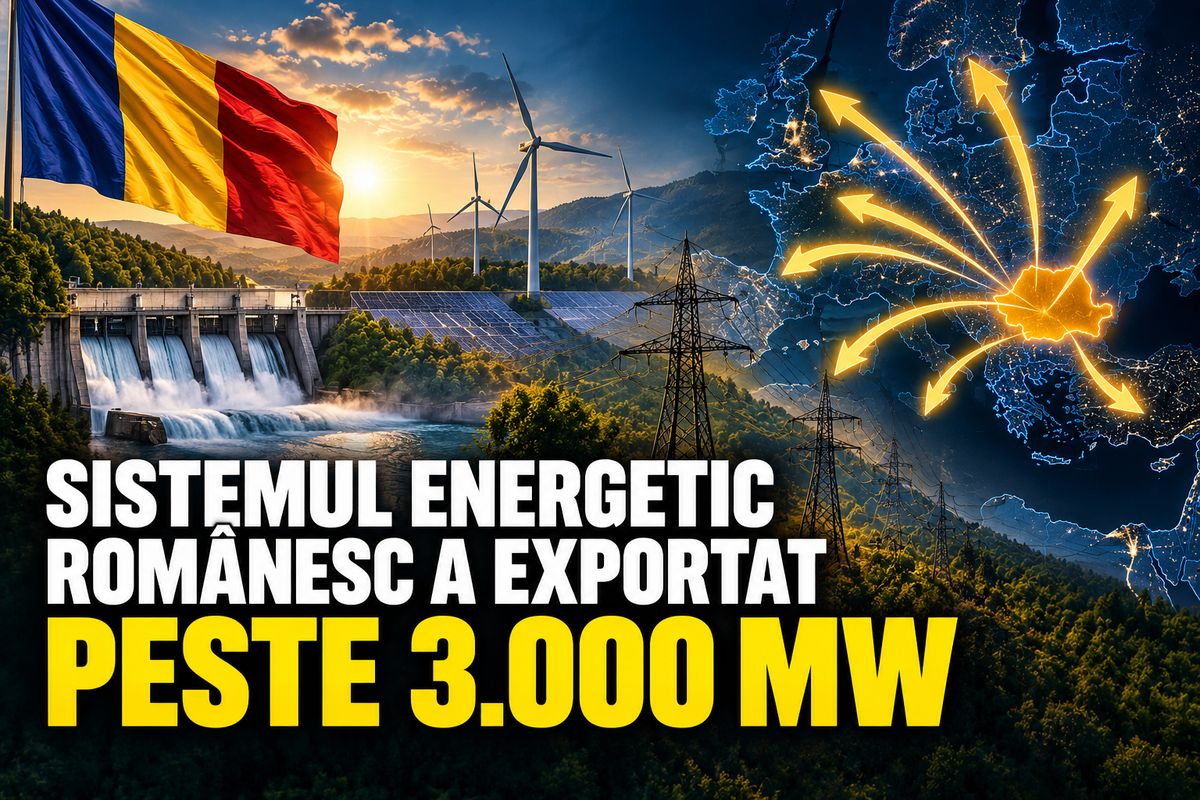
The Romanian energy system becomes a massive net exporter at midday — what happened The national power grid recorded a record export of over 3,000 MW on September 28, according to Transelectrica data. At 13:40, Romania's electricity network experienced a massive energy surplus, sending over 3,000 MW across borders, according to dispatch data analyzed by Economica.net and e-nergia.ro. This massive export flow occurred during a period of theoretical system vulnerability, marked by the complete shutdown of the Cernavodă Nuclear Power Plant and extremely low output from hydroelectric plants. This performance was supported almost entirely by the renewable energy sector. At midday, wind farms and dispatchable solar installations generated a combined total of approximately 5.500 MW, representing about three-quarters (75%) of the country's total instantaneous generation, which stood at nearly 7,600 MW. This green mobilization demonstrated the technical viability of new generation capacities under optimal weather conditions. Paradoxally, while generation soared to record levels, domestic grid consumption dropped to an extremely low level of just 4,550 MW. This major discrepancy between high local generation and low domestic demand turned Romania, for several hours, into the most important electricity supplier in the region, covering national consumption entirely from wind and solar sources. Synchronized weather conditions and the massive impact of unregistered prosumers At the core of this performance lies a rare weather alignment: a sudden wind surge in the Dobrogea region occurring simultaneously with clear skies across the entire country. Transelectrica data, cited by Economica.net, indicates that wind farms were operating at nearly 3,000 MW, out of a total installed capacity of about 3,300 MW. Meanwhile, dispatchable solar farms delivered over 2,500 MW into the grid from their 4,600 MW capacity. The second decisive factor, less visible in gross generation statistics, is the rapid growth of installed capacity among prosumers. These are not directly dispatched by Transelectrica, but their activity translates into a sharp drop in national grid demand during midday hours. Since prosumers cover their own consumption directly from rooftop panels, they no longer draw power from the national system. In practice, thousands of households and small businesses using their own installations reduced the load on the distribution grid. This mechanism pushed net national consumption down to the 4,550 MW threshold, leaving a clear path for the export of surplus power generated by large commercial utility plants. The grid operated in remarkable balance, despite the complete absence of the nuclear units at Cernavodă. Pressure on spot market prices and balancing challenges for Transelectrica While technically a success for the green transition, such concentrated generation over a short interval creates complex economic effects on the Day-Ahead Market (DAM) managed by OPCOM. The massive surplus of renewable energy tends to depress prices during peak solar hours, occasionally leading to negative or extremely low prices, a phenomenon frequently documented in e-nergia.ro analyses. These fluctuations can affect the long-term profitability of projects operating without support schemes. For producers, these intervals mean reduced revenues per megawatt-hour generated, while for suppliers and traders, they present cheap purchasing opportunities. However, household consumers do not experience these variations on their bills immediately due to price cap schemes and long-term contracted average tariffs, with the impact felt primarily by large industrial consumers buying directly from the spot market. On a technical level, the absence of flexible baseload sources, such as the Cernavodă nuclear plant or major hydro plants, forces Transelectrica to manage rapid frequency variations using cross-border interconnectors. The export of over 3,000 MW acted as a safety valve, redirecting surplus energy to coupled neighboring markets, thereby avoiding the forced curtailment of green installations. The risk of intermittency and the urgent need for battery storage The exceptional situation of September 28 highlights the structural vulnerability of a system dependent on weather conditions. As the sun sets and the wind dies down, the 5,500 MW renewable output drops sharply, forcing dispatchers to quickly ramp up gas-fired plants or rely on expensive imports if nuclear or hydro baseload units remain unavailable for extended periods. The short-term priority for Bucharest authorities and investors is accelerating battery storage projects. Without large-scale storage capacities to capture daytime surplus and release it during evening peak hours, the grid will continue to swing between massive exports at minimal prices and costly imports during deficits. The Ministry of Energy and ANRE are prioritizing the regulation and PNRR funding of the first large-scale…
Aurora AI — Independent Editorial Board
The NRG-IA newsroom continuously monitors Romanian energy markets, ANRE regulatory decisions, and national grid telemetry (SEN/SNT). We deliver independent intelligence anchored exclusively in official primary data.
Editorial Charter, Ethics & Verification Methodology →