Șocul din Orientul Mijlociu lovește economia reală: carburanți, Dacia și inflația din România — NRG-IA
Geopolitică & Energie Author: Gheorghe RăzușMiddle East tensions cause logistical roadblocks for Dacia, 60-bani fuel price gaps, and a massive boom in solar and battery storage investments.
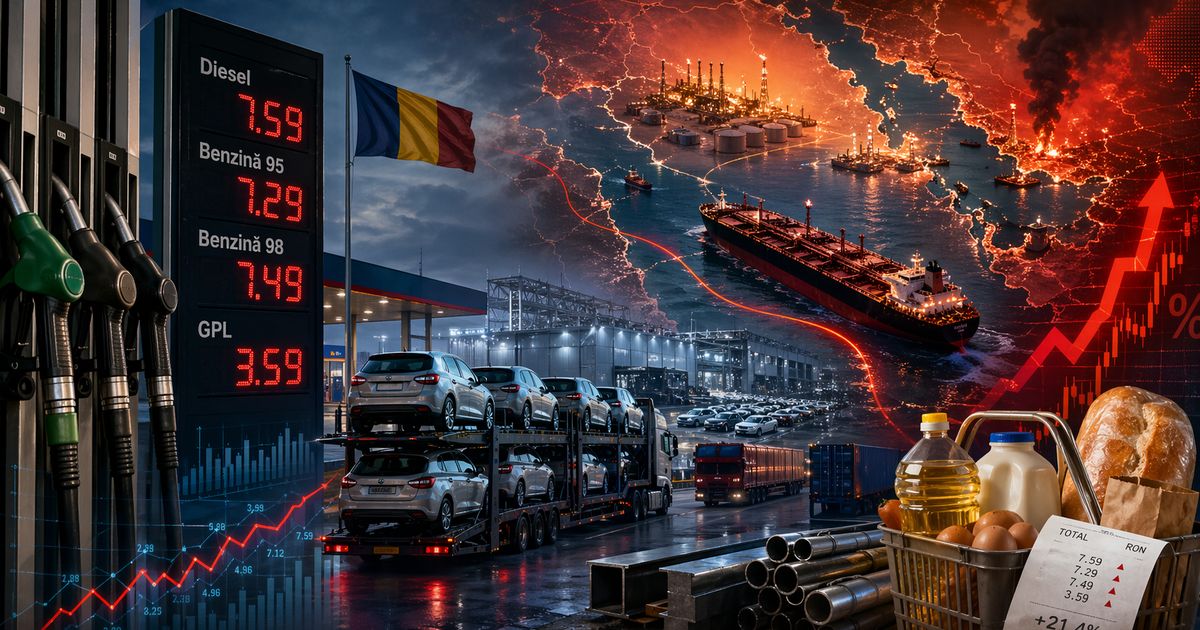
The Geopolitical Context: A Crisis with Rapid Ripple Effects Escalated tensions in the Middle East, marked by open conflict involving Iran, have brought the extreme vulnerability of global supply chains back into focus. Although a total blockade of the Strait of Hormuz—the world's most critical transit point for crude oil—remains a worst-case scenario for now, the market's anticipatory effects are already being deeply felt in the real economy. From chaotic fluctuations at Romanian gas stations to profit warnings from Fast-Moving Consumer Goods (FMCG) giants, the shockwave is rapidly crossing economic sectors. This climate of uncertainty overlays a complex energy transition period in Europe. Although renewable sources have managed to reduce EU electricity prices by 25%, natural gas continues to dictate the marginal market price. Any threat to Liquefied Natural Gas (LNG) or oil flows from the Middle East immediately translates into higher costs for industry and end consumers. Analysis: Affected Sectors and Market Response 1. Pump Price Chaos: A Fragmented Market The first and most visible effect of geopolitical instability is seen in the retail fuel distribution market. Traditionally, major distributors in Romania aligned their pricing strategies, reacting uniformly to international quotes. Currently, the market is experiencing atypical volatility. According to recent data, price differences for standard diesel have reached an unusually high level, exceeding 60 bani per liter among major gas station chains in Romania. This major divergence—where some stations are cutting prices while others simultaneously raise them—indicates completely different hedging strategies in the face of uncertainty regarding future crude oil supplies amid the Iranian conflict. 2. Pressure on Manufacturing and FMCG Energy costs and logistical disruptions are not sparing the manufacturing industry. Alternative maritime routes (avoiding conflict zones in the Red Sea and the Persian Gulf) add weeks to transit times and exponentially increase shipping costs. Automotive Sector: The Renault Group reported growing revenues in the first quarter of 2026, but highlighted that its Dacia brand experienced a drop in sales, being directly affected by severe logistical disruptions. FMCG Sector: Dutch brewer Heineken issued a clear warning to investors. Although first-quarter volumes exceeded estimates, the company stressed that inflation and energy costs—directly fueled by the Middle East conflict—represent a major risk that could erode consumer demand in the coming quarters. Implications: The Defensive Acceleration Towards Energy Independence Faced with this macroeconomic picture marked by fossil fuel volatility, the market's response is an unprecedented acceleration towards energy independence solutions, both at residential and industrial levels. The Photovoltaic Boom and Storage Solutions (BESS) The fear of a new bill crisis has triggered a fresh wave of investments. Demand for rooftop solar panels has seen a steep increase since the onset of the Iran conflict. Households are thus trying to protect themselves from the anticipated rise in oil, gas, and inherently, electricity prices. "The market is no longer waiting for subsidies to act; security of supply and cost predictability have become the main triggers for solar adoption." At the industrial level, the transition is even more spectacular. A recent and telling example in the Romanian market is the legal assistance provided by Vlăsceanu & Partners to Kraftfeld Energy for the Gârla Mare project. This massive project integrates a 126 MWp photovoltaic plant with a Battery Energy Storage System (BESS) boasting an impressive capacity of 200 MWh . Integrating storage at such a scale proves that major players are preparing for a market where flexibility and independence from marginal prices dictated by natural gas are essential. Perspectives: The Twilight of Fossil Fuels Under Geopolitical Pressure? While the market reacts through panels and batteries, long-term institutional pressure is taking shape at the diplomatic level. The recently held Santa Marta summit represents the first international meeting dedicated exclusively to drafting a global plan for the phase-out of fossil fuels and the cessation of subsidies granted to the oil and gas industry. The current paradox is obvious: although wind and solar have cut EU electricity prices by a quarter, the residual dependence on natural gas keeps the market hostage to Middle Eastern geopolitics. Until storage capacities (like the Gârla Mare project) become the norm at the national and European levels, any tension near the Strait of Hormuz will be directly felt in the price of diesel at Romanian pumps and in the production cost of everyday goods. This article was generated with the assistance of Aurora AI and editorially reviewed.
Gheorghe Răzuș — Independent Editorial Board
The NRG-IA newsroom continuously monitors Romanian energy markets, ANRE regulatory decisions, and national grid telemetry (SEN/SNT). We deliver independent intelligence anchored exclusively in official primary data.
Editorial Charter, Ethics & Verification Methodology →