Șocurile energetice externe împing România spre 9 legi PNRR, investiții și măsuri pentru facturi mai mici — NRG-IA
Piața de Energie Author: Ioana BuzoaicaThe global oil crisis forces Romania to accelerate energy reform: The Government prepares 9 laws for €10 billion from PNRR.
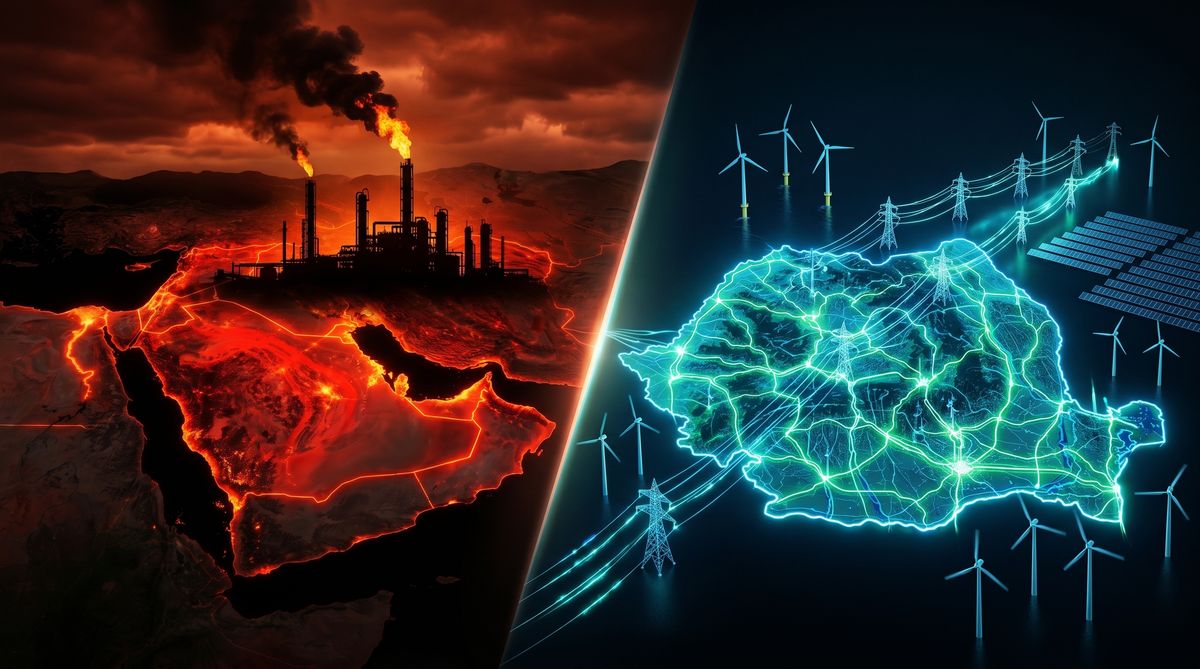
Context: The Definitive Rupture in the Global Oil Market The global fuel crisis, exacerbated by the conflict in Iran, is no longer just a temporary episode of price volatility, but a structural inflection point for the entire energy architecture. Fatih Birol, the Executive Director of the International Energy Agency (IEA), recently warned, as cited by Digi24 and Economica.net , that the fossil fuel industry has undergone irreversible changes. Using the metaphor "the vase is broken," the IEA chief emphasized that the war has permanently eroded trust in oil, accelerating the transition to renewable sources, nuclear energy, and electrification. This global shock is strongly felt at the institutional and diplomatic levels. The European Parliament is currently adopting its position on the 2028-2034 multiannual budget, with the implications of the Middle East crisis on energy prices as a central agenda item. Concurrently, 53 nations have gathered to plan a future decoupled from fossil fuels—an effort paradoxically supported, according to a Digi24 analysis, even by the US administration, which, despite being a public ally of the oil industry, is accelerating the shift to electric vehicles and clean energy. Analysis: Romania's Race Against Time for €10 Billion from PNRR For Romania, the shockwave from international markets translates into immense pressure on national infrastructure and the state budget. Faced with potential shortages and price hikes on foreign exchanges, the only real safety net remains energy independence financed by European funds. Prime Minister Ilie Bolojan has announced an administrative paradigm shift, preparing a package of nine essential laws to unlock €10 billion from the National Recovery and Resilience Plan (PNRR), funds that must be accessed by August. Following a recent visit to the Ministry of Energy, the Prime Minister highlighted, according to Digi24 , that reforming and strengthening the energy sector is a major priority amid price-related challenges. Without these funds, Romania risks remaining exposed to external shocks, lacking the necessary capital to modernize its transmission and distribution networks, which are vital for integrating new production capacities. Furthermore, the Government has initiated a campaign to "clean up" the energy market. Directly targeting the internal causes of price increases, the Executive promises firm measures against speculators who block power grids with paper projects, prioritizing real investments that can bring physical megawatts into the system and, consequently, lower prices for the end consumer. Implications: How Global Shocks Translate into Romanian Consumers' Bills While billions of euros are negotiated at the macro level, at the micro level, household and industrial consumers are looking for survival solutions to cope with their bills. Civil society's response to the price crisis comes in the form of concrete legislative proposals for protection. The Association of Prosumers and Energy Communities of Romania (APCE) has submitted a set of five measures to the Government aimed at immediately reducing the financial burden on citizens, according to Economica.net . Among the most important requests are: A reduced VAT rate of 5% for photovoltaic systems, a measure designed to stimulate household energy independence and reduce demand from the national grid. Eliminating the cogeneration contribution from all consumers' bills, a tax that currently adds extra pressure to the final cost of energy. Monthly financial compensation for the energy delivered to the grid by prosumers, to ensure a fair capital flow for those who support the national energy system with green energy. These proposals reflect a harsh reality: the energy transition is no longer just an ecological goal, but an economic defense mechanism. By becoming a prosumer, the Romanian citizen attempts to insulate themselves from the volatility of the oil barrel and the geopolitical crises in the Middle East. Perspectives: Accelerated Transition as the Only Security Solution The current shortages and price hikes are not temporary anomalies, but symptoms of a change of era in the energy sector. The IEA's warning regarding the permanent reduction in future oil demand shows that markets have assimilated geopolitical risk as a constant. For Romania, the equation is clear: energy security no longer depends on fossil fuel imports, but on the administrative capacity to absorb the €10 billion from the PNRR and to legislate in favor of domestic production. If the nine-law package prepared by the Bolojan Government passes the parliamentary test and unlocks European funds, Romania has the chance to modernize its grid to face an electricity-dominated future. Otherwise, consumers will remain captive in a vulnerable market, where the price of energy will continue to be dictated by crises in global straits and internal system inefficiencies. This article was generated with the assistance of Aurora AI…