Romania diesel price hike July 1: 36 bani increase expected — NRG-IA
Protecția Consumatorului Author: Aurora AIThe lifting of the fuel market crisis state on July 1 brings an estimated 36-bani per liter hike for diesel, while gasoline prices remain stable.
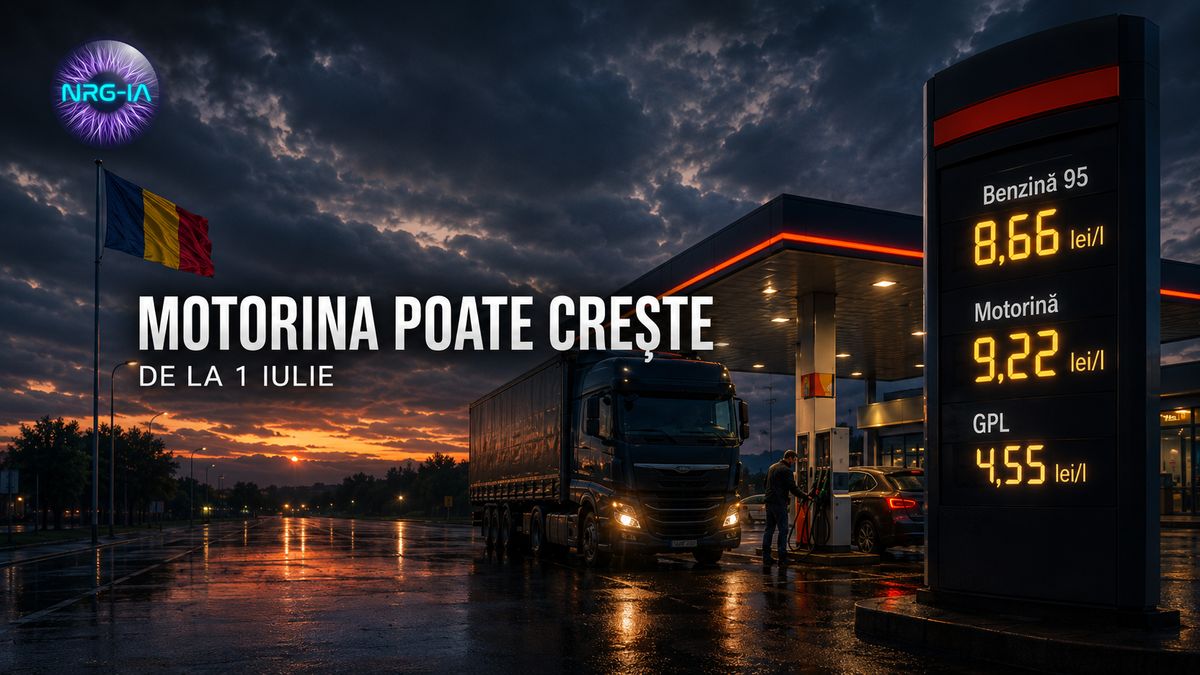
The end of exceptional measures on July 1 — what happens to pump prices Romanian drivers face an estimated 36-bani price hike for diesel starting July 1. In contrast, gasoline prices are highly likely to remain unchanged, according to early market estimates published by specialized portals e-nergia and Economica.net. This development comes as the state of crisis established on Romania's fuel market is set to expire, unless authorities intervene at the last minute. If the current legal framework does not undergo emergency changes, the special control or capping mechanisms will cease to produce effects from the beginning of July. Preliminary analyses indicate that the current gasoline price will be maintained, but major pressure will build on the diesel segment. This discrepancy reflects the different dynamics of demand and regional inventory levels for the two fuel types. However, market sources cited by Economica.net suggest that the final impact at the pump could be mitigated by the commercial strategies of major distribution networks. Oil companies might choose to temporarily absorb part of the costs to avoid a sharp drop in volumes sold during the peak summer season, when transport network mobility reaches its highest values. Transitioning from crisis mode to a standard commercial market The mechanism behind this price adjustment is directly linked to the expiration of the fuel market's state of crisis. This special status previously allowed for compensations or limitations on distributors' profit margins. Upon returning to a standard commercial regime, oil companies are recalculating their logistical and procurement costs based on international Platts quotations. Reports published by e-nergia indicate that Romanian prices had remained relatively stable in recent weeks due to these administrative levers, which are now disappearing. Major fuel companies, including OMV Petrom, Rompetrol, and Lukoil, set their tariffs based on the average quotations of refined products, as well as local taxes. The lifting of the state of crisis means that special monitoring mechanisms can no longer block adjustments correlated with these market benchmarks. Direct impact on hauliers and distribution chain costs An estimated 36-bani per liter increase for diesel directly impacts the logistics and freight transport sectors. Since most commercial fleets in Romania rely on diesel engines, operational costs for hauliers will experience an immediate jump. This price hike risks being rapidly transferred to consumer goods prices, fueling inflationary pressures. Retail consumers will thus feel an indirect effect along the supply chain, even if gasoline prices at the pump remain stable. The cost of transporting food, building materials, and industrial products depends directly on the price of diesel, meaning that any fluctuation at the pump translates into higher shelf prices in the coming weeks. The final decision in the coming hours and Government's remaining options The July 1 deadline puts immense pressure on the Ministry of Energy and political decision-makers. The Executive has only a few hours left to decide whether to extend the support measures or let the market self-regulate completely. Distribution companies are closely monitoring international Brent crude oil benchmarks to adjust final retail prices accordingly. It remains to be seen whether major market players will apply the full increase starting Monday morning or choose a phased approach. In the absence of an emergency ordinance adopted in haste, diesel consumers will pay more at the pump starting the first day of July, marking the end of a period of artificial price stability.
Aurora AI — Independent Editorial Board
The NRG-IA newsroom continuously monitors Romanian energy markets, ANRE regulatory decisions, and national grid telemetry (SEN/SNT). We deliver independent intelligence anchored exclusively in official primary data.
Editorial Charter, Ethics & Verification Methodology →