SpaceX: $74B for AI Supercomputing and On-Site Power — NRG-IA
Tehnologie & Inovație Author: Ioana BuzoaicaSpaceX plans over $74B for two US supercomputing campuses, including on-site power, reflecting AI's growing impact on energy infrastructure.
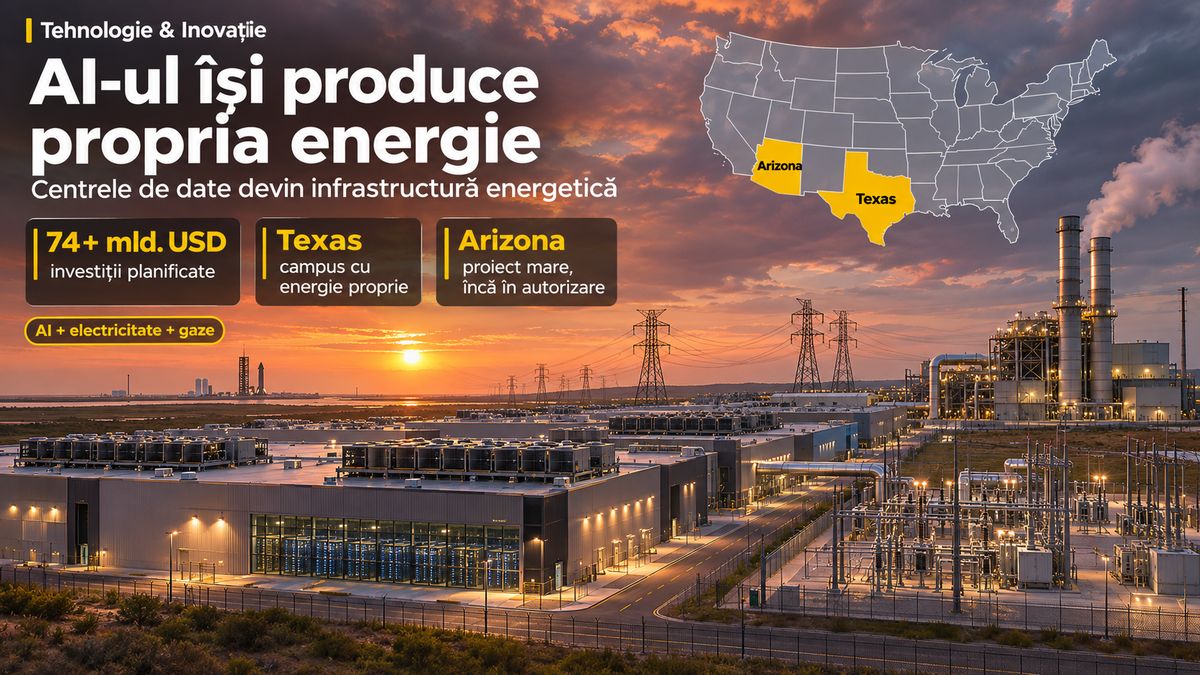
SpaceX, the company founded by Elon Musk, announced on November 12, 2026, plans to invest over $74 billion in two supercomputing campuses in the United States. Approximately $24 billion is earmarked for the Starbase complex in Texas, with an additional $50 billion designated for a project in Cochise County, Arizona. While the financial scale is striking, the real paradigm shift lies in how the company intends to power these facilities. At Starbase, SpaceX aims to construct a supercomputing center powered by behind-the-meter generation, including an on-site natural gas power plant, operating independently of the public grid. In Arizona, the project pursues a different strategy: collaborating with local power utilities, expanding energy infrastructure, and leveraging existing renewable resources. Together, these two investments illustrate an increasingly crucial reality for the artificial intelligence industry: securing sufficient power at the right time is becoming a decisive factor for scaling compute capacity. SpaceX's announcement comes as data center developers face growing grid connection delays and an urgent demand for uninterrupted base-load power. A BloombergNEF report published just a day earlier estimates that global data center electricity demand could reach 2,354 TWh by 2035, nearly quadruple current levels. This outlook is turning energy from a utility service purchased by digital operators into a core strategic component of their capital investments. Texas: SpaceX Aims to Generate Its Own Power for Supercomputers The Texas project is located at Starbase near the Port of Brownsville, a region already associated with the development of Starship rockets. Filings published by local authorities outline a phased development across approximately 444 acres (nearly 180 hectares). The complex will integrate an on-site natural gas power plant and a supercomputing facility that SpaceX intends to build, own, and operate. This co-located approach could fundamentally alter the deployment timeline for data centers. Traditional operators request grid interconnects and rely on transmission capacity, substation upgrades, and utility queue timelines. Building a captive power plant allows the developer to directly control a critical element of the required infrastructure, potentially reducing waiting times for compute power. According to details published by regional business outlets based on an air permit application, the proposed energy setup for Starbase includes 35 gas turbines with a total capacity of roughly 748 MW. While this capacity reflects preliminary permit filings rather than a commissioned plant, its magnitude underscores the scale of electricity consumption SpaceX anticipates for its digital infrastructure. For a supercomputing center, continuous power availability is vital. High-performance AI workloads rely on thousands or tens of thousands of specialized processors, and power demand extends far beyond server chips. Cooling systems, backup power, and auxiliary infrastructure add significant electrical load. Furthermore, modern centers must withstand rapid load fluctuations caused by intensive compute operations. Natural gas provides dispatchable generation independent of solar or wind variability. However, choosing such a solution depends on fuel costs, plant efficiency, gas supply availability, and environmental regulations. Self-generation may streamline power access, but it exposes the digital operator to the operational and financial risks inherent to energy production. Arizona: A $50 Billion AI Campus with Proposed Power Requirements of Up to 6 GW The second project announced by SpaceX is located in Cochise County, Arizona, with planned investments of approximately $50 billion. Local authority filings for the proposed supercomputing campus detail the phased development of up to nine data processing facilities, alongside electrical infrastructure, cooling systems, and battery storage capacity. The most striking power figure in the permit application is a requested load of 6 GW of electrical power at full buildout . This represents the applicant's estimated requirement for the final project design, rather than an operational load or an approved interconnection capacity. Even as a target, the scale is extraordinary: 6,000 MW represents a demand comparable to the instantaneous peak load of medium-sized national grids. In Arizona, SpaceX states it is working with local electric cooperatives to develop the infrastructure necessary to supply the campus. The company plans to leverage existing renewable resources and dry cooling technologies to reduce water consumption. According to company statements, the project could potentially help lower power bills for electric co-op members by up to 20%, though such outcomes will depend on actual infrastructure investments and cost-recovery frameworks. The sheer size of the development could generate substantial local economic impacts. SpaceX estimates roughly…
Ioana Buzoaica — Independent Editorial Board
The NRG-IA newsroom continuously monitors Romanian energy markets, ANRE regulatory decisions, and national grid telemetry (SEN/SNT). We deliver independent intelligence anchored exclusively in official primary data.
Editorial Charter, Ethics & Verification Methodology →