Iran transit tolls: why Brent crude stays at 100 dollars — NRG-IA
Geopolitică & Energie Author: Aurora AIKpler suspects Gulf states pay secret transit tolls to Iran in Hormuz, keeping Brent at $100 and blocking global fuel price relief.
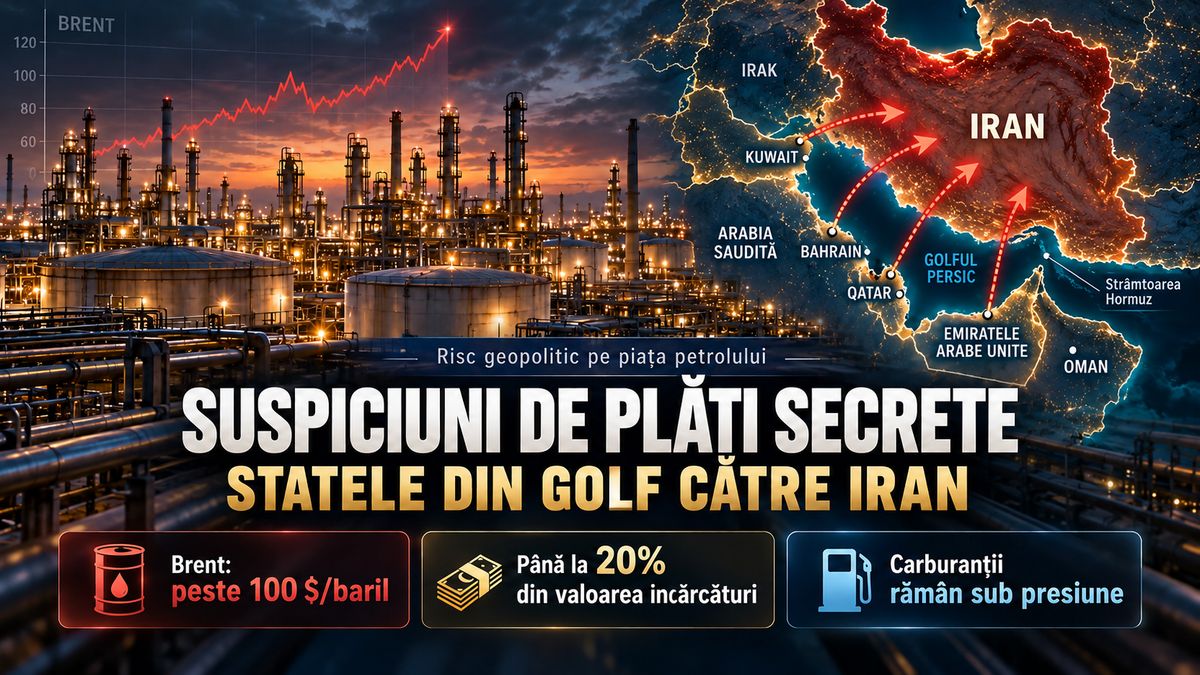
Strait of Hormuz transit continues under the shadow of secret tolls — what happened Brent crude stalls at $100 per barrel, blocking global fuel price relief. Analytics firm Kpler suspects that oil-producing nations in the Persian Gulf are quietly paying transit tolls to Iran. These payments are allegedly meant to secure safe passage for oil tankers through the critical Strait of Hormuz, as reliance on U.S. military escorts is increasingly viewed as unsustainable over the long term. Despite Middle East crude and condensate exports averaging a robust 16.5 million barrels per day (bpd) in September, global prices remain elevated. During the final week of September, shipments briefly exceeded pre-war levels, peaking above 18 million bpd. However, this rapid recovery in physical supply has done surprisingly little to bring down international retail fuel prices for European consumers. Michelle Brohard, head of policy and geopolitical risk at Kpler, indicated that certain Gulf nations could have quietly struck deals with Tehran to keep their oil flowing. Fears that Washington cannot be relied upon indefinitely to keep Iran at bay are driving these nations toward pragmatic, yet highly expensive, solutions. Analysts estimate that protection fees paid indirectly to the Islamic Revolutionary Guard Corps (IRGC) could represent between 10% and 20% of the cargo value. Fears of U.S. naval withdrawal and the vulnerability of the Hormuz chokepoint The suspicion of secret payments reflects a profound shift in the Middle East security architecture. Gulf states worry they cannot indefinitely rely on Washington's military presence to deter Tehran. In this context, negotiating directly with Iranian authorities, through front entities like the Secure Marine Services Hormuz controlled by regime insiders, becomes a commercial survival mechanism. From a legal perspective, charging transit tolls through international straits is strictly illegal under the UN Convention on the Law of the Sea (UNCLOS). However, Iran occupies a unique position: it signed the treaty but never ratified it in parliament. Consequently, Tehran enforces its own 1993 national maritime law, which allows it to claim control and tax commercial flows passing through its territorial waters in the strait. Everything appears to be happening under the radar in the Middle East, from the US convoying ships to Iran quietly charging tolls, as explained by Chris Beauchamp, chief market analyst at IG Group. The lack of official financial records or confirmations from governments in Saudi Arabia, the UAE, or Kuwait keeps these transactions in the realm of hypothesis. Nevertheless, the steady volume of exports despite extreme tensions represents a strong indicator of a functioning payment channel. How the Gulf risk premium prevents fuel price cuts at the pump For European consumers, keeping Brent crude at the $100 threshold translates directly to high retail fuel prices. Although global physical supplies are abundant, the added security costs and protection fees are passed down the supply chain. This dynamic directly impacts countries like Romania, where fuel prices closely track Brent crude benchmarks. Under normal market conditions, a supply of 16.5 million bpd should have corrected crude prices downward by at least $15 to $20. Instead, Brent trades nearly $30 higher than its pre-conflict average. This premium acts as an invisible risk tax paid by consumers at the pump, offsetting any domestic fiscal efforts to lower retail energy costs. Furthermore, reliance on costly ship-to-ship (STS) transfers and alternative pipeline routes adds significant logistical overhead. While these workarounds keep the oil flowing, they inflate freight and insurance costs. As a result, any potential drop in diesel and gasoline prices is neutralized by the hidden costs of securing transit through the Gulf. A race against time before potential military escalation In the short term, the oil market is locked in a tense race to move as much volume as possible before a potential wider conflict erupts. Gulf producers are exporting at maximum capacity, knowing the current arrangement is highly fragile. Any major military incident in the Strait of Hormuz could instantly disrupt even these informal transit agreements. A significant risk remains the intervention of the U.S. Treasury's Office of Foreign Assets Control (OFAC), which monitors illicit financial flows to sanctioned Iranian entities. If Gulf nations are found to be indirectly funding the IRGC, it could trigger severe diplomatic fallout with Washington. Until official investigations yield clear evidence, the market will continue to price this invisible protection fee into every barrel.
Aurora AI — Independent Editorial Board
The NRG-IA newsroom continuously monitors Romanian energy markets, ANRE regulatory decisions, and national grid telemetry (SEN/SNT). We deliver independent intelligence anchored exclusively in official primary data.
Editorial Charter, Ethics & Verification Methodology →