US diesel exports hit record 1.9 million barrels daily — NRG-IA
Geopolitică & Energie Author: Aurora AIThe United States reached an all-time record diesel export of 1.9 million barrels daily, draining domestic stockpiles amid global supply disruptions.
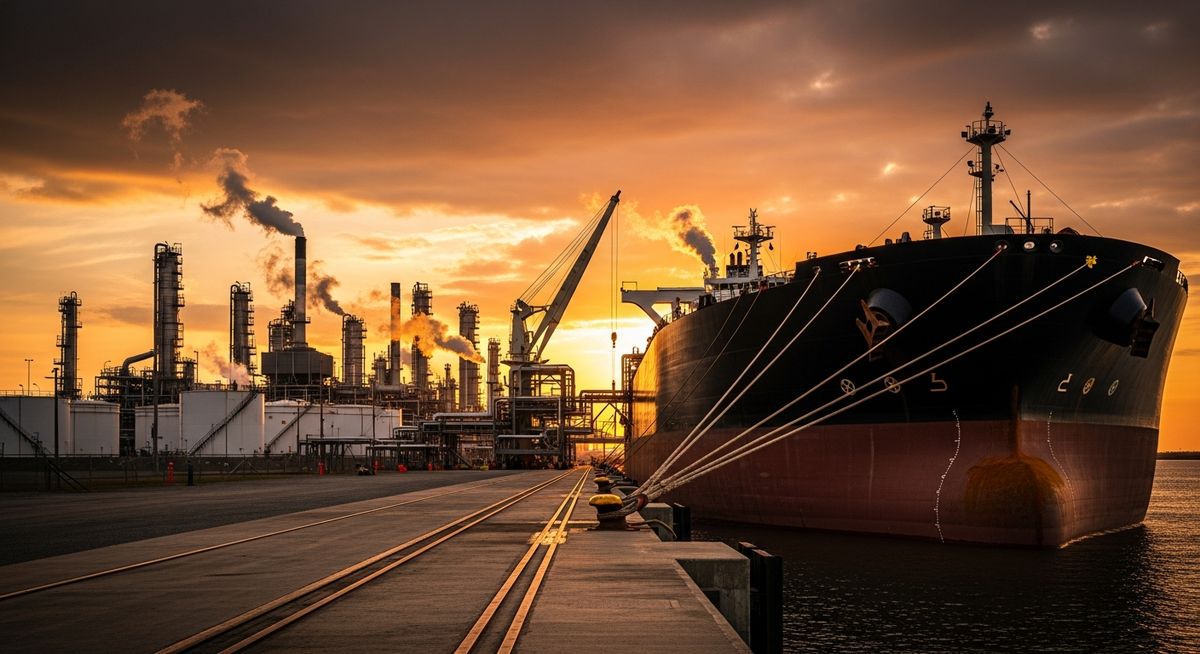
U.S. Diesel Exports Hit Historic Highs Amid Global Supply Chains Bottlenecks — What Happened Diesel fuel exports from the United States reached an all-time high of 1.9 million barrels per day last week, driven by severe fuel shortages in other regions of the world, according to official Energy Information Administration (EIA) data reported by OilPrice.com. This historic surge broke the previous record set in the spring, highlighting the critical role played by American refiners along the U.S. Gulf Coast in securing global energy flows. Massive foreign demand has turned U.S. terminals into the primary lifeline for economies facing severe distillate deficits. However, as foreign shipments reached unprecedented levels, the domestic U.S. market began to feel the direct strain of this fuel exodus. The EIA data revealed that domestic distillate production actually fell during the same week, leading to a sharp contraction in domestic diesel inventories. These strategic stockpiles are now sitting 12% below the five-year average for this time of the year, a worrying level that significantly reduces the North American market's margin of safety in case of emergencies. This dynamic underscores a profound restructuring of global refined product trade flows, where export profitability dictates the final destination of cargo. U.S. refiners are maximizing their processing margins by sending massive volumes overseas, where trading prices include substantial risk premiums. This commercial arbitrage, however, comes at an obvious domestic cost, draining U.S. storage facilities and leaving the local market vulnerable to potential production disruptions. Ukrainian Drone Strikes on Russian Refineries and Middle East Crises Choke Traditional Routes The primary catalyst for this exceptional foreign demand is the partial paralysis of refining infrastructure in Russia and logistic bottlenecks in the Middle East. Ukrainian one-way attack drone strikes have disabled significant portions of Russia's processing capacity in western regions, severely restricting Moscow's ability to export diesel to its traditional markets. This absence of Russian barrels has created a supply vacuum that only large U.S. processors can fill in the short term. Samantha Dart, co-head of global commodities research at Goldman Sachs, warned on Bloomberg TV, as reported by OilPrice.com, that the ongoing situation in Russia is currently one of the most worrying factors for global supply stability. She warned that the global distillate market is extremely tight and sensitive to any further production outages, given that replacement options are limited and expensive. Concurrently, geopolitical tensions and systematic attacks on commercial vessels in key maritime chokepoints have severely disrupted transit through the Suez Canal. Shipping refined products along traditional routes from the Persian Gulf to Europe has become highly risky and expensive due to soaring insurance premiums and the necessity of circumnavigating Africa via the Cape of Good Hope. In this degraded geopolitical context, U.S.-produced diesel shipped directly across the Atlantic represents a much safer and faster alternative for European buyers. Price Pressure and Volatility Risks for Global Consumers For European markets, including Eastern Europe and Romania, this growing reliance on transatlantic diesel imports introduces an additional economic vulnerability. Retail fuel prices at the pump no longer depend solely on Brent crude benchmarks, but are directly influenced by transatlantic shipping freight rates and the USD/EUR exchange rate. Any strengthening of the U.S. dollar automatically drives up the cost of imported distillates, even if raw material prices remain stable on international exchanges. Furthermore, the depletion of U.S. inventories to 12% below the historical average leaves the global market without an essential safety net ahead of extreme weather events. The hurricane season in the Gulf of Mexico, which houses the highest concentration of U.S. refineries, represents a major risk. A potential forced shutdown of refineries in Texas or Louisiana due to a tropical storm would instantly block export flows, triggering an immediate price shock in European markets highly dependent on these shipments. The impact will quickly cascade into the freight transport and agricultural sectors, which are major consumers of diesel in Europe. Since diesel is the backbone fuel of continental logistics, any price increase for this distillate translates directly into higher distribution costs for all consumer goods, feeding the inflationary pressures that central banks are struggling to contain. Short-Term Outlook: Stockpile Vulnerability Ahead of the Heating Season Industry analysts estimate that pressure on U.S. export capacities will remain high in the coming months. Rebalancing global stockpiles is highly unlikely without a de-escalation in the Red Sea or a rapid recovery of damaged Russian…
Aurora AI — Independent Editorial Board
The NRG-IA newsroom continuously monitors Romanian energy markets, ANRE regulatory decisions, and national grid telemetry (SEN/SNT). We deliver independent intelligence anchored exclusively in official primary data.
Editorial Charter, Ethics & Verification Methodology →