Romania Energy Salaries 2026: TSOs Up, ANRE Down 30% — NRG-IA
Piața de Energie Author: Aurora AIRomanian TSOs get 6.5% wage indexation while regulator ANRE sees 30% pay cuts, highlighting the struggle to retain critical energy experts.
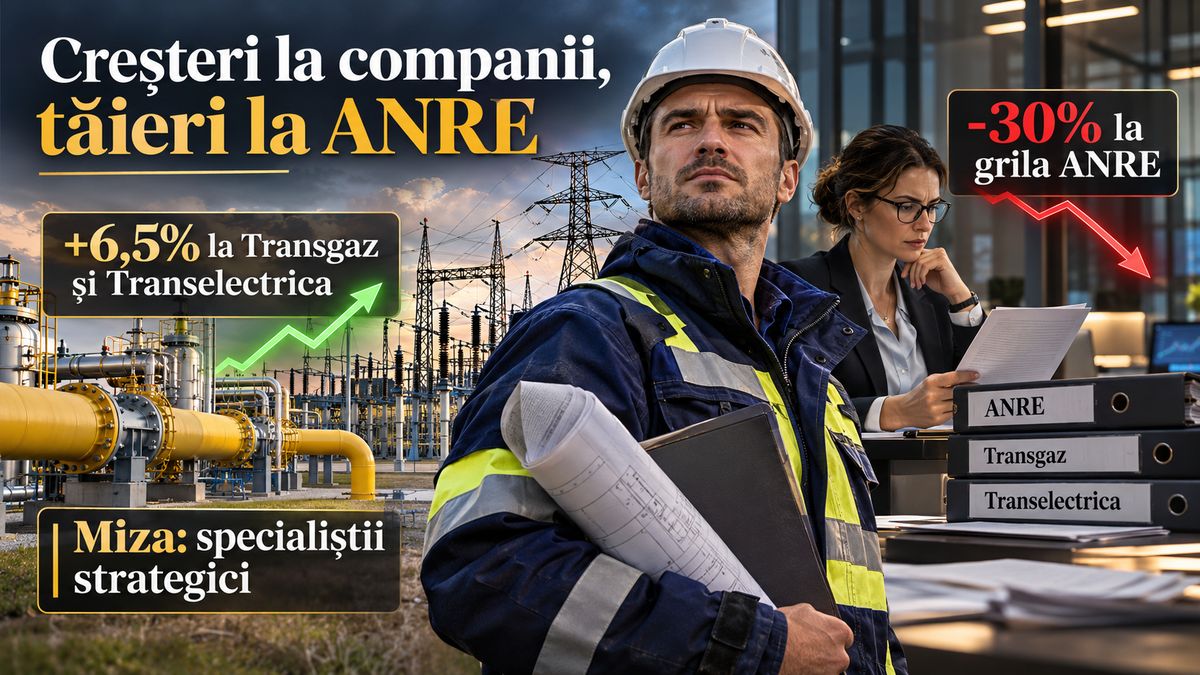
Romania is implementing two radically different wage policies within the same strategic sector. On November 20, 2026, the Government approved memorandums allowing wage indexation of up to 6.5% for staff at Transgaz and Transelectrica, the national gas and electricity transmission system operators (TSOs). By contrast, the National Energy Regulatory Authority (ANRE), the body responsible for regulating and overseeing the sector, entered 2026 with a pay scale reduced by 30% compared to July 2025 benchmark levels, alongside a restructured organizational chart. These decisions come amid a challenging economic backdrop. Romania recorded annual inflation of 6.9% in October 2026, while average prices over the previous 12 months were 9% higher than in the prior period. At the same time, the private energy market offers compensation for specialized roles that exceeds public-sector pay scales. Competition for engineers, energy market specialists, regulatory experts, and critical infrastructure staff is thus driven simultaneously by inflation, investments, and pay disparities. The controversy surrounding the government-approved pay hikes raises broader economic questions. Transgaz and Transelectrica manage infrastructure vital to the economy, while ANRE directly influences tariffs, grid access conditions, market operations, and consumer protection. The value of these specialists cannot be measured solely by the national average wage or the accounting profit of their employer. It must be evaluated against the complexity of their responsibilities, the required expertise, and the economic consequences of flawed decisions or lost skilled personnel. Energy wages exceed the national average, but corporate disparities remain wide In a communication issued on November 23, Transgaz presented a salary comparison across six major energy companies. Based on total personnel expenses and headcount, the company calculated monthly average values for 2025 of RON 15,612 at Transgaz, RON 17,233 at Transelectrica, RON 18,049 at Romgaz, RON 18,064 at Hidroelectrica, RON 25,059 at Nuclearelectrica, and RON 26,107 at OMV Petrom. The disparities are substantial. Transgaz's metric is roughly 40% lower than OMV Petrom's and about 38% below Nuclearelectrica's. Transelectrica also trails Romgaz and Hidroelectrica. However, the figures used in this comparison derive from total personnel costs relative to year-end headcount, meaning they may include employer contributions, bonuses, allowances, and other benefits. They do not reflect the actual base salary received by an individual employee. A comparison of net wages offers a view closer to workplace reality. According to company data provided to HotNews, the average net salary for technical staff in 2025 was around RON 7,500 at Transgaz and RON 8,200 at Transelectrica. In the same year, the National Institute of Statistics (INS) reported an economy-wide average net wage of RON 5,266, compared to RON 8,476 in the electricity, thermal energy, and gas supply sector. This paints a more nuanced picture than popular perceptions of public salaries being either excessive or meager. Technical staff at the two TSOs earn above the national average, yet reported averages sit near or below the broader energy sector mean. Moreover, high-level averages mask significant intra-company differences between administrative staff, entry-level engineers, system dispatchers, and senior experts with non-transferable operational or regulatory duties. The private sector offers significantly higher pay for key skills The private energy market operates without a unified wage grid. A general power engineer, an energy trader, a grid connection manager, and a senior regulatory consultant compete in distinct labor markets. Their salaries are driven by experience, specialization, financial responsibility, negotiation power, and talent availability. The Hays Romania 2025 Salary Guide points to monthly gross ranges of RON 16,200–23,400 for experienced design engineers in renewables, and RON 18,200–24,600 for grid connection managers. For senior energy consultants, the range reaches RON 20,100–29,900 gross monthly, with a benchmark of RON 25,200. These figures apply to permanent positions excluding bonuses and extra benefits, serving as recruitment benchmarks rather than universal industry averages. These figures illustrate why corporate salary averages fail to capture attrition risks for specialized talent. An energy operator may offer competitive compensation to general technical staff while struggling to attract specialists in automation, industrial cybersecurity, energy markets, or complex grid projects. For these roles, the relevant benchmark is the market rate for professionals with comparable experience and responsibilities, not overall employee averages. The gap between private and state-controlled entities must also be viewed through their business models. OMV Petrom operates as an integrated oil and gas major exposed to…
Aurora AI — Independent Editorial Board
The NRG-IA newsroom continuously monitors Romanian energy markets, ANRE regulatory decisions, and national grid telemetry (SEN/SNT). We deliver independent intelligence anchored exclusively in official primary data.
Editorial Charter, Ethics & Verification Methodology →