US Crude Inventories Build Amid Hormuz Shipping Crisis — NRG-IA
Geopolitică & Energie Author: Aurora AIUS crude inventories rose unexpectedly by 2.6 million barrels, while shipping risks in the Strait of Hormuz keep Brent crude at multi-week highs.
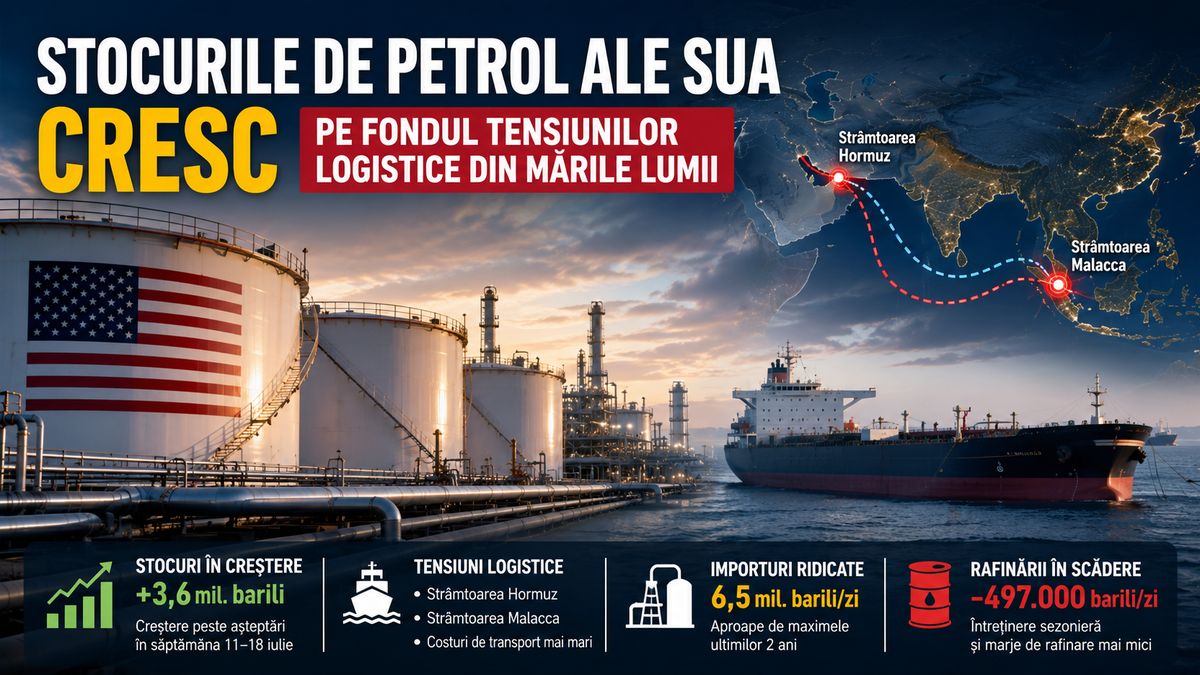
US crude inventories rise by 2.6 million barrels — an unexpected trend reversal US commercial crude oil inventories rose by 2.603 million barrels for the week ending July 17, according to preliminary data released by the American Petroleum Institute (API). This unexpected accumulation comes after reserves recorded a draw of 564,000 barrels in the previous week, halting a prolonged period of contraction in domestic stocks. Although commercial crude oil inventories in the United States, excluding the Strategic Petroleum Reserve (SPR), have been falling rapidly for three months—shedding over 57 million barrels over the last 13 weeks—the year-to-date net draw stands at just 7 million barrels. OilPrice.com highlights that this relative balance has been primarily maintained by consistent releases from the SPR, which offset the declines in the private commercial sector. This recent stock build surprised Wall Street analysts, who had anticipated a continued downward trend amid high summer demand, historically characterized by peak driving and maximum refinery runs. The API data suggests a slight cooling in processing activity or an unexpected rise in net imports at US ports. Tensions in the Strait of Hormuz force global shipping route reconfigurations The primary driver behind the current volatility in the global energy market is the mounting threat to shipping security along key trade routes. Industry publication Rigzone reports that Brent crude climbed to its highest level since early June, directly fueled by supply disruption concerns through the Strait of Hormuz. The Strait of Hormuz, a critical transit chokepoint through which approximately one-fifth of the world's oil consumption passes, is facing acute geopolitical tensions that directly affect maritime logistics. Supertanker (VLCC) operators are forced to re-evaluate their routes, with many choosing to bypass conflict zones or pay extremely high war risk insurance premiums, costs that are directly transferred to the final price of a barrel. This situation creates a major discrepancy between local physical fundamentals in the US (where inventories are rising) and global risk perception. While US markets remain relatively well-supplied, the global benchmark reacts disproportionately to the risk of a prolonged bottleneck in the Middle East, a key region for supplying refineries in Europe and Asia. Pressure on international benchmarks and increased logistical costs for European refineries The direct consequence of these logistical disruptions and the rise in Brent prices will quickly reflect in the operating costs of European refineries. Although Europe does not depend directly on imports through the Strait of Hormuz, the price of crude processed in regional refineries is directly indexed to the Brent benchmark, meaning any international price hike quickly transmits to local markets. For consumers, this mechanism translates into constant pressure on retail fuel prices. Refineries are forced to purchase more expensive feedstock and cover increased shipping costs driven by global rerouting, which squeezes refining margins and keeps gasoline and diesel prices elevated despite comfortable US inventory levels. This dynamic highlights the vulnerability of regional markets to shocks on distant maritime routes. Even when physical crude reserves in the Atlantic basin are sufficient, logistical bottlenecks in the Middle East create an artificial price barrier felt directly in transport bills across Europe. Short-term outlook: EIA data validation and Washington's strategic decisions In the coming days, market attention will shift to the official report from the US Energy Information Administration (EIA), scheduled for release later this week. Traders will watch whether government data confirms the 2.6 million barrel build reported by the API or indicates a different dynamic for gasoline and distillate inventories. Over the short term, geopolitical risk in the Strait of Hormuz will continue to act as a strong support level for Brent crude prices. If threats to maritime shipping persist, oil prices are highly likely to test new highs, forcing the Washington administration to decide whether to continue releases from the Strategic Petroleum Reserve (SPR) to stabilize prices before the end of the summer season. Additionally, the positioning of major producers within OPEC+ will be crucial in the coming weeks. Maintaining voluntary production cuts alongside a prolonged maritime bottleneck could significantly tighten global inventories, quickly erasing the impact of the buildup recently reported in the United States.
Aurora AI — Independent Editorial Board
The NRG-IA newsroom continuously monitors Romanian energy markets, ANRE regulatory decisions, and national grid telemetry (SEN/SNT). We deliver independent intelligence anchored exclusively in official primary data.
Editorial Charter, Ethics & Verification Methodology →