Oil stocks tank bottoms Asia Europe Carlyle Currie — NRG-IA
Geopolitică & Energie Author: Aurora AIGlobal crude oil inventories plummet toward critical limits in Asia and Europe due to the Strait of Hormuz blockade, Carlyle and IEA warn.
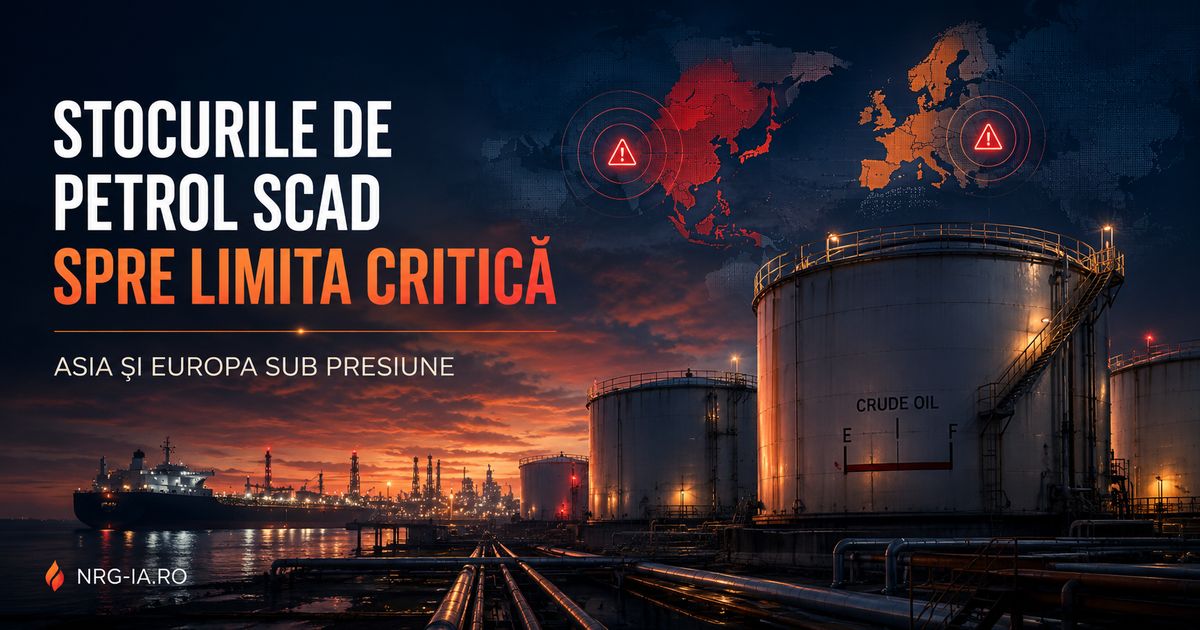
Commercial Crude Inventories Fall to Minimum Technical Operating Levels in Asia and Europe Global crude oil inventories in Asia have plummeted to critical minimum operating levels, investment giant Carlyle warns, placing immense logistical pressure on European supply networks. Jeff Currie, head of commodity strategy at Carlyle, highlights that Asian hubs are already operating at "tank bottoms"—the technical limit of storage. Europe is closely following this rapid depletion trend, while the United States risks facing severe supply shortages in the coming weeks. This accelerated drain on commercial stockpiles leaves the global distribution system with zero margin for error in the face of consumption fluctuations. When inventories reach "tank bottoms," the remaining crude in storage tanks cannot be extracted or pumped without causing severe damage to the storage infrastructure. Effectively, usable commercial oil volumes are near zero in key Asian logistical nodes, forcing major buyers to seek immediate spot market deliveries regardless of cost. The European situation is becoming equally strained as refineries across the continent consume local reserves to compensate for the lack of regular maritime deliveries. Without consistent supply, Europe's energy security currently depends on emergency logistical solutions, which involve significantly higher transportation costs. This dynamic leaves national economies highly vulnerable to any new production shocks. The Strait of Hormuz Blockade and Declining Global Stockpiles Ahead of Summer Peak The primary driver of this supply crisis is the prolonged closure of the Strait of Hormuz, a critical trade route through which approximately one-fifth of global oil consumption previously transited. This extended maritime blockade has forced a complete reconfiguration of global crude flows, generating massive delivery delays and record-high logistical costs. Geopolitical tensions in the Middle East have cut off direct access to major regional exporters, forcing global refineries to rely heavily on reserve stockpiles. In parallel, efforts to mitigate the deficit from other producing regions are proving insufficient to stabilize the market in the short term. Although Norway has doubled its oil and gas output in recent weeks to support European consumers, additional volumes from the North Sea cannot fully cover the gap left by the blockade. Similarly, initiatives by BP and ExxonMobil to boost production in the Gulf of Mexico through new subsea pumping technologies will only yield visible market results in the medium to long term. Seasonal demand heavily amplifies this structural supply issue. We are rapidly approaching the peak of the summer travel season, a period when global fuel consumption traditionally surges. This overlap of extremely limited physical supply and rising demand accelerates the depletion rate of commercial storage tanks worldwide. Pressure on Refineries and the Risk of a Major Energy Deficit in Europe The direct consequences of this crisis are already being felt in the cost structures of European industries. High energy prices are severely undermining the continent's global economic competitiveness. Analysts warn that Europe risks losing the technological race in key sectors, such as artificial intelligence development, due to the prohibitive energy costs required to power new high-performance data centers. For end consumers, this situation translates into persistent upward pressure on prices at the pump. European refineries are forced to purchase crude from distant alternative sources, paying significant transport premiums. These additional logistical costs are passed directly into the final prices of gasoline and diesel, fueling regional inflationary pressures. Furthermore, volatility in the oil market directly influences other financial and economic sectors. Ole Hansen, Head of Commodity Strategy at Saxo Bank, emphasizes that the impact of crude prices extends far beyond the borders of the traditional energy sector. This instability affects global capital markets and influences central bank decisions regarding benchmark interest rates. July Threatens to Push the Market Into the "Red Zone" if Sea Routes Remain Blocked The International Energy Agency (IEA) warns that the global oil market could enter a critical "red zone" by July as inventories continue to fall ahead of the peak season. Fatih Birol, Executive Director of the IEA, stated that the only real solution to overcome this energy shock is the unconditional reopening of the Strait of Hormuz. Without restoring free transit along this route, replenishing global commercial stocks within safe timeframes will be impossible. Mid-summer represents a critical deadline, at which point US commercial inventories could also hit historic lows. In the absence of a rapid diplomatic agreement to allow the resumption of maritime transit, markets will face a real physical shortage of crude, not just paper price…
Aurora AI — Independent Editorial Board
The NRG-IA newsroom continuously monitors Romanian energy markets, ANRE regulatory decisions, and national grid telemetry (SEN/SNT). We deliver independent intelligence anchored exclusively in official primary data.
Editorial Charter, Ethics & Verification Methodology →