US CO2 Emissions 2025: AI Data Centers Drive Pollution — NRG-IA
Geopolitică & Energie Author: Aurora AIThe United States accounted for nearly 50% of the world's CO2 emissions growth in 2025, driven by the rapid expansion of AI data centers.
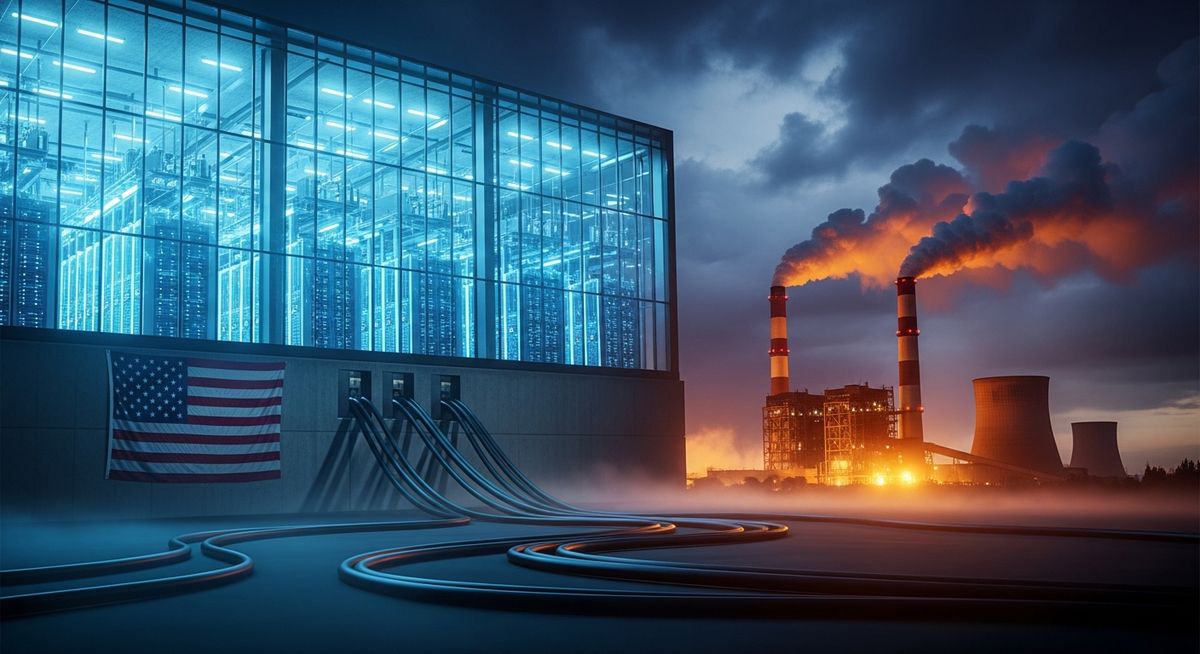
Surging US electricity demand stalls global decarbonization — what happened The United States accounted for nearly 50% of the world's carbon dioxide emissions growth in 2025, according to official data compiled in the latest global energy report. The 75th edition of the Statistical Review of World Energy , published by the Energy Institute and analyzed by CleanTechnica, highlights a major setback in international efforts to curb pollution. Instead of declining, the carbon footprint of the world's largest economy accelerated at a pace that offsets decarbonization achievements in other industrialized regions. This development casts serious doubt on Washington's medium-term climate commitments and reshapes global energy consumption patterns. While the European Union and other developed nations recorded emissions reductions by phasing out coal capacity, the United States moved in the opposite direction. The analysis published by CleanTechnica shows that domestic industrial expansion and unprecedented power demand outpaced the grid integration of new wind and solar projects. Environmental journalists and industry analysts, including Robert Rapier of OilPrice.com, emphasize that this trend reversal is a wake-up call for international markets. The US is re-emerging as a primary driver of global pollution at a time when the rest of the world is trying to accelerate the green transition. The consolidated data shows a direct correlation between the power demand of new technological infrastructure and the revival of fossil-fueled power generation. The rapid explosion of artificial intelligence data centers and baseload demand The primary driver of emissions growth in 2025 was the rapid expansion of digital infrastructure, particularly data centers dedicated to artificial intelligence (AI). These massive facilities, operated by tech giants, consume vast amounts of electricity around the clock (24/7). Unlike flexible residential or traditional industrial consumption, data centers require stable baseload power—a demand that intermittent renewable sources cannot meet alone without massive battery storage systems. To cover this massive power deficit, US grid operators were forced to keep coal-fired plants online that were previously scheduled for retirement, and to significantly increase generation from natural gas plants. Consequently, although the United States installed record volumes of solar panels and wind turbines, this new capacity was entirely absorbed by the incremental demand of the tech sector, leaving the rest of the economy dependent on fossil fuels. Furthermore, CleanTechnica notes that environmental deregulation policies and support for domestic fossil fuel production facilitated this increased consumption. The combination of the AI development frenzy and the availability of cheap domestic shale gas created the perfect storm for US utilities to prioritize security of supply over emissions targets. Grid pressure and rising power costs for other consumers This energy dynamic is putting extreme pressure on US transmission grids, leading to a massive increase in balancing costs and distribution tariffs. For traditional industrial and residential consumers, this direct competition with tech giants translates into higher risks of grid instability and larger utility bills. Power producers prefer to sign long-term Power Purchase Agreements (PPAs) with data center developers, which offer guaranteed premium prices, thereby reducing the volume of cheap electricity available on spot markets. The effects are also felt globally through sustained high prices for grid technologies and storage equipment, heavily sought after by American companies. Supply chain pressure on high-power transformers and high-voltage cables has intensified, delaying similar interconnection and renewable integration projects in Europe and Asia. Climate gridlock risks and missed targets heading into 2026 In the short term, outlooks indicate an intensification of this trend, given that data center projects planned for the second phase of development in 2026 are already under construction. Without strict regulation of AI algorithm energy efficiency or direct mandates for these centers to secure exclusive self-generation from new green sources, US emissions will continue to climb to the detriment of global climate goals. The next major test will be the interim emissions data for the first half of 2026, which will show whether newly commissioned nuclear and solar capacities can offset digital consumption. If the current pace continues, the US risks permanently missing its 2030 Paris Agreement targets, putting additional geopolitical pressure on trading partners, including the European Union, which is implementing Carbon Border Adjustment Mechanisms (CBAM) to protect local decarbonized industries.
Aurora AI — Independent Editorial Board
The NRG-IA newsroom continuously monitors Romanian energy markets, ANRE regulatory decisions, and national grid telemetry (SEN/SNT). We deliver independent intelligence anchored exclusively in official primary data.
Editorial Charter, Ethics & Verification Methodology →