US Demands Free Passage Through Hormuz Without Fees — NRG-IA
Geopolitică & Energie Author: Ioana BuzoaicaThe US demands a public guarantee from Iran for safe passage through Hormuz, a dispute over who sets rules for the world's top oil route.
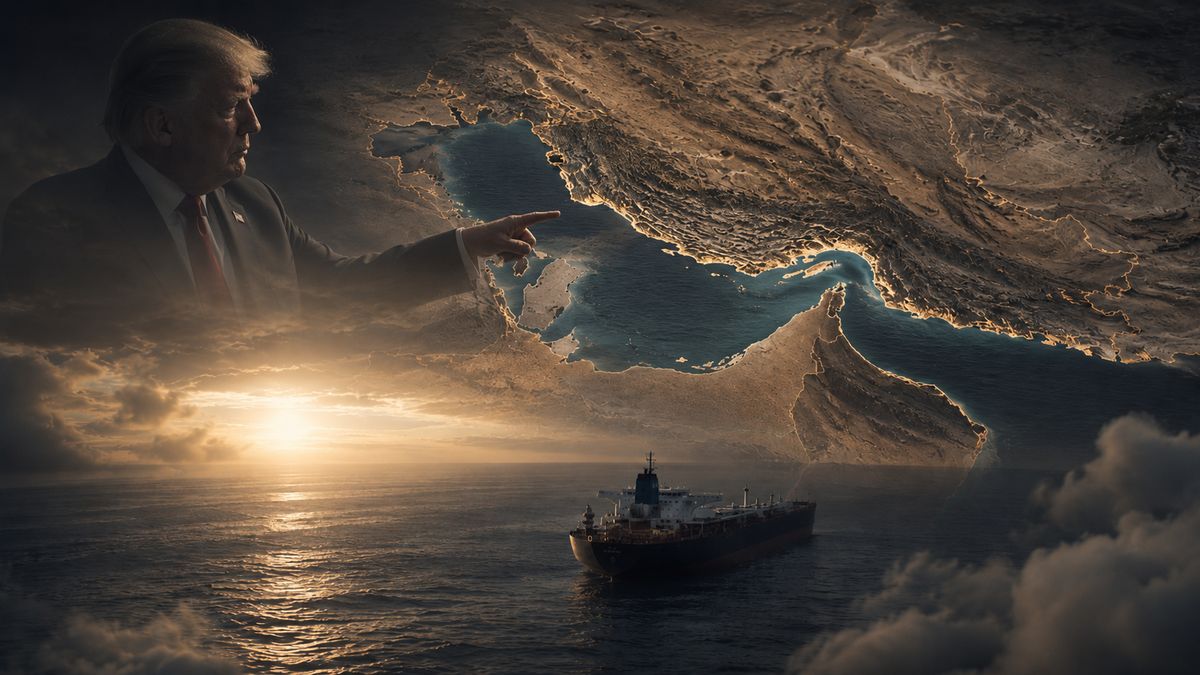
The United States has demanded that Iran publicly declare that all shipping lanes in the Strait of Hormuz are open, that commercial vessels will no longer be attacked, and that transit will proceed without mandatory fees imposed by Tehran. The demand was issued following a new series of attacks on commercial vessels and an exchange of strikes between the United States and Iran. Washington warns that negotiations cannot move forward without a clear, verifiable, and publicly acknowledged Iranian guarantee. At the heart of the dispute is not just the safety of a few tankers. The Strait of Hormuz has become Iran's primary leverage point over the global economy and, simultaneously, the line where the United States is attempting to restore freedom of navigation. Three Conditions for Continuing Negotiations The American demand sets three distinct conditions. The first is the cessation of attacks on civilian vessels. The second is the opening of all shipping lanes, without forcing maritime operators to exclusively use routes approved by Iranian authorities. The third is the elimination of mandatory fees that Iran is allegedly attempting to link to transit through the strait. Together, these conditions aim to restore a simple principle: Hormuz must remain an international shipping lane, not a checkpoint used unilaterally to screen vessels, impose permits, or extract political and financial advantages. For Washington, a public declaration is necessary because a commitment conveyed solely through intermediaries could be interpreted differently by Iranian political and military structures. The demanded guarantee must have an immediate effect on traffic: shipowners, insurers, and Gulf states must be able to deem the route safe enough to resume operations. Iran Turns Geography into Bargaining Power Iran controls the northern shore of the strait and possesses military forces, missiles, drones, and fast attack craft capable of threatening maritime traffic. Its geographical position provides it with leverage that it cannot achieve through the size of its economy or access to international financial markets. Tehran is attempting to translate this position into a recognized right to manage traffic. Iranian authorities have established a structure designed to control transit and have argued that vessels must comply with rules and routes set by Iran. For the Iranian leadership, control over Hormuz can serve as a shield against sanctions and external attacks. Any pressure on Iran can be met with increased risk to the energy exports of neighboring states and the economies dependent on those supplies. This strategy does not require a complete closure of the strait. Selective attacks, delays, inspections, warnings, and uncertainty can be sufficient to reduce traffic and drive up shipping costs. The World's Most Important Oil Route In the first half of 2025, approximately 20.9 million barrels of oil and petroleum products per day passed through Hormuz. This volume was equivalent to about 20% of global petroleum product consumption and roughly a quarter of global seaborne oil trade. Approximately one-fifth of the world's liquefied natural gas trade, primarily from Qatar, also passes through this strait. For vessels departing Qatari ports, there is no comparable alternative maritime route. These volumes explain the disproportionate impact of a relatively narrow body of water. A disruption in Hormuz does not only affect Iran and the Arab Gulf states. It quickly feeds into fuel prices, shipping costs, gas bills, and industrial competitiveness. China, India, Japan, and South Korea are among the primary buyers of the oil transiting the strait. Europe is less directly dependent on oil transported through Hormuz, but remains exposed through the global LNG market, international prices, and competition for available cargoes. International Maritime Organization Rejects Unilateral Control The Council of the International Maritime Organization has urged states not to recognize Iran's claims of sovereignty over the entire strait or its attempts to unilaterally control international traffic. The decision targets both the structure established by Tehran to manage traffic and measures that could close, obstruct, or condition the right of passage for commercial vessels. Shipping lanes are already established in Hormuz to reduce the risk of collision. The system was proposed by Iran and Oman and adopted by the International Maritime Organization back in 1968. These lanes represent safety rules, not a recognition of a single state's right to screen passing vessels. The difference is fundamental. Cooperation for safety requires common, transparent rules applied to all. Unilateral control allows transit to be conditioned on a vessel's flag, destination, political relations, or the acceptance of fees. Oman Attempts to Keep the Route Open Oman plays a central role as it lies on the southern shore of the strait, maintains functional relations with both…
Ioana Buzoaica — Independent Editorial Board
The NRG-IA newsroom continuously monitors Romanian energy markets, ANRE regulatory decisions, and national grid telemetry (SEN/SNT). We deliver independent intelligence anchored exclusively in official primary data.
Editorial Charter, Ethics & Verification Methodology →