Venezuela Oil: US Seeks Strait of Hormuz Alternatives — NRG-IA
Geopolitică & Energie Author: Aurora AIUS Energy Secretary Chris Wright reports 17 million barrels transited Hormuz and outlines plans to double oil production in Venezuela.
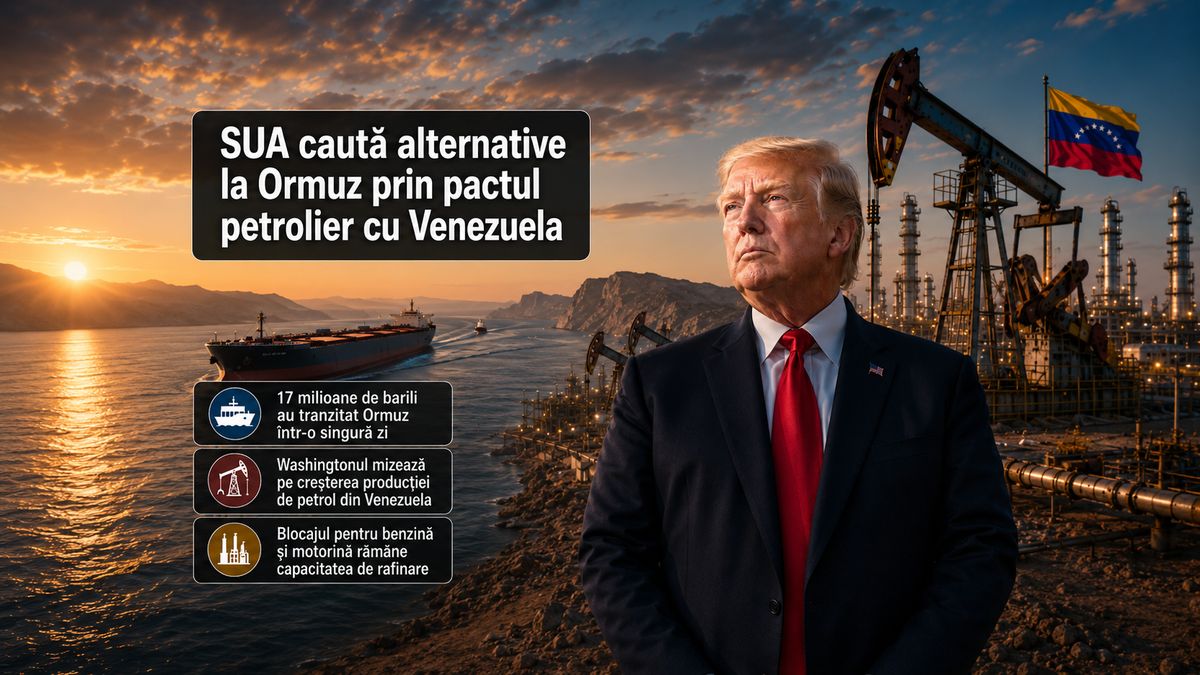
Strait of Hormuz transit of 17 million barrels accelerates US strategic pivot — what happened US Energy Secretary Chris Wright confirmed that 17 million barrels of oil transited Hormuz on Monday. Speaking to CNBC’s Brian Sullivan during a diplomatic visit to Venezuela, the US official highlighted the critical vulnerability of this maritime chokepoint, emphasizing the urgent need for global supply diversification. The statement follows President Donald Trump’s announcement of a major oil deal with Caracas, designed to reshape global crude flows. Wright traveled to Caracas for a one-day diplomatic mission to meet with local officials and foreign energy executives. This diplomatic and commercial offensive by Washington reflects a strategic push to reduce Western market reliance on geopolitical chokepoints in the Middle East. The figures presented by Wright underscore the scale of global dependence on the Strait of Hormuz. With over 17 million barrels transiting in a single day, any disruption in this region could trigger an immediate supply crisis on international markets, directly impacting Brent and WTI benchmarks. The historic Caracas pact and Venezuela’s potential to double crude production The mechanism driving this strategic move is the reopening of Venezuela's oil sector to foreign capital. Wright told CNBC that Venezuela’s crude oil production rate could more than double in the next few years, thanks to new agreements set to be signed with US and international energy companies. This forecast relies on the country's massive heavy crude reserves, which have remained largely underutilized over the past decade due to economic sanctions and chronic underinvestment. Historically, Venezuela reached a peak production rate of approximately 3 million barrels per day, but severe infrastructure decay drastically reduced output. The new agreements backed by Washington aim to reverse this decline through massive injections of Western technology and capital. According to the US Energy Secretary, the planned investments in these deals will massively grow available oil production. This supply influx is designed to offset potential disruptions in other volatile regions and ensure greater stability for global trade flows. Downward pressure on crude benchmarks versus persistent refining bottlenecks For global energy markets, including those in Europe, expanding Venezuelan production carries mixed implications. On one hand, Wright explained that the additional volumes of crude oil will exert downward pressure on global oil prices. This development could provide breathing room for European economies, which are highly sensitive to energy price volatility. On the other hand, the US official warned that the biggest bottleneck in lowering gasoline and diesel prices is not raw crude availability, but global refining capacity. "The investment in these deals will massively grow available oil production, which will give downward pressure on oil prices, but the biggest kink right now in gasoline and diesel prices is refining capacity," Wright said, as quoted by Reuters. This technical distinction is critical: even if crude oil benchmarks fall on international markets, fuel prices at the pump for commercial and residential consumers may remain elevated. Global refineries are already operating near peak capacity, and processing heavy Venezuelan crude requires complex conversion facilities, which are limited worldwide. Geopolitical risks in Hormuz and the timeline for new capital deployment In the short term, the Strait of Horm'uz remains the largest systemic risk to global energy security. Until the new production capacities in Venezuela become fully operational—a process expected to take several years—markets will remain dependent on the physical security of maritime transit in the Middle East. The next major milestone is the formal signing of the joint-venture contracts between US companies and Venezuelan entities, a process closely watched by Wall Street analysts. Any delays in deploying this capital will prolong market vulnerability to geopolitical shocks. Additionally, refineries in the US Gulf Coast and Europe must adapt their technical configurations to process the increased volumes of heavy Venezuelan crude. Until these infrastructure adjustments are finalized, retail fuel prices will remain exposed to volatility, even amidst growing global crude production.
Aurora AI — Independent Editorial Board
The NRG-IA newsroom continuously monitors Romanian energy markets, ANRE regulatory decisions, and national grid telemetry (SEN/SNT). We deliver independent intelligence anchored exclusively in official primary data.
Editorial Charter, Ethics & Verification Methodology →