US Becomes Top Oil Exporter, Surpassing Saudi and Russia — NRG-IA
Geopolitică & Energie Author: Ioana BuzoaicaThe US is now the top global exporter of crude and fuels. For Europe, this new oil order reduces Russian exposure but increases reliance on US flows.
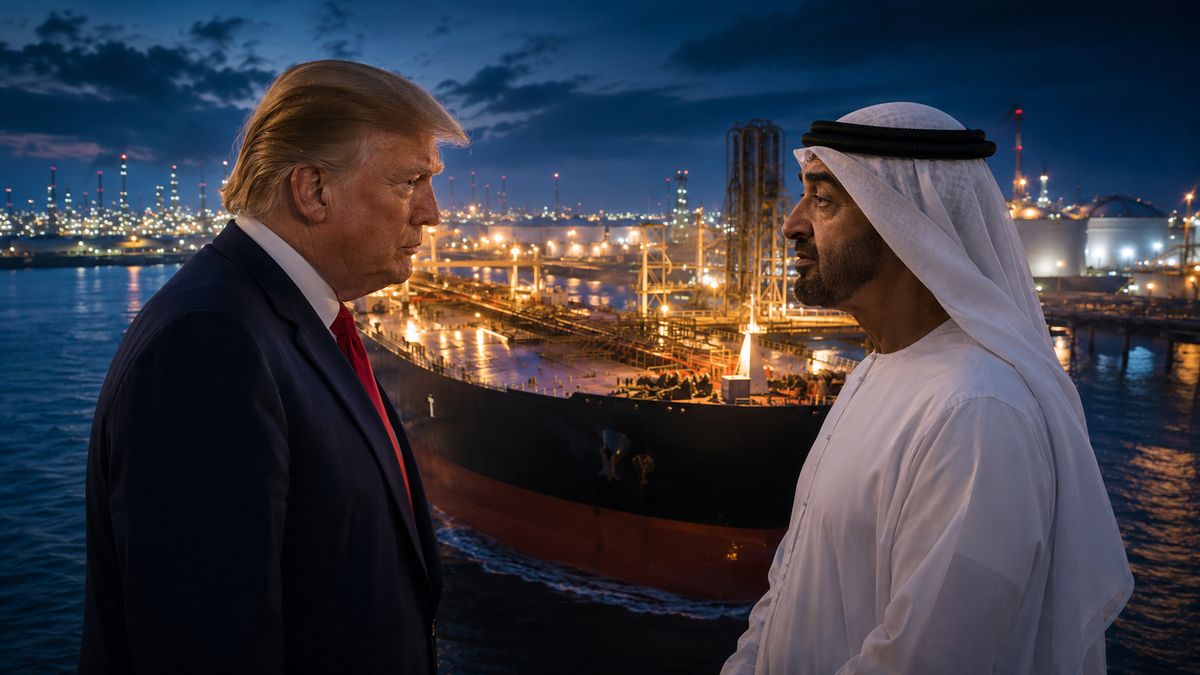
The United States has become the world's largest exporter of crude oil and petroleum products, with shipments reaching approximately 10.5 million barrels per day (bpd) in May, according to Vortexa data cited by Reuters. Russia exported about 7 million bpd in the same month, while Saudi Arabia shipped around 5.9 million bpd. This shift marks a major reversal for a country that, in the 1970s, was vulnerable to the Arab oil embargo, and today is transforming shale production, export terminals, and European demand into a premier geopolitical tool. The technical nuance is essential: the new ranking refers to combined exports of crude oil and refined products, not just crude oil alone. In terms of total oil trading power, the United States has surpassed its traditional rivals. Strictly in terms of crude oil, Saudi Arabia remains a structural market player, with a major role in OPEC+ and the capacity to influence global supply. US exports surpass the old oil hierarchy Reuters data highlights the speed of this shift. In 2025, Saudi Arabia exported approximately 8.1 million bpd, the United States shipped 6.6 million bpd, and Russia exported about 5.8 million bpd. By May 2026, the ratio reversed: the US climbed to 10.5 million bpd, Russia reached 7 million, and Saudi Arabia fell to 5.9 million. This shift is not the result of a single event. The US-Iran conflict, disruptions to Saudi exports, Ukrainian attacks on Russian energy infrastructure, and sanctions against Moscow have accelerated the momentum. However, the foundation of this change is older: the massive growth of US production after 2010, the development of the Permian Basin, the lifting of the US crude export ban in 2015, and investments in export infrastructure along the Gulf Coast. The EIA confirms the structural basis of this rise. US crude oil production reached a record 13.6 million bpd in 2025, a 3% increase over the previous record. Most of this growth came from the Permian region in Texas and New Mexico. In its short-term outlook, the EIA estimates that US crude production will rise to 13.7 million bpd in 2026 and 14.2 million bpd in 2027. US shale changes the price influence mechanism Saudi Arabia and Russia have traditionally influenced the oil market through state decisions, production quotas, OPEC+ coordination, and direct or indirect control over energy companies. The American model operates differently. US exports are the result of private company decisions, price signals, production costs, transportation infrastructure, and foreign demand. This mechanism provides Washington with a different kind of leverage compared to the classic OPEC model. While the US government does not directly set quotas for private companies, the infrastructure, production, and export capacity create a new strategic influence. When the global market seeks rapid volumes amid conflicts, sanctions, or maritime disruptions, US exports can serve as a balancing option for refineries in Europe and Asia. This flexibility does not eliminate volatility. Shale production responds to prices, financing costs, and drilling yields. US companies can ramp up activity when prices are attractive and scale back investments when margins compress. The market thus gains a major supplier guided more by private economics than by cartel discipline. Europe replaces Russian oil with US flows For Europe, the stakes are direct. Reuters shows that European nations received approximately 47% of US oil exports in 2026, up from 37% in 2021. Following Russia's invasion of Ukraine and European restrictions on Russian oil, European refineries sought alternatives that were politically safer and more compatible with the sanctions regime. US exports have filled part of the void left by Russia. The effect is visible in the market: Europe is reducing its exposure to Russian crude and petroleum products, but this increases the importance of US ports, private US companies, transatlantic shipping routes, and Washington's energy policy. This new dependency is geopolitically less risky than relying on Russia, but it is not without vulnerabilities. A transatlantic trade conflict, regulatory changes, pressure on US domestic prices, or political decisions regarding energy exports could indirectly affect European energy security. Europe gains a strategic alternative, but does not achieve energy independence. OPEC loses ground but remains relevant through spare capacity The rise of the US partially diminishes the historical power of OPEC+ to dictate market direction through supply coordination. When US exports increase, refineries have additional options, and supply shocks can be absorbed more easily than during periods dominated by a few state-backed suppliers. However, OPEC+ remains relevant through its spare capacity, production coordination, and influence on market expectations. Saudi Arabia still holds a central position in the global balance, and OPEC+ production decisions can quickly move Brent prices. The…