US presses for Russian gas transit restart via Ukraine — NRG-IA
Geopolitică & Energie Author: Ioana BuzoaicaThe US is pushing to resume Russian gas flows via Ukraine to curb €100/MWh prices, sparking a clash with the EU while Romania relies on 88.5% storage.
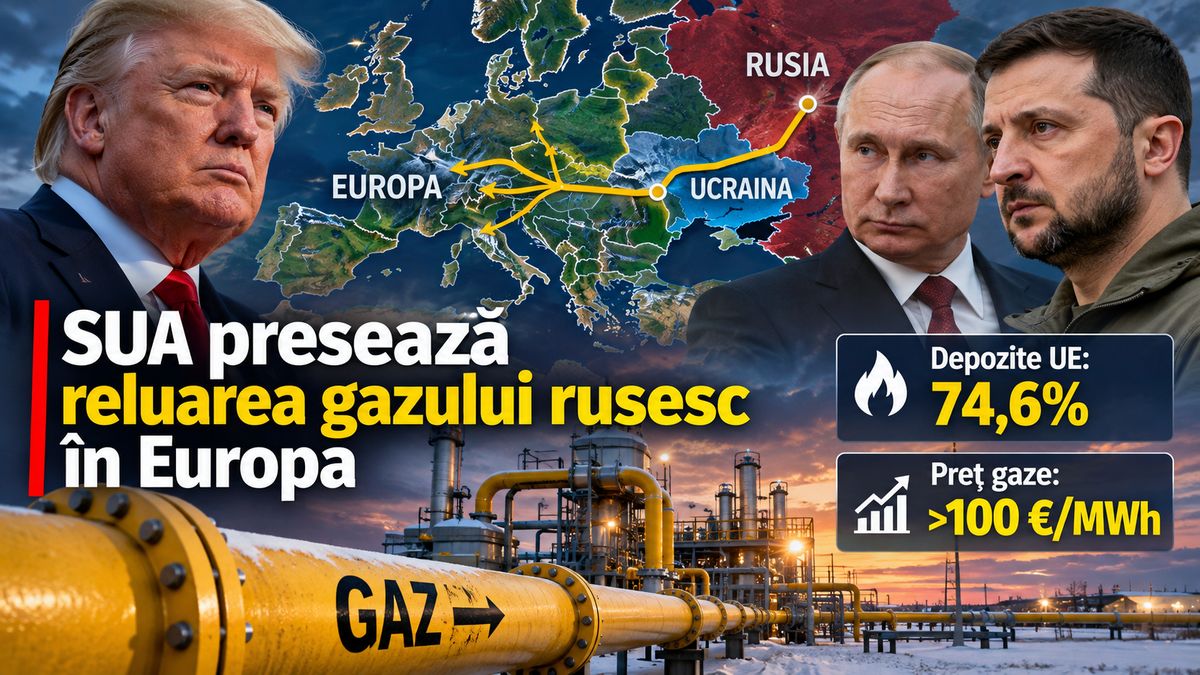
The United States administration is exerting diplomatic pressure on Kyiv and Moscow to rapidly resume Russian natural gas exports to Europe through Ukraine's trunk pipeline network, viewing it as a central pillar of a winter energy armistice. The initiative, put forward by US envoys Steve Witkoff and Jared Kushner following talks in Moscow and Kyiv and disclosed on November 2 by The Wall Street Journal and Reuters, comes at a time of severe vulnerability for the European market. Europe entered the heating season on November 1 with underground storage facilities filled to just 74.62% capacity and wholesale prices breaching the €100/MWh mark in late October. The White House's push marks a radical paradigm shift from the past four years, during which Washington acted as the primary opponent of Russian pipelines to the continent and became its largest alternative supplier via liquefied natural gas (LNG) shipments. In the autumn of 2026, however, the geoeconomic calculus of Donald Trump's administration was upended by the global shock caused by the Middle East war and the maritime transport bottleneck in the Strait of Hormuz, which simultaneously drove crude oil above $100/barrel and European gas above €100/MWh. To curb global energy inflation ahead of peak winter demand, US negotiators are seeking the immediate market injection of the only massive volumes of gas that can reach Europe in days without ships or regasification terminals: Russian pipeline gas. The US proposal has triggered a head-on collision between Washington's transactional pragmatism and the European Union's energy security architecture. While US envoys attempt to broker a cessation of reciprocal attacks on energy infrastructure between Russia and Ukraine and the reopening of transit halted on January 1, 2025, the European Commission views a potential return of Russian molecules as a direct threat to the REPowerEU plan, which aims to phase out fossil fuel reliance on the Russian Federation entirely by 2027. Washington's military leverage and Kyiv's financial dilemma The negotiations led by Steve Witkoff and Jared Kushner directly tie the resumption of gas transit to halting military strikes on energy infrastructure in both countries. Under the architecture proposed by the US side, Russia would cease bombardments of Ukraine's power grid, power plants, and gas storage sites before the freeze sets in, while Kyiv would have to stop drone attacks on Russian refineries, storage depots, and oil terminals—strikes that have exacerbated the global diesel and crude supply deficit in recent months. To persuade authorities in Kyiv to accept this package, the US administration has deployed two major levers of pressure and incentives. On one hand, US officials warned Ukraine that Washington could suspend the PURL (Prioritized Ukraine Requirements List) mechanism—the critical program through which allies fund the prioritized acquisition of American weaponry for the Ukrainian front—if strikes on Russian energy infrastructure continue. On the other hand, restarting the trunk pipelines is framed as an immediate source of revenue for Ukraine's war budget through the collection of transit fees, which, prior to the halt of flows on January 1, 2025, brought Kyiv between $800 million and $1.2 billion annually for volumes of around 14–15 billion cubic meters per year. This conditionality leaves the Ukrainian government facing an extraordinarily difficult strategic decision. The transit shutdown at the start of 2025, following the expiration of the five-year contract between Naftogaz and Gazprom, was pursued by Kyiv precisely to deprive Moscow of billions of euros in annual revenue from gas sales to the European market. However, the prospect of facing winter without protection for its own power grid, coupled with the risk of blocked ammunition and air defense deliveries via the PURL mechanism, shifts the cost balance for Kyiv. How the Strait of Hormuz bottleneck drained Europe's gas reserves The urgency with which the White House is pushing to reopen the Ukrainian route is highlighted by physical gas market figures as the 2026–2027 winter begins. According to official data compiled by Gas Infrastructure Europe (GIE / AGSI+), as of the benchmark date of November 1, 2026, underground storage facilities across the European Union reached an average fill level of just 74.62%. This is more than 15 percentage points below the European safety target of 90% and represents the lowest buffer reserve with which the bloc has entered the cold season since the 2021 crisis. The direct cause of this storage deficit lies thousands of kilometers away in the Persian Gulf. After abandoning the bulk of Russian pipeline gas, Europe built its energy stability around massive LNG imports, leaving itself directly exposed to shocks in the global maritime market. The escalating war involving the US, Israel, and Iran, along with navigation disruptions in the Strait of Hormuz—a route handling…
Ioana Buzoaica — Independent Editorial Board
The NRG-IA newsroom continuously monitors Romanian energy markets, ANRE regulatory decisions, and national grid telemetry (SEN/SNT). We deliver independent intelligence anchored exclusively in official primary data.
Editorial Charter, Ethics & Verification Methodology →