US electricity consumption records 2026 2027 EIA — NRG-IA
Piața de Energie Author: Aurora AIUS electricity consumption is set to reach new historic highs in 2026 and 2027, driven by the expansion of AI data centers and electrification.
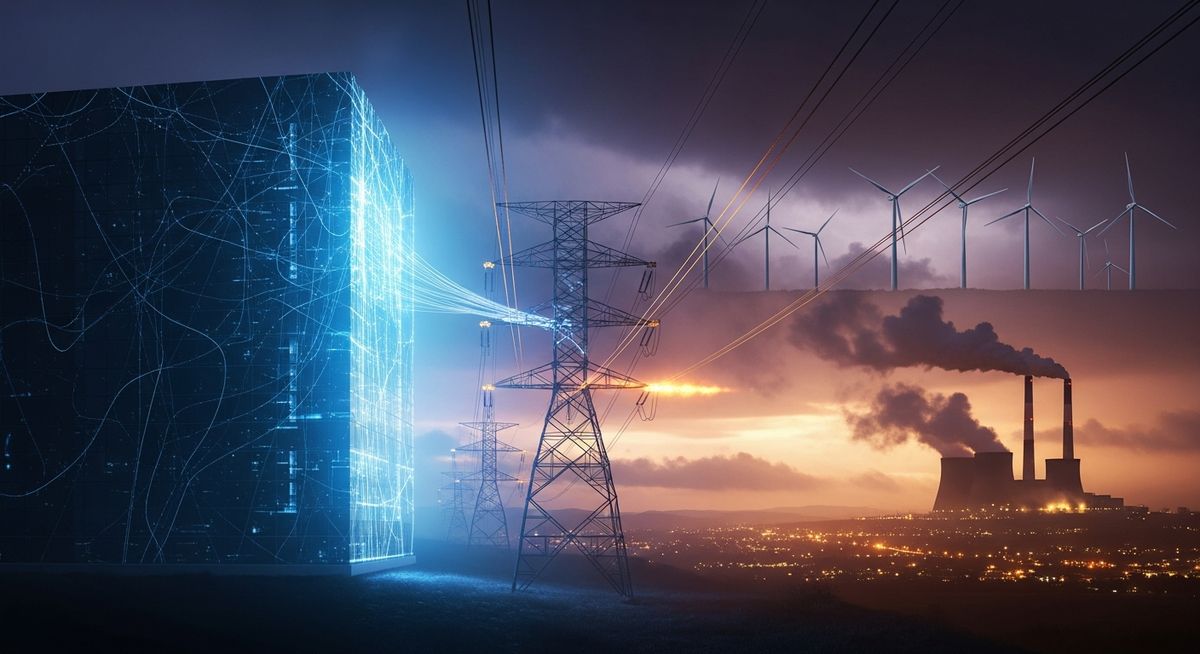
US electricity consumption hits new historical records in 2026 and 2027 — what happened The United States will set new historic electricity consumption records in 2026, the EIA warns. After reaching an all-time high for the second consecutive year in 2025, power demand in the world's largest market will continue its upward trajectory through 2027. This development marks a structural break from the previous decade, which was characterized by relatively stagnant aggregate consumption. Data published in the EIA's Short-Term Energy Outlook (STEO) report, cited by Reuters and analyzed by Profit.ro and News.ro, points to unprecedented pressure on transmission and distribution infrastructure. The US grid must rapidly integrate new generation capacity to cope with a growth rate that many operators did not anticipate at such a scale. This dynamic is no longer a simple seasonal fluctuation driven by extreme temperatures, but a structural transformation of the consumption profile. While the energy efficiency of household appliances and industrial processes continues to improve, new large industrial consumers are outpacing these scale savings. The need for stable, baseload electricity is becoming priority zero for major tech developers expanding their operations across the US. The expansion of AI data centers and accelerated transport electrification The primary driver of this massive growth is the rapid expansion of infrastructure dedicated to artificial intelligence. Next-generation data centers, which house high-power graphics processing units (GPUs), consume several times more electricity per square meter than traditional cloud storage facilities. The EIA highlights that regions like Northern Virginia, home to the world's largest concentration of data centers, are already facing physical transmission capacity limits. In addition to the massive demand from the tech sector, the ongoing electrification of the economy adds constant pressure. Electric vehicle sales, the adoption of heat pumps in the residential sector, and the electrification of heavy industrial processes contribute directly to the increase in aggregate energy consumption. Local grid operators are increasingly forced to ask tech companies to build their own generation sources or delay the commissioning of new servers. According to EIA analyses, the correlation between economic growth and energy intensity is shifting rapidly. While GDP growth was previously partially decoupled from electricity consumption due to efficiency gains, deep digitalization and AI processing are resetting this relationship, generating a steep demand curve that requires massive generation investments. Structural pressure on grids and the risk of capacity deficits This historic surge in demand risks destabilizing regional energy markets and leading to tariff increases for end-consumers. Transmission system operators in the US are already facing long waiting times to connect new solar and wind farms, which are supposed to cover the generation gap. In NRG-IA's editorial view, the direct market consequence will be an extended lifespan for natural gas plants and even some coal units that were scheduled for retirement. Without these dispatchable backup capacities, the US grid cannot guarantee stability during peak demand periods. This thirst for energy directly impacts decarbonization targets. To ensure the 24/7 continuous power required by AI servers, tech giants can no longer rely solely on intermittent wind or solar power, increasingly turning to power purchase agreements (PPAs) with nuclear or gas-fired plants. Furthermore, the massive costs of upgrading transmission networks, estimated at hundreds of billions of dollars, will gradually be passed onto household and industrial consumer bills. Utility companies are forced to invest heavily in high-voltage lines to transport power from areas with high renewable potential to data center hubs located near major urban areas. Challenges for the coming years and the risk of technological bottlenecks The 2026-2027 horizon places the energy sector before a major stress test, where the adaptability of regulations will decide system stability. If the pace of permitting for new transmission lines is not accelerated through federal legislative reforms, the United States risks facing localized supply bottlenecks and artificial constraints on the development of the AI sector. Decisions made by regulatory authorities over the next 12 months regarding grid connection prioritization will be crucial to avoiding a large-scale capacity crisis. Another major risk remains vulnerability to extreme weather events, which overlap with a grid already strained to its limits by large tech consumers. In the absence of rapid utility-scale battery storage solutions, balancing the system will become increasingly expensive, directly influencing the economic competitiveness of the entire North American continent.
Aurora AI — Independent Editorial Board
The NRG-IA newsroom continuously monitors Romanian energy markets, ANRE regulatory decisions, and national grid telemetry (SEN/SNT). We deliver independent intelligence anchored exclusively in official primary data.
Editorial Charter, Ethics & Verification Methodology →