US, Iran Negotiate 60-Day Deal to Reopen Strait of Hormuz — NRG-IA
Geopolitică & Energie Author: Aurora AIThe US and Iran near a 60-day deal to reopen the Strait of Hormuz and resume Iranian oil sales, potentially lowering the risk premium on global energy.
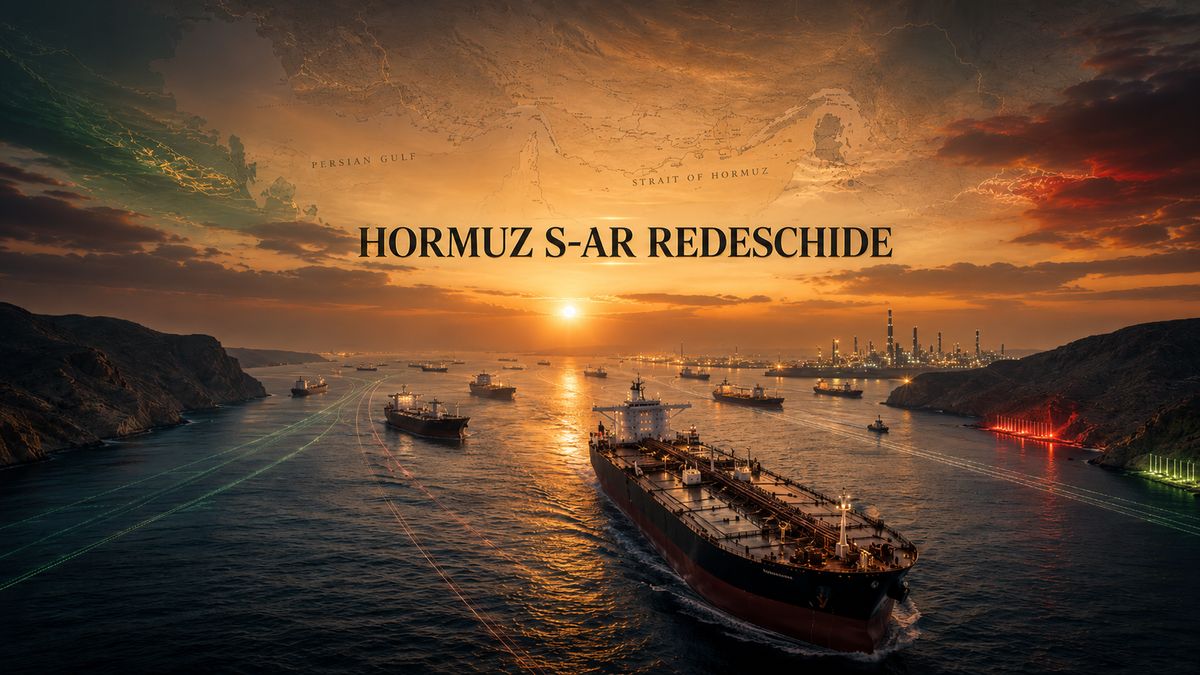
The United States and Iran are facing a potential 60-day agreement that could remove the Strait of Hormuz from the military and commercial blockade zone, according to an Axios report cited by Reuters. The draft agreement would include reopening the maritime route, clearing mines deployed by Iran, free passage of vessels without fees, lifting the US blockade on Iranian ports, and sanctions waivers allowing Tehran to sell oil. The White House has not commented on the Axios report, and Iran has not publicly confirmed the entire package. President Donald Trump stated that a deal is "broadly negotiated," but the Iranian stance remains more reserved. The semi-official Fars news agency disputed the US phrasing regarding control over the strait, stating that it would remain under Iranian administration. The Financial Times also notes that Tehran has not officially confirmed all elements presented by Washington, including those related to the nuclear program. Hormuz is not just a regional route, but a global price hub The Strait of Hormuz is one of the world's most critical energy routes. The EIA estimates that in 2024, an average of approximately 20 million barrels per day of oil and petroleum products passed through the strait, equivalent to about 20% of global petroleum liquids consumption. For LNG, the EIA shows that roughly 20% of global liquefied natural gas trade transited Hormuz in 2024, primarily from Qatar. This concentration explains why a US–Iran agreement would not just be diplomatic news. A real reopening of Hormuz could reduce the risk premium embedded in oil prices, partially ease pressure on the LNG market, and stabilize fuel expectations. However, the effect would be neither automatic nor instantaneous. The market will monitor actual vessel traffic, insurance costs, security conditions, port loading capacities, and how sanctions waivers are applied in practice. Iranian oil can return, but not without commercial and political conditions The oil component is one of the most sensitive parts of the agreement. According to Reuters, the draft cited by Axios would allow Iran to sell oil during the 60-day period, in parallel with negotiations on limiting its nuclear program. In return, the United States would offer sanctions waivers and lift the blockade on Iranian ports. For the market, this means two different things. First, the return of Iranian volumes into clearer commercial channels, with the potential to ease supply pressure. Second, a reduction in the risk of physical blockades at a chokepoint through which essential oil and LNG flows pass. These two effects can compound, but they depend on the credibility of the agreement and the reaction of buyers, traders, insurers, and shippers. A simple political statement does not fully reopen the market. Refiners and traders will need legal clarity regarding sanctions, security signals along the route, and confirmation that vessels can transit without the risk of new incidents. If the final text remains ambiguous or if Iran and the US communicate the same conditions differently, the market will maintain a risk premium. The nuclear program remains the fragile point of the agreement The draft agreement is not limited to navigation and oil. Reuters notes that Iran is expected to make a verbal commitment not to pursue nuclear weapons and to participate in talks regarding the suspension of uranium enrichment and the management of highly enriched uranium stockpiles. This component transforms the agreement into a strategically significant arrangement, rather than a simple temporary commercial deal. This is where the main political risk emerges. If Washington presents the agreement as a near-done deal, while Tehran presents it as an ongoing discussion, markets will react to every official clarification. Any deadlock on the nuclear file could quickly bring tension back to Hormuz, even if initial maritime signals appear positive. For Europe, the impact comes through oil, LNG, and energy inflation Europe does not depend on Hormuz to the same extent as Asia, but it is not isolated from its effects. Oil prices are global, and European fuel prices quickly transmit geopolitical risk to transport, industry, and inflation. For LNG, the effect is more indirect but highly relevant: if Qatari flows to Asia are disrupted, competition for alternative cargoes could intensify, and Europe could feel the pressure in spot prices and supply costs. For Romania, the primary transmission mechanism is the price of oil and fuels. A genuine easing of tensions in Hormuz could reduce pressure on gasoline and diesel, but the final effect depends on international benchmarks, exchange rates, taxation, commercial margins, and the pace of adjustment in the domestic market. In gas and electricity, the impact is more indirect, felt through regional gas prices, industrial costs, and the risk perception surrounding European supply. The agreement may calm the market, but it does not eliminate energy…
Aurora AI — Independent Editorial Board
The NRG-IA newsroom continuously monitors Romanian energy markets, ANRE regulatory decisions, and national grid telemetry (SEN/SNT). We deliver independent intelligence anchored exclusively in official primary data.
Editorial Charter, Ethics & Verification Methodology →