US, Russia Discuss Return of Gas via Nord Stream – Reuters — NRG-IA
Geopolitică & Energie Author: Ioana BuzoaicaUS and Russia explore bringing US investors into Nord Stream to resume gas exports to Europe, despite EU bans and major political hurdles.
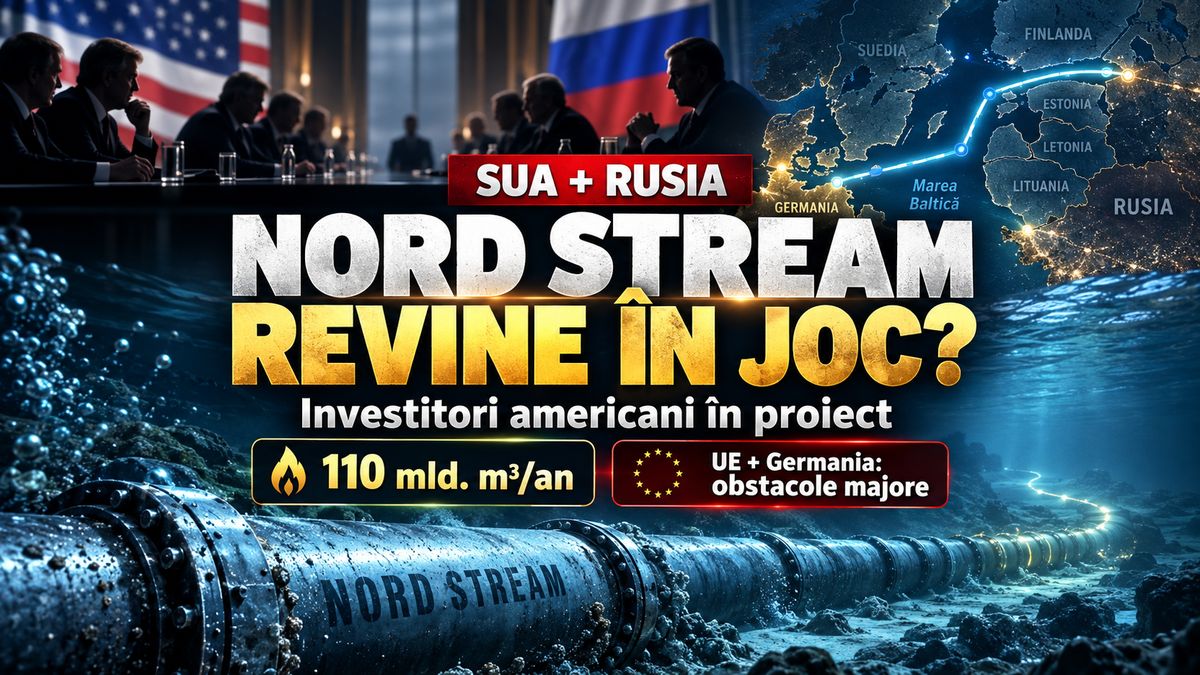
The United States and Russia are exploring a potential return of Russian gas to Europe via the Nord Stream pipelines, under an arrangement that would allow US investors to enter the project and share in the revenues generated by potential future deliveries. The discussions involve Jared Kushner, US envoy and son-in-law of President Donald Trump, and Kirill Dmitriev, an economic representative close to Vladimir Putin, according to an investigation published by Reuters on October 8, 2026. The information, obtained by the agency from five sources familiar with the matter, points to a potential major shift in energy relations between Washington and Moscow. An infrastructure built to transport Russian gas directly to Germany—which became a symbol of the energy rift between Russia and Europe following the invasion of Ukraine—could be included in an economic agreement with US participation. The prospect is all the more significant given that the European Union has already banned transactions related to the use of Nord Stream and adopted legislation to phase out Russian gas imports. Germany, the primary commercial beneficiary of the project prior to 2022, opposes reopening the pipelines. The talks are in an exploratory stage. Reuters did not identify a finalized investment agreement, a designated US buyer, or a timeline for resuming shipments. A White House representative denied the existence of recent discussions regarding Nord Stream, while other sources confirmed that the possibility of a transaction remains on the agenda of US-Russian contacts. US Investors Could Share in Revenues Generated by Russian Gas According to Reuters, Kushner and Dmitriev discussed the possibility of involving US capital in Nord Stream within the context of broader negotiations to end the war in Ukraine and develop economic relations between the United States and Russia. Kushner is promoting the idea that joint commercial projects and the prospect of future economic gains can help sustain a peace agreement. This approach would allow assets affected by sanctions and conflict to be transformed into investments that generate revenue for both US and Russian participants. Under such an arrangement, US investors could acquire equity in the companies that own or operate the infrastructure, earning revenues from gas transmission activities. The exact structure of any potential transaction, the targeted stakes, and the financial terms have not been made public. Kushner and Dmitriev have met in recent weeks in Moscow and New York. Reuters notes that the extent of the discussions specifically dedicated to Nord Stream during these meetings remains unclear. White House representatives indicated that any potential economic agreements with Russia would need to be negotiated with the involvement of the U.S. International Development Finance Corporation (DFC), a federal development finance institution, and the Department of the Treasury. A condition expressed by the US administration is that such transactions must yield benefits for US companies and taxpayers. Kirill Dmitriev has long supported the resumption of energy trade relations between Russia and Germany. In September, he held contacts with representatives of the US Departments of Energy and the Treasury to discuss potential joint economic initiatives. The prospect of introducing US capital into a project previously dominated by Gazprom would alter the economic structure of an infrastructure of strategic importance for Europe's supply. Nord Stream Has a Designed Capacity of 110 Billion Cubic Meters Annually Nord Stream represents one of the largest natural gas transmission projects built between Russia and the European Union. The system comprises two distinct projects, Nord Stream 1 and Nord Stream 2, each consisting of two subsea pipelines through the Baltic Sea between Russia and Germany. Each project has a nominal transport capacity of 55 billion cubic meters annually, resulting in a total design capacity of 110 billion cubic meters per year. Nord Stream 1 entered service between 2011 and 2012, becoming one of the primary routes for transporting Russian gas to Germany and European markets connected to the German grid. Nord Stream 2 was completed in 2021 but never entered commercial operation. Germany suspended the certification process in February 2022, prior to the launch of Russia's full-scale invasion of Ukraine. On September 26, 2022, underwater explosions in the Baltic Sea severely damaged the Nord Stream infrastructure. Three of the four pipelines suffered ruptures, while one of the Nord Stream 2 pipelines remained unruptured (avoiding gas leaks), although external damage was identified. This latter pipeline has a nominal design capacity of approximately 27.5 billion cubic meters annually and represents the portion of the infrastructure with the most obvious technical potential for reactivation. However, bringing it back into service would require technical integrity assessments,…
Ioana Buzoaica — Independent Editorial Board
The NRG-IA newsroom continuously monitors Romanian energy markets, ANRE regulatory decisions, and national grid telemetry (SEN/SNT). We deliver independent intelligence anchored exclusively in official primary data.
Editorial Charter, Ethics & Verification Methodology →