Rosneft's Syzran Refinery Offline After Drone Attack — NRG-IA
Geopolitică & Energie Author: Ioana BuzoaicaRosneft's Syzran refinery halted operations after a May 21 drone strike, shifting the focus of Ukrainian attacks to Russia's domestic fuel production.
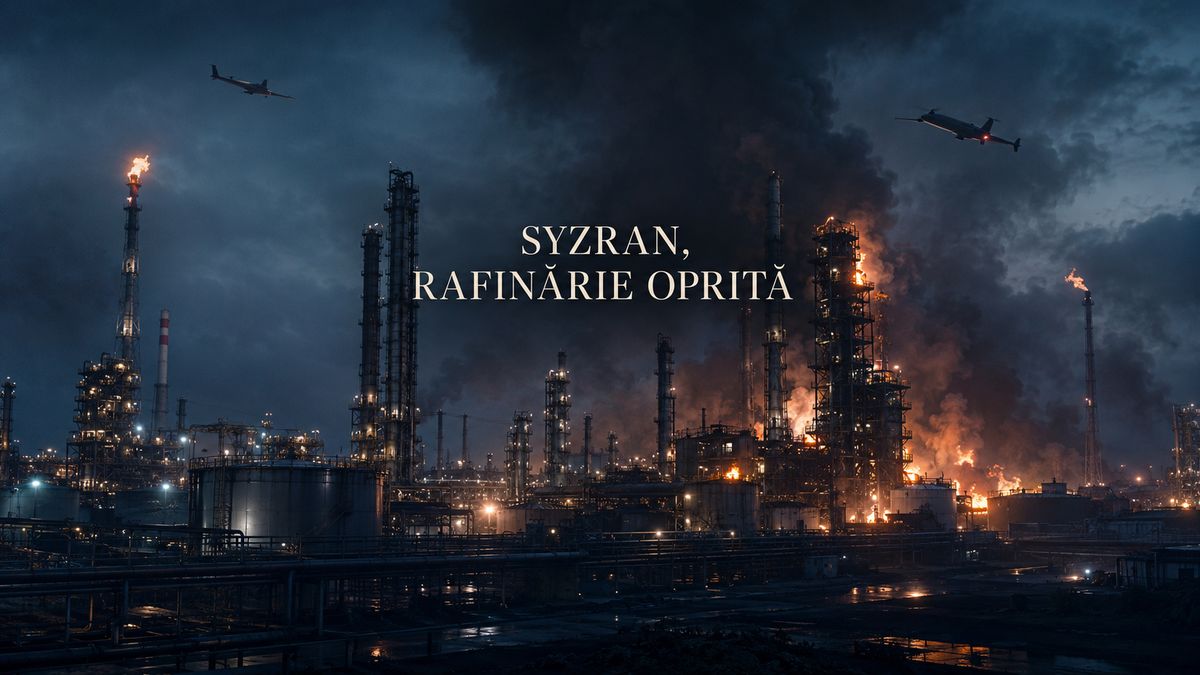
The Russian Syzran refinery, owned by Rosneft and located on the Volga River in the Samara region, has halted operations following a Ukrainian drone attack on May 21, according to Reuters, citing two industry sources. The sources indicated that the attack damaged the CDU-6 crude distillation unit, which accounts for over 70% of the refinery's capacity, and repairs could take more than a month. The refinery's nameplate capacity is 8.5 million tonnes per year, equivalent to approximately 170,000 barrels per day, according to Reuters. Rosneft did not immediately respond to a request for comment from the news agency. The attack hits the unit keeping the refinery running The critical element is not just that the refinery was hit, but the type of facility affected. CDU-6 is a primary distillation unit, meaning it is one of the core installations through which crude oil enters the refining process. If this unit is offline, the refinery does not just lose a secondary component, but a central part of its technological flow. This explains why the shutdown carries more weight than an isolated incident. Damage to a unit covering over 70% of capacity directly limits the production of petroleum products, not just logistics or storage. In energy terms, the attack targets conversion infrastructure: the crude oil exists, but the capacity to transform it into fuels becomes vulnerable. Syzran is a key fuel refinery, not just a symbolic target Rosneft describes Syzran as part of the Samara refining group, with a distillation capacity of 8.5 million tonnes per year, producing motor fuels, aviation fuel, bitumen, and other petroleum products. The company also notes the presence of conversion and treatment facilities such as catalytic reforming, hydrotreating, mild hydrocracking, catalytic and thermal cracking, isomerization, and bitumen production. Reuters data shows that in 2024, the Syzran refinery processed 4.3 million tonnes of crude oil and produced approximately 800,000 tonnes of gasoline, 1.5 million tonnes of diesel, and 700,000 tonnes of fuel oil. These figures demonstrate that the impact is not limited to an isolated industrial asset but directly affects Russia's overall petroleum product balance. Refining becomes a systematic target The attack on Syzran is part of a broader campaign against Russian energy infrastructure. Reuters reported that Ukraine has intensified its attacks on Russian energy facilities in recent months, amid stalled peace talks and ongoing Russian strikes on Ukrainian energy infrastructure. In the case of Syzran, Ukraine claimed to have hit the Rosneft refinery in the Samara region, located more than 800 kilometers from the border. Ukrainian unmanned systems forces claimed the attack caused a major fire, and commander Robert Brovdi stated that Syzran was the 11th Russian refinery targeted by Ukraine in May. This sequence alters the energy risk profile. Attacks on refineries target areas that are harder to compensate for quickly than localized transport disruptions: primary equipment, distillation units, and conversion facilities have long repair times, depend on specialized industrial components, and can reduce fuel production even if crude oil supply continues uninterrupted. Pressure shifts to gasoline and diesel Reuters previously reported that nearly all major refineries in central Russia have been forced to halt or reduce fuel production following Ukrainian attacks. The cumulative capacity of the affected refineries exceeds 83 million tonnes per year, representing approximately a quarter of Russia's total refining capacity. The same Reuters data indicates that the affected refineries account for over 30% of Russian gasoline production and about 25% of diesel production. Moscow had already introduced a ban on gasoline exports from April until the end of July, a sign that pressure on the domestic fuel market was being treated as an operational risk even before the damage to Syzran was confirmed. In this context, the Syzran shutdown should not be viewed as an isolated incident. It is part of a chain of vulnerabilities that could reduce the availability of petroleum products, force domestic fuel reallocations, and diminish Russia's flexibility between the domestic market and exports. The energy war enters the refineries For Russia, crude oil exports remain essential, but refining is where crude becomes usable fuel for the economy, transport, the military, and petroleum product exports. Striking refineries puts pressure on this conversion link. For Ukraine, the logic of these attacks differs from traditional sanctions. Financial and trade sanctions limit access to markets, technology, and revenues. Attacks on refineries can physically reduce processing capacity, at least temporarily. The effect depends on the extent of the damage, repair times, and Russia's ability to redirect crude flows to other refineries. For the international market, the direct effect may be more limited than in the case of a…
Ioana Buzoaica — Independent Editorial Board
The NRG-IA newsroom continuously monitors Romanian energy markets, ANRE regulatory decisions, and national grid telemetry (SEN/SNT). We deliver independent intelligence anchored exclusively in official primary data.
Editorial Charter, Ethics & Verification Methodology →