Tesla and NatPower sign 25 GWh BESS deal in Italy and UK — NRG-IA
Energie Regenerabilă Author: Ioana BuzoaicaNatPower and Tesla sign a deal for 25+ GWh of BESS in Italy and the UK, shifting batteries from renewable support to integrated commercial infrastructure.
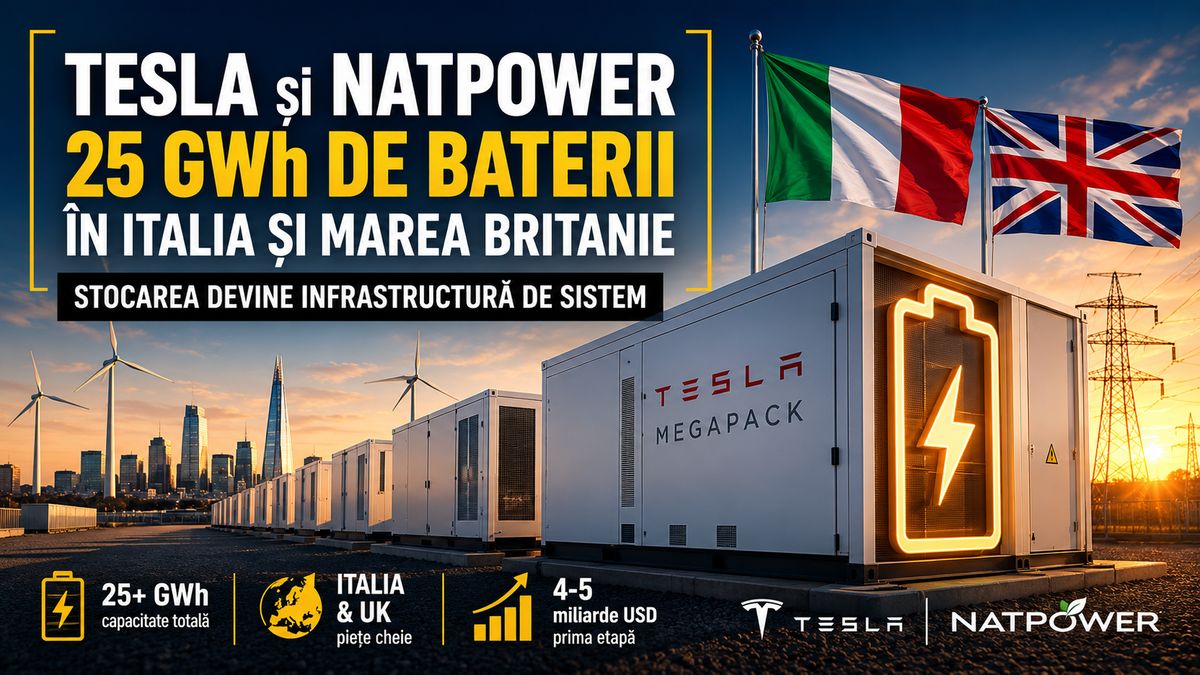
NatPower and Tesla have signed a multi-year agreement to develop over 25 GWh of battery energy storage systems (BESS) in Europe, with projects located in Italy and the UK. The program marks one of the largest European moves in the BESS sector and confirms a shift in the scale of storage: batteries are no longer treated merely as add-ons to solar or wind farms, but as commercial infrastructure capable of participating in balancing, arbitrage, and grid services. The agreement covers the deployment of Tesla Megapack systems, alongside engineering, procurement, and construction (EPC) services, as well as trading services through the Autobidder platform. The projects will be owned and operated by NatPower, while Tesla will provide the technology, execution, and commercial optimization component for the batteries. Reuters notes that the first phase includes five projects and has an estimated cost of between $4 billion and $5 billion. The battery becomes a market asset, not just equipment The key element of the agreement is not just the 25 GWh capacity, but the integration of multiple components into a single commercial model. Tesla is not merely delivering Megapack equipment; it is also entering the EPC and trading space. Autobidder, Tesla's optimization platform, manages when the battery buys, stores, and sells energy, based on prices and system needs. This structure changes the economics of storage projects. A large-scale battery does not generate energy, but it can shift energy from low-price hours to high-price hours, reduce pressure during peak consumption, and participate in balancing services. In markets with high solar and wind penetration, the value of the battery comes from flexibility, not generation. Energy Storage News points to the same agreement structure: over 25 GWh of BESS in Italy and the UK, Tesla Megapacks, EPC services, and trading services via Autobidder, with the projects owned and operated by NatPower. Italy and the UK become key markets for storage The choice of Italy and the UK is no coincidence. Both markets require flexibility to integrate renewables, reduce congestion, and support balancing during hours when wind or solar generation fluctuates rapidly. In the UK, storage is already linked to grid decarbonization targets and the need to manage large volumes of wind energy. NatPower had previously announced significant ambitions in the British market, including the development of a large portfolio of battery projects, in a system where grid connection times and capacity remain major constraints. In Italy, storage is becoming critical for absorbing solar energy and narrowing the gap between daytime generation and evening consumption. ESS News mentions that the first phase includes projects in Italy and the UK, including a site at Priolo in Sicily, as part of a European NatPower program targeting over 100 GWh of total capacity. From 25 GWh to over 100 GWh The announced 25 GWh represents the first phase of a broader program. Reuters quotes the companies stating that the program could exceed 100 GWh of storage capacity, with potential revenues of over $15 billion over 20 years. This projection should be read as a long-term commercial estimate rather than guaranteed revenue. It depends on project execution, grid connections, regulations, pricing, ancillary services, and the willingness of markets to remunerate flexibility. The statement by NatPower CEO Fabrizio Zago highlights the industrial stakes of the agreement: the sector has access to technology and capital but struggles to deliver infrastructure at the required pace. The model with Tesla aims to align capital, execution, and commercial operation in a structure that can be replicated across multiple markets. This logic is important for Europe. Large-scale batteries are no longer just isolated technical projects, but assets that must be financed, built, connected, operated, and optimized in complex markets. Without this integration, many projects remain stuck between permits, grid connections, revenue volatility, and the lack of clear remuneration mechanisms. The implications for Romania For Romania, the Tesla–NatPower agreement is relevant because of the market direction it signals, rather than any immediate direct impact. Romania is already experiencing rapid growth in solar generation, and the gap between hours of photovoltaic surplus and peak hours is becoming increasingly significant. In such a system, storage is no longer a technological accessory, but a prerequisite for flexibility. Romania has battery projects announced or under development, but the local market is still in its formative stages. The lesson from the Tesla–NatPower agreement is that storage becomes bankable when technology, construction, grid connection, and commercial revenues are integrated into a coherent model. Otherwise, capacity installed on paper does not translate quickly enough into functional infrastructure. For the National Power System (SEN),…
Ioana Buzoaica — Independent Editorial Board
The NRG-IA newsroom continuously monitors Romanian energy markets, ANRE regulatory decisions, and national grid telemetry (SEN/SNT). We deliver independent intelligence anchored exclusively in official primary data.
Editorial Charter, Ethics & Verification Methodology →