Oil Returns via Hormuz, but Brent Remains Above $100 — NRG-IA
Geopolitică & Energie Author: Ioana BuzoaicaMiddle East oil returns via Hormuz and Saudi bypass routes, but Brent stays above $100/bbl as risks of further supply disruptions persist.
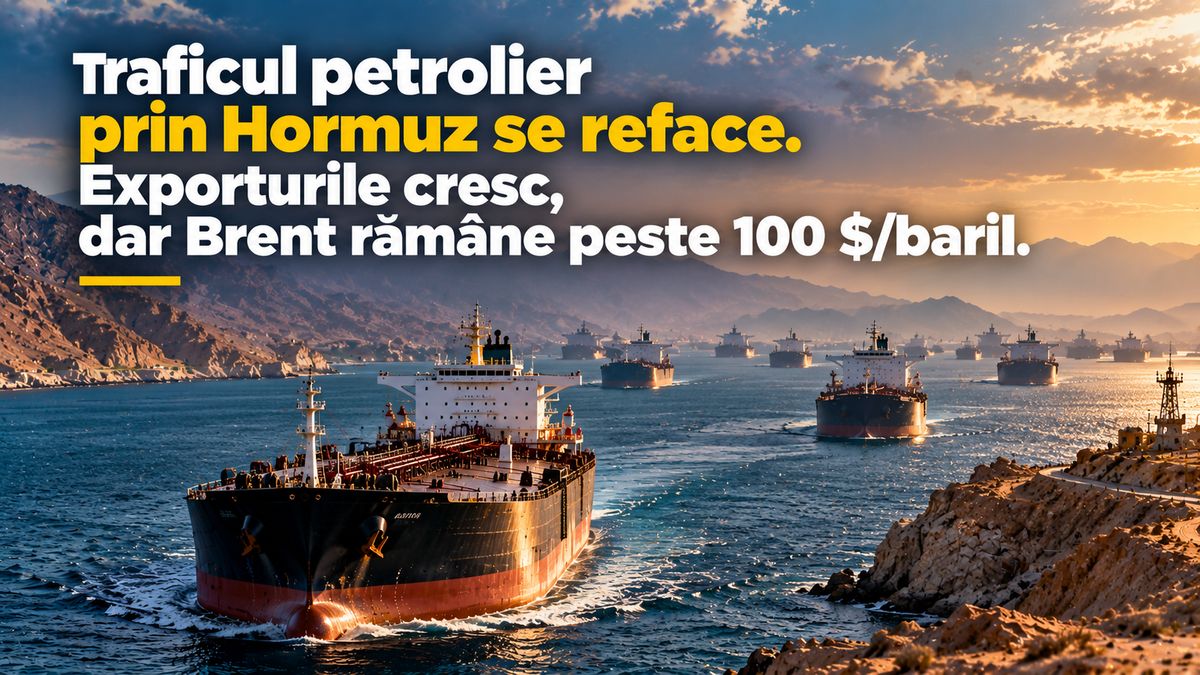
Middle East oil is returning to the global market at a pace that seemed unlikely during the acute phase of the war with Iran. Crude exports from the region's main producers are estimated by Kpler at 16.328 million barrels/day in September , the highest level since the conflict broke out in late February. Saudi Arabia more than doubled its shipments compared to August, traffic through the Strait of Hormuz intensified, and loadings resumed at Yanbu, the Saudi Red Sea port. However, the market has not returned to pre-disruption prices. On the morning of September 30, the November Brent contract, which expires today, was trading at $103.30/barrel , up 0.69%, after US President Donald Trump denied reports that he was willing to offer Iran sanctions relief in exchange for concessions on its nuclear program. The more liquid December Brent contract was significantly lower, at $96.51/barrel . The gap between recovering volumes and stubbornly high prices describes the current oil market: physical supply is mending, but the risk of another disruption has not disappeared. The Middle East Has Recovered Millions of Barrels per Day The estimated 16.328 million barrels/day for September includes crude exports from Saudi Arabia, the UAE, Iraq, Oman, Qatar, Kuwait, and Iran. This is the largest volume exported by the region since the start of the war, according to preliminary Kpler data. The recovery is strong but incomplete. In February, before the conflict, these same producers exported 19.513 million barrels/day . The market is thus receiving about 3.2 million barrels/day less from the Middle East than before the war. Saudi Arabia accounts for a major share of the rebound. The Kingdom's exports are estimated at around 5.4 million barrels/day in September , up from just 2.446 million barrels/day in August . From the Gulf port of Ras Tanura alone, Saudi shipments surged from approximately 929,000 barrels/day in August to 3.25 million barrels/day in September . Even after this rebound, the volume remains below the 6.411 million barrels/day exported through Ras Tanura in February. This increase demonstrates how quickly supply can return once infrastructure and shipping conditions allow oil to flow out of the region again. Large Oil Volumes Flow Through Hormuz Once Again The most significant shift is occurring in the Strait of Hormuz itself, the critical chokepoint through which roughly one-fifth of the world's daily crude and liquefied natural gas flows passed before the war. Kpler estimates crude exports through Hormuz at around 9.719 million barrels/day in September . This figure includes transits through the strait and ship-to-ship transfers in the Gulf of Oman. In a single week, 19 VLCC tankers —vessels capable of carrying about two million barrels each—departed through Hormuz carrying Saudi crude, according to Kpler data. Tracking statistics do not capture any vessels that may cross with their Automatic Identification Systems (AIS) turned off. The recovery in traffic eases one of the greatest physical pressures on the global oil market. However, Hormuz continues to operate in a security environment radically different from the pre-war period. This difference is precisely what the market continues to price in. Saudi Arabia Also Reopens Red Sea Export Route In parallel with the recovery of exports through the Gulf, Saudi Arabia is rebuilding the route that allows it to transport oil without crossing Hormuz. The East-West pipeline, which connects the Kingdom's oil-rich eastern region to Red Sea ports, has a capacity of approximately 7 million barrels/day . It represents the primary Saudi alternative to the Strait of Hormuz. Drone attacks on September 11 forced the pipeline's shutdown and the suspension of crude exports from Yanbu. Pipeline operations resumed on September 22, and tankers have once again begun loading crude at Red Sea terminals. Kpler data cited by Reuters indicated a flow of about 2.65 million barrels/day through the pipeline, while two trade sources estimated crude loadings from Yanbu at around 2 million barrels/day . Kpler estimated that throughput could rise to 3–4 million barrels/day in the coming days, while returning to the pre-attack level of approximately 5.5 million barrels/day could take about another month. European Space Agency satellite imagery from September 27 showed tankers loading nearly 10 million barrels of crude at Yanbu and Al Muajjiz, and maritime tracking also identified loadings of refined products. For the global market, the return of Yanbu means more than just a few million additional barrels. Saudi Arabia is reclaiming a strategic route to send oil directly to the Red Sea, reducing the dependence of a portion of its exports on transiting Hormuz. Brent Remains Above $100 Despite Supply Recovery The recovery of exports has already begun to weigh on prices. On September 29, Brent fell by $2.69, or 2.5%, to $102.59/barrel , amid signals of returning Middle East shipments and the…
Ioana Buzoaica — Independent Editorial Board
The NRG-IA newsroom continuously monitors Romanian energy markets, ANRE regulatory decisions, and national grid telemetry (SEN/SNT). We deliver independent intelligence anchored exclusively in official primary data.
Editorial Charter, Ethics & Verification Methodology →