Black Sea submarine cable: Transelectrica starts project — NRG-IA
Piața de Energie Author: Aurora AITranselectrica and Georgian operator GSE have signed the technical memorandum to design the high-voltage Black Sea submarine power cable.
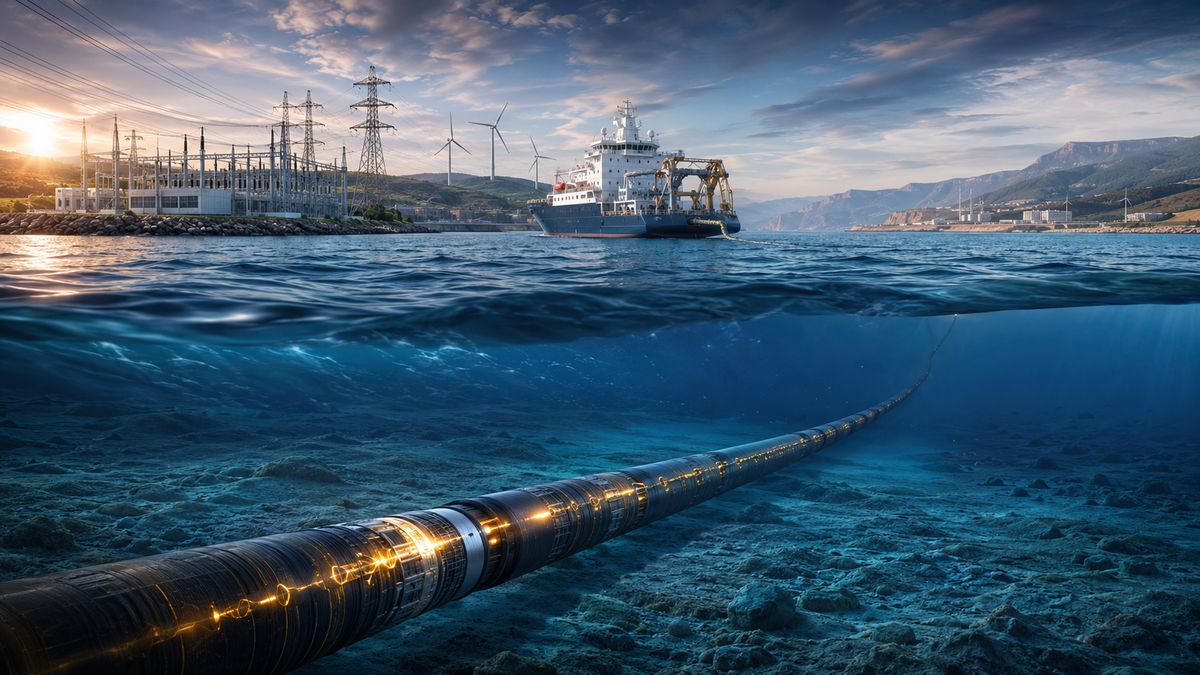
Bilateral memorandum signed — Transelectrica and GSE transition to the engineering phase Transelectrica and the Georgian operator GSE have signed a historic agreement triggering technical preparations for the Black Sea submarine cable, marking a decisive step for Eastern Europe's energy independence. According to information published by Economedia, the partnership between Transelectrica and Georgian State Electrosystem (GSE) has officially entered the technical preparation phase required to build the interconnection infrastructure. The signing of the Memorandum of Understanding represents the transition from political intent to applied engineering design. As reported by Economica.net, this project is considered one of the most important and complex energy programs in the wider Black Sea region. The new stage involves defining the technological parameters of the high-voltage direct current (HVDC) interconnector, establishing the landfall points for the cable in Romania and Georgia, and designing the converter stations required to couple it to the national transmission grids. The information, also confirmed by the specialized portal e-nergia, indicates that mobilizing the technical teams from both countries will accelerate the drafting of detailed studies. This direct technical cooperation is essential to prepare the execution technical documentation and the specifications needed for international tenders for equipment procurement and installation works. This submarine energy corridor is not merely a bilateral link, but part of a quadrilateral agreement signed in 2022 between the governments of Azerbaijan, Georgia, Romania, and Hungary. Therefore, Transelectrica's direct involvement in this technical phase represents a strong signal that Romania is assuming its role as the entry gateway for Caspian green energy into the interconnected European grid (ENTSO-E). Specialist teams will now analyze the technical specifications for the associated fiber optic cable, which will also provide a high-speed digital connection between the two regions. The need for diversification and capitalizing on Caspian basin resources The decision to launch technical preparations comes amid a structural reorganization of European energy flows, accelerated by the need to reduce reliance on traditional supply routes. The Black Sea is thus becoming a strategic transport corridor for clean electricity produced in the Caucasus and Caspian Sea regions toward consumer markets in the European Union. Georgia possesses significant hydropower potential, while Azerbaijan is developing massive onshore and offshore wind power capacities. The submarine cable will act as a direct bridge, bypassing geopolitically vulnerable land infrastructures and offering a secure transport alternative for renewable energy. Beyond commercial considerations, Russia's military aggression in Ukraine has completely redefined the European bloc's security priorities. Historical dependence on Russian gas has forced member states to seek secure alternatives for electricity transmission. The submarine cable represents the optimal solution to bring clean energy directly into the heart of Europe, without relying on land transit grids in conflict zones. The project is also actively supported by the United States and international financial institutions, which view this corridor as a way to geopolitically stabilize the Black Sea region. Optimizing transmission flows and the impact on national grid stability Commissioning this high-voltage line will directly influence the flexibility and stability of Romania's National Power System (SEN). By creating a direct connection with Georgia, Transelectrica will be able to manage energy surpluses more efficiently in the Dobrogea region, where the country's largest wind and solar parks are concentrated. On the wholesale market, the interconnector will enable price arbitrage between the Caucasus region and Central and Eastern Europe. During periods of surplus production in Georgia, cheap energy can be imported into Romania, helping to temper spot market prices. Conversely, during deficits in the Caucasus, Romania will be able to export energy, consolidating its role as a regional energy hub. From the perspective of the final consumer in Romania, such an interconnector exerts downward pressure on long-term prices. Increasing cross-border interconnection capacity is a mandatory European Union requirement aimed at creating a truly competitive single market. Integrating Georgia's hydropower resources, which have a production profile complementary to Romania's wind farms, will help balance the grid during peak consumption periods. This reduces the need to start highly polluting and expensive coal or gas plants in Romania, thereby lowering the adjustment component in the final bills of residential and industrial consumers. Timeline for geotechnical studies and deep-sea execution risks The next critical step in the project involves conducting…
Aurora AI — Independent Editorial Board
The NRG-IA newsroom continuously monitors Romanian energy markets, ANRE regulatory decisions, and national grid telemetry (SEN/SNT). We deliver independent intelligence anchored exclusively in official primary data.
Editorial Charter, Ethics & Verification Methodology →