Transelectrica: Major blackout risk avoided on grid — NRG-IA
Protecția Consumatorului Author: Aurora AITranselectrica operated the national grid under extreme stress in August 2026, avoiding a major blackout thanks to voluntary consumption reductions.
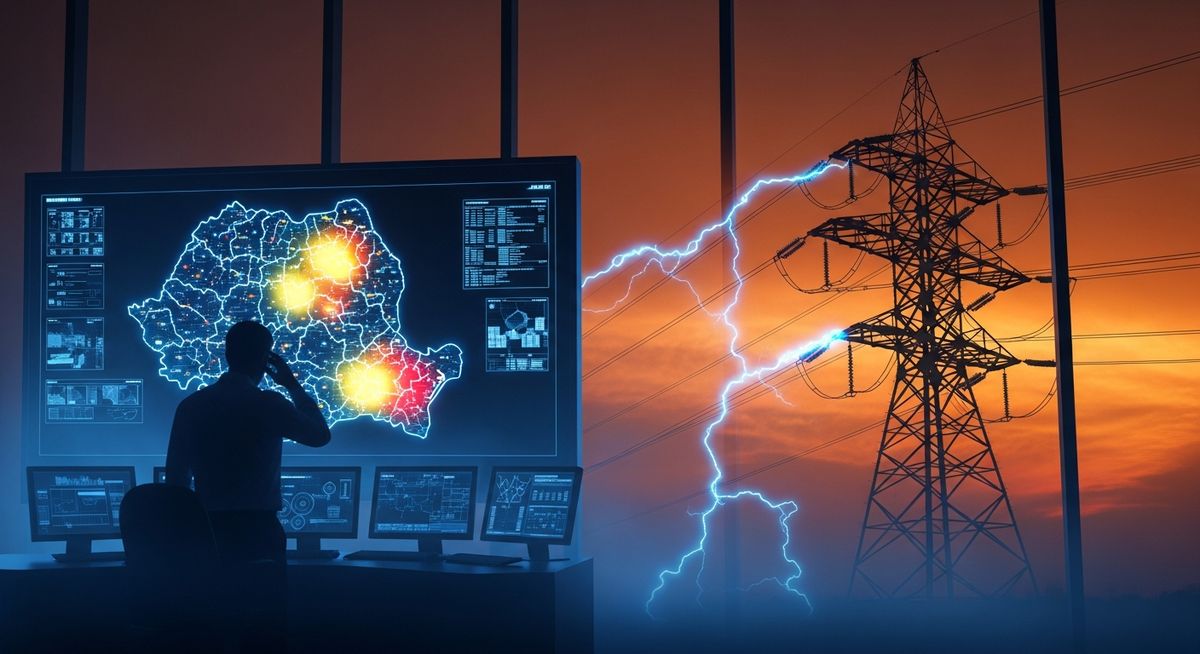
Grid balancing at the limit — Transelectrica avoids a major blackout Transelectrica operated the National Energy System under extreme stress in August 2026, avoiding a major blackout of significant proportions. According to an official statement issued by Transelectrica and analyzed by the publication e-nergia.ro, the national electricity transmission system operator confirmed that the national grid is facing a particularly difficult operating period. However, energy dispatchers managed to maintain technical parameters within safe limits, preventing uncontrolled disconnections. A decisive role in maintaining the balance between production and consumption was played by voluntary consumption reduction decisions in recent days. Reports published by Profit.ro indicate that calls for responsibility were positively received by large industrial consumers and the general public, providing the grid with essential breathing room during peak load times. This mobilization of consumers functioned as a virtual capacity reserve. Without these rapid consumption adjustments, the system would have risked entering areas of severe imbalance, where the only technical solution would have been the automatic triggering of system protections or even controlled disconnections of certain user categories. Extreme temperatures and domestic production deficit The trigger for this technical alert state is represented by the persistent wave of extreme heat that affected Romania in the first half of August. High temperatures directly affect the transmission infrastructure, reducing the thermal transmission capacity of overhead power lines and decreasing the efficiency of transformers in electrical substations. In parallel, the heatwave severely affects domestic energy production capacities. Gas or coal-fired thermal power plants register diminished yields due to high cooling water temperatures, while the lack of wind neutralizes the contribution of wind farms during critical evening hours. This combination of climatic factors overlapped with high consumption generated by the intensive use of air conditioning systems. Thus, the evening hours, when photovoltaic production drops sharply towards zero, became the most difficult interval to manage for the National Energy Dispatcher, forcing massive imports to cover the deficit. Pressure on spot market prices and import dependence Operating at the upper limit of technical capacity translates directly into high economic costs for the Romanian energy market. To cover the domestic production deficit, the country had to import significant volumes of electricity through cross-border interconnectors, activating European market coupling mechanisms. This dependence on cross-border flows during peak hours exerts massive pressure on electricity prices on the Day-Ahead Market (DAM) managed by OPCOM. Peak evening prices can exceed critical thresholds, costs that will eventually be reflected in the bills of non-household final consumers and, in the long run, in supply tariffs for the population. Additionally, the costs of system and balancing services increase significantly when Transelectrica must activate rapid emergency reserves. These tariffs, regulated by ANRE, are ultimately borne by all consumers in Romania, being included directly in the structure of the monthly electricity bill. Maintaining vigilance during peak hours and the test of August Although the immediate risk of a major system blackout has been overcome through the coordinated intervention of Transelectrica and the voluntary response of consumers, the state of vigilance remains high until the end of August. Meteorological forecasts indicate that high temperatures will persist, meaning the grid will continue to operate under pressure. Sector experts warn that the system urgently needs investments in battery storage capacities and grid modernization to increase resilience to thermal shocks. Until these strategic projects are completed, consumption flexibility remains the primary rapid protection tool. In the immediate period, Transelectrica will closely monitor the evolution of cross-border flows and the availability of national power generation units. Consumers are urged to maintain responsible behavior, especially in the 18:00 - 22:00 time slot, to ensure the continuous stability of the grid without the need for restrictive administrative measures.