Transelectrica Tenders Mostiștea Substation Upgrade — NRG-IA
Tehnologie & Inovație Author: Ioana BuzoaicaTranselectrica tenders the RON 279m Mostiștea substation upgrade, bringing data, robotic inspections, and non-SF6 tech to the transmission grid.
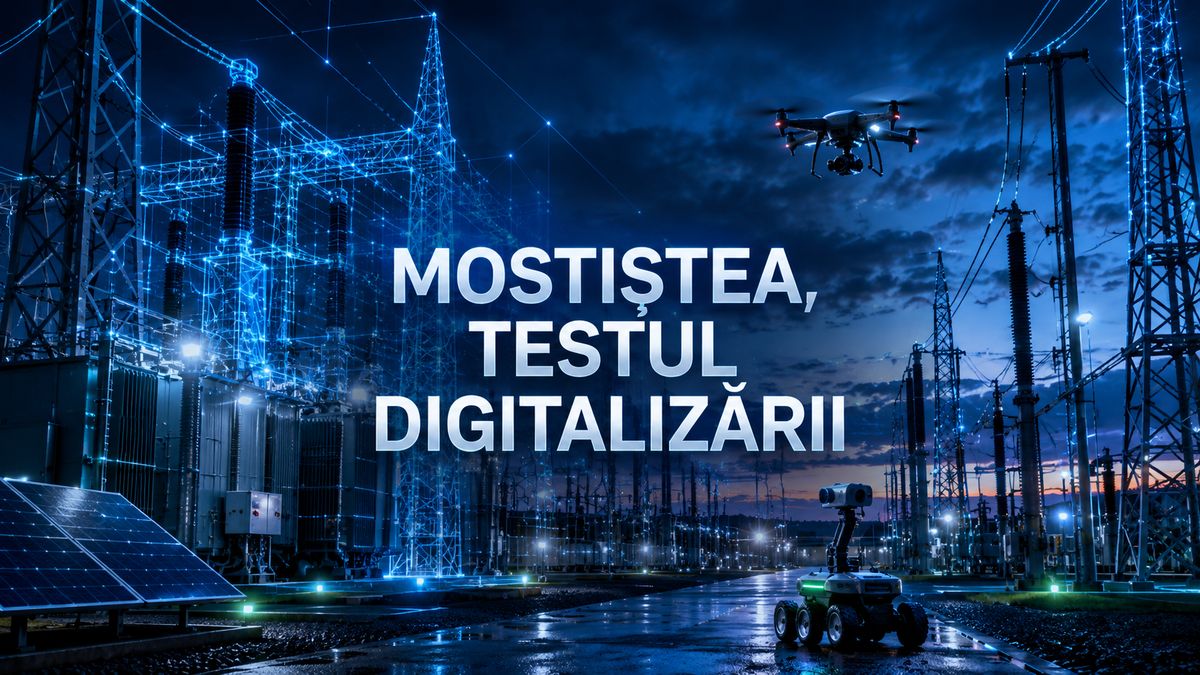
Transelectrica has launched a tender for the retrofitting of the 220/110/20 kV Mostiștea substation under the DigiTEL Green pilot project, with an estimated value of RON 278.86 million excluding VAT. The procedure was published on July 6, 2026, and bids can be submitted until September 8 at 15:00. The contract covers the electrical substation, a Digital Twin, augmented reality, robotic assistance and inspection, drones, security systems, and a photovoltaic system. Mostiștea thus becomes one of the most extensive digitalization investments applied directly to a substation within the Power Transmission Grid. The goal is not merely to replace legacy equipment, but to integrate electrical infrastructure, digital monitoring, assisted surveillance, and environmental solutions into a single project that can subsequently serve as a model for other substations in the grid. A substation built in 1974 enters the digital grid era The Mostiștea substation was commissioned in 1974 and has not undergone a complete retrofitting process until now. The project, funded through the Modernisation Fund, aims to transform it into a digital substation, featuring new transformation, control, protection, security, and technical surveillance infrastructure. A 220/110/20 kV substation does not generate power; instead, it steps down high-voltage electricity and routes it to the grid levels that supply consumption areas and regional infrastructure. Its operation must be continuous, as any failure, delayed intervention, or equipment downtime can compromise security of supply and grid flexibility. As designed, Mostiștea will receive a digital layer connecting equipment, technical documentation, operational data, and maintenance activities. The Digital Twin is the core of this transformation: a digital model of the facility used to track equipment health, prepare interventions, analyze risks, and manage technical information associated with substation assets. Transelectrica's plans for the project include digitalizing the data required for management decisions, utilizing an asset health index, a risk index, and statistical estimation mechanisms for equipment lifespan. The substation thus becomes a grid node where operations rely more on operational data and less on isolated checks performed only after an issue arises. Digital Twin, augmented reality, and the "control room of the future" The digitalization at Mostiștea builds on the experience Transelectrica has accumulated in other DigiTEL projects. The company previously incorporated digital substation concepts at Alba Iulia and introduced augmented reality, virtual reality, and Digital Twin technologies into the live operating environment of the Domnești substation through the DigiTEL Smart Vision project. At Mostiștea, the project expands this infrastructure and links it to the comprehensive retrofitting of the substation. Company documents list objectives such as introducing a "control room of the future" concept, utilizing BIM — Building Information Modelling — and developing a digital foundation capable of supporting decisions on operations, maintenance, modernization, or asset replacement. Augmented reality completes this architecture. In operating a substation, technical personnel require rapid access to diagrams, procedures, documentation, reports, and intervention history. Integrating this data into a digital environment can reduce the time needed to identify an issue and support direct interventions or remote assistance. This shift is crucial for a grid that must simultaneously manage growing renewable generation, new consumption patterns, more variable power flows, and assets built during very different eras. Substations remain the infrastructure linking power plants, high-voltage lines, and consumers, and their digitalization becomes vital for the speed at which the system identifies and resolves vulnerabilities. Robots and drones for facility surveillance The most visually striking component of the project is the introduction of robotic assistance and technical surveillance. Transelectrica's documents outline the use of artificial intelligence systems via physical robots and drones, a first for the Power Transmission Grid. The tender contract explicitly includes "robotic assistance/inspection and drones" under the category of related systems. This infrastructure can support equipment checks, visual and thermal inspections, monitoring of hard-to-reach areas, and faster interventions when non-conformities are identified. Transelectrica links these solutions to reduced response times, increased operational safety, lower operating and maintenance costs, and improved risk management. In a high-voltage substation, every check assisted by data, cameras, sensors, or autonomous equipment can reduce personnel exposure to repetitive tasks or high-risk operational areas. The first non-SF6 technology in the Power Transmission Grid Mostiștea also features an environmental component that…
Ioana Buzoaica — Independent Editorial Board
The NRG-IA newsroom continuously monitors Romanian energy markets, ANRE regulatory decisions, and national grid telemetry (SEN/SNT). We deliver independent intelligence anchored exclusively in official primary data.
Editorial Charter, Ethics & Verification Methodology →