Transitioning from Lignite to 2.1 GW Solar: PPC Completes Europe's Largest Photovoltaic Complex in Greece — NRG-IA
Piața de Energie Author: Aurora AIPPC completes Europe's largest solar project (2.1 GW) in Greece, transforming former lignite mines into pillars of regional energy security.
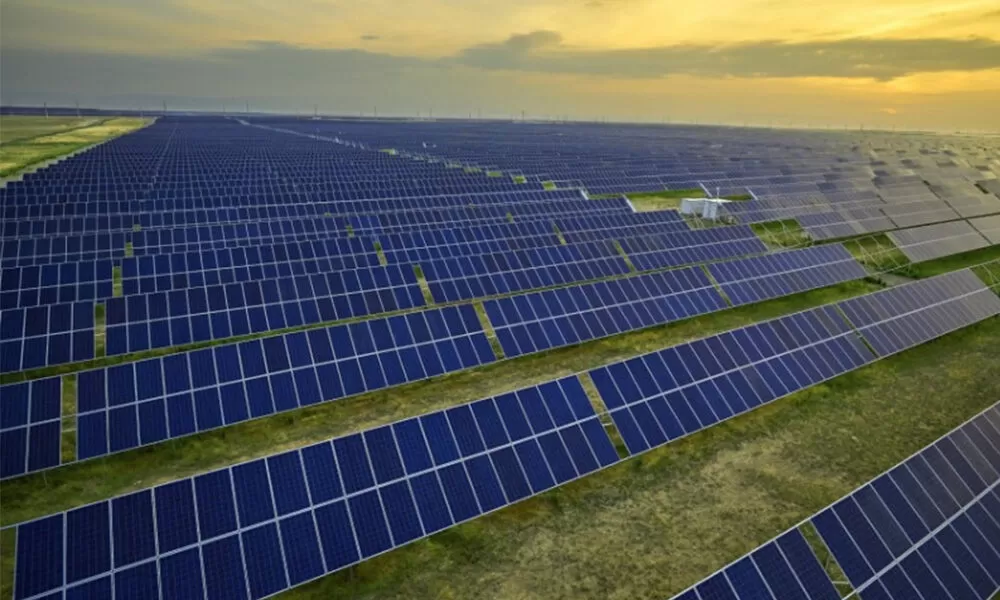
A New Renewable Giant on the European Map At a time when global energy security is being challenged by tensions in the Strait of Hormuz and hydrocarbon market volatility, the PPC Group (Public Power Corporation) has announced the completion of the largest solar project cluster on the European continent. Located in the Amyntaio and Ptolemaida regions of Northern Greece, this complex marks a paradigm shift: transforming former lignite mining sites into pillars of clean energy. With a total capacity exceeding 2,100 MW (2.13 GW) , the project is not just an impressive technical achievement but also a clear signal regarding the direction of the energy sector in Southeast Europe. According to company data, the estimated annual production reaches 3,150 GWh , a figure capable of covering approximately 6% of the annual energy demand of Greece's interconnected system. Technical Analysis: From Extraction to Solar Radiation The placement of this mega-project on the site of former lignite mines is a textbook example of what the European Union defines as a "Just Transition." Utilizing existing grid infrastructure (former connection points of coal-fired power plants) significantly reduces the costs of integration into the national transmission system. Installed Capacity: 2.13 GW (over 2,100 MW). Average Annual Production: 3,150 GWh. Systemic Impact: Covers 6% of Greece's demand. Storage Component: The Group confirmed it will install massive battery storage capacities to balance the intermittency of the solar source. This investment places PPC in a regional leadership position, especially since the group is also active in the Romanian market. The success of the Amyntaio and Ptolemaida model could serve as a pilot project for similar regions in Romania, such as the Jiu Valley or the Oltenia Energy Complex, where the transition from coal remains a sensitive socio-economic issue. Geopolitical Context and Supply Security The completion of this investment comes amidst an extremely tense international climate. While Iran and Oman negotiate transit protocols through the Strait of Hormuz—a vital route for 20% of global oil and gas consumption—and Chinese leader Xi Jinping calls for the accelerated construction of a "new energy system" to counter global shocks, Greece is taking a decisive step toward independence from imported fossil fuels. "Accelerating the planning and construction of a new energy system is essential to protect energy security," Xi Jinping stated, highlighting a global trend that PPC is now materializing in the Balkans. For regional consumers, including those in Romania, the increasing share of renewables in the energy mix of major regional players like PPC means, in the long run, less pressure from natural gas prices used in electricity production. However, analysis indicates that price benefits will be fully realized only after the full integration of the storage units mentioned in the group's plans. Implications for the Regional Market and Romania PPC is not just a Greek producer, but a major actor in the Romanian market following the acquisition of Enel assets. The expertise gained in developing GW-scale projects in Greece will likely be exported to the projects the group has in its pipeline in Romania. Currently, Romania faces no immediate supply difficulties for crude oil, according to recent discussions between government officials and industry companies, but the long-term strategy must include such massive local production capacities. Analysis of energy flows suggests that such giant projects can contribute to stabilizing prices on the regional spot market (DAM), reducing the need for expensive imports during peak solar radiation hours. However, the challenge remains managing energy surpluses and avoiding negative prices, which underscores the critical importance of battery storage. Perspectives: The Future is Hybrid Medium-term perspectives indicate that PPC will continue to diversify its portfolio. In addition to photovoltaics, the storage component will become mandatory to maintain grid stability. Furthermore, using degraded lands (former mines) solves one of the biggest problems for renewable developers: the conflict with agricultural land. In conclusion, the completion of the 2.1 GW complex in Northern Greece represents a landmark moment for Europe. It is proof that decarbonization can be achieved on an industrial scale, providing a concrete solution for energy security in an era of unpredictable geopolitical crises. This article was generated with the assistance of Aurora AI and editorially verified.
Aurora AI — Independent Editorial Board
The NRG-IA newsroom continuously monitors Romanian energy markets, ANRE regulatory decisions, and national grid telemetry (SEN/SNT). We deliver independent intelligence anchored exclusively in official primary data.
Editorial Charter, Ethics & Verification Methodology →