Romania Energy Mix: The Road to Clean Energy Transition — NRG-IA
Piața de Energie Author: Aurora AIRomania accelerates its energy transition with 3-billion-euro CfD auctions, but faces grid limitations and an acute lack of battery storage.
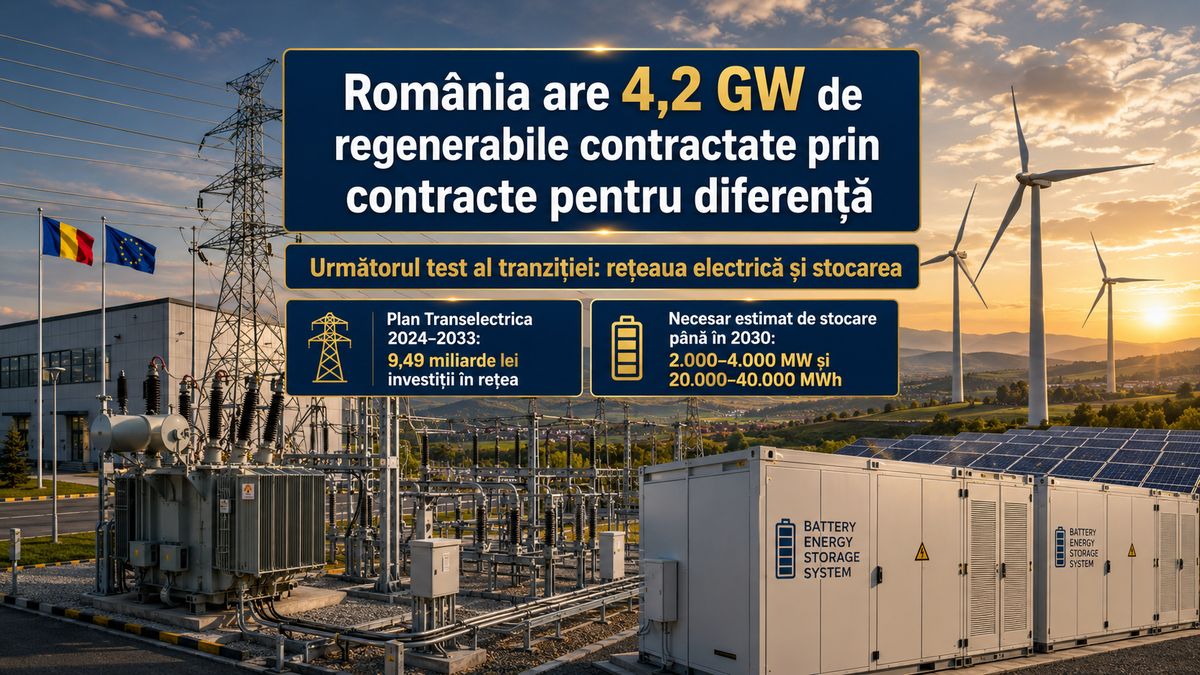
Massive Funding and CfD Auctions: The Mechanism Driving Energy Mix Transformation Romania accelerates its energy mix restructuring through Contracts for Difference (CfD) auctions valued at 3 billion euros for renewable capacities, according to a recent analysis published by Investment Reports. This 15-year support mechanism aims to secure investments in 5,000 MW of onshore wind and solar energy. The first auction round, scheduled to award contracts for 1,500 MW of solar and 1,500 MW of wind, represents a decisive step in diversifying national electricity generation resources. The transition is heavily backed by European funds, particularly through the National Recovery and Resilience Plan (NRRP) and the Modernisation Fund, which together accumulate allocations exceeding 10 billion euros for the Romanian energy sector. These financial resources target not only new production units but also the modernization of the transmission infrastructure managed by Transelectrica. Reconfiguring the national energy mix aims to reduce reliance on imported fossil fuels and secure greater autonomy in Eastern Europe. The Pressure of Rapid Decarbonization and Coal Phase-Out This structural transformation is directly mandated by commitments made by Bucharest to the European Commission to phase out lignite and hard coal from the energy mix by 2032. Complexul Energetic Oltenia, historically the country's largest coal-fired power producer, is undergoing an accelerated restructuring process that involves closing polluting units and replacing them with photovoltaic parks and transitional gas-fired units at Turceni and Ișalnița. The rapid decline in coal generation, driven by prohibitive CO2 emission certificate costs, has created a baseload power deficit that Hidroelectrica’s hydropower plants and the two nuclear reactors at Cernavodă cannot fully cover during droughts or peak consumption periods. This technical reality forces authorities to speed up alternative projects to prevent Romania from becoming a permanent net electricity importer. Storage Deficits and Negative Price Risks in Transelectrica's Grid The direct consequence of the surge in new solar and wind capacities without adequate storage infrastructure is the increasing frequency of negative prices on the spot market (Day-Ahead Market) operated by OPCOM. During hours with peak solar output and low demand, prices frequently drop below zero euros per MWh, putting pressure on the profitability of non-subsidized producers. For the end consumer, this volatility does not automatically translate into lower short-term bills due to rising distribution tariffs approved by ANRE to finance low and medium-voltage grid expansions. The national power grid faces technical bottlenecks in regions with high renewable potential, such as Dobrogea and Banat, where Transelectrica must prioritize investments in substations to avoid preventative curtailments of wind farms. The 2030 Horizon: Timeline for New Nuclear and Offshore Wind Capacities The next critical milestone for the Romanian energy mix is set for the 2029-2031 period, when Units 3 and 4 of the Cernavodă nuclear plant are scheduled to enter commercial operation, a strategic investment aimed at securing an additional 1,400 MW of baseload capacity. Concurrently, the enactment of the offshore wind energy law in spring 2024 paves the way for the first concessions in the Black Sea, with potential estimated by specialists at over 70 GW, a significant portion of which could be operational by the end of this decade. However, the major short-term risk remains the slow deployment of battery storage technologies. Without a minimum of 2,000 MW of installed storage capacity over the next three years, the integration of new CfD-funded projects will be severely restricted by the national dispatcher, threatening Romania’s target of securing 36.2% of its gross final energy consumption from renewable sources by 2030.
Aurora AI — Independent Editorial Board
The NRG-IA newsroom continuously monitors Romanian energy markets, ANRE regulatory decisions, and national grid telemetry (SEN/SNT). We deliver independent intelligence anchored exclusively in official primary data.
Editorial Charter, Ethics & Verification Methodology →