Kozlodui & Cernavoda: 3 Reactors Offline, 3.5GW Imports — NRG-IA
Piața de Energie Author: Ioana BuzoaicaRomania and Bulgaria have 3 nuclear reactors offline (2.45 GW). Drought delays Cernavoda's restart, pushing Romanian peak imports to 3,500 MW.
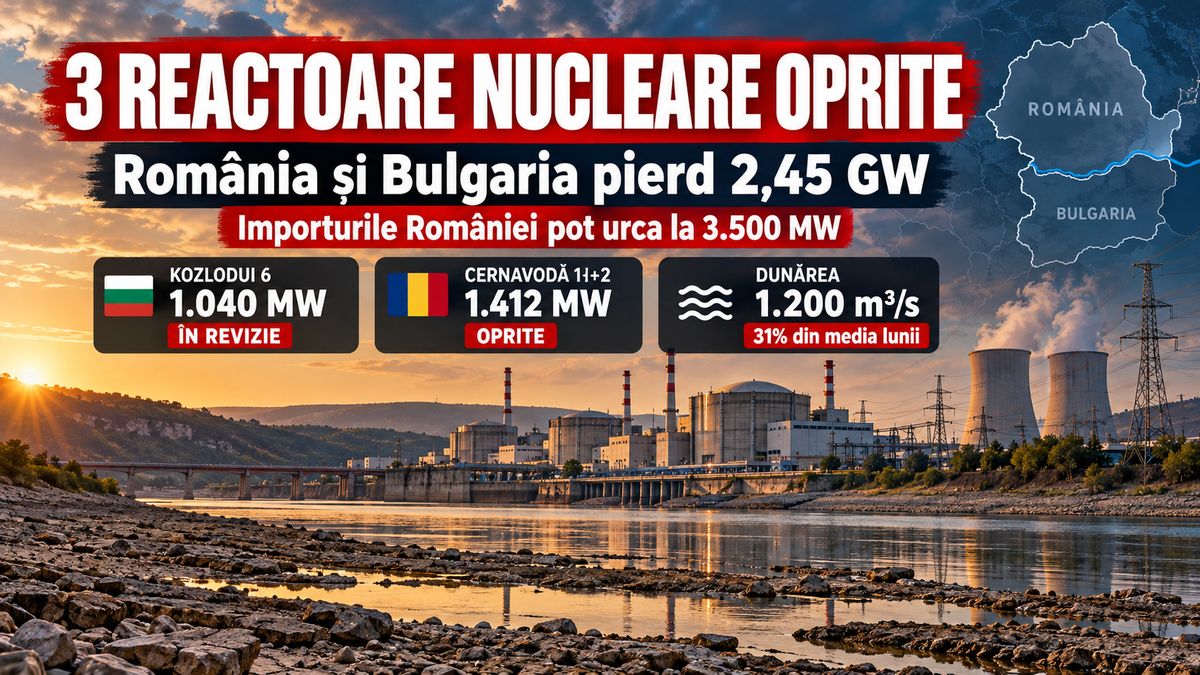
Romania and Bulgaria simultaneously have three nuclear reactors offline after Unit 6 of Bulgaria's Kozloduy nuclear power plant entered its scheduled annual maintenance on October 8, 2026. The reactor has a gross electrical capacity of 1,040 MW and is expected to return to service by the end of November. At the same time, both units at Romania's Cernavoda plant remain shut down due to exceptionally low water levels on the Danube, with Romanian authorities estimating that electricity imports could reach 3,500 MW during certain peak consumption hours. The three reactors represent approximately 2.45 GW of gross installed capacity. The overlapping outages reduce available regional nuclear generation at a time when drought is also affecting hydropower plants, leaving the Romanian power system heavily reliant on imports to cover demand. The situation is particularly challenging for Romania. Following an Energy Command meeting on October 6, State Secretary Cristian Busoi described the country's ability to cover electricity consumption as one of the most difficult situations in decades. The two Cernavoda reactors, which typically provide a significant share of national generation, cannot be restarted before October 15, according to assessments presented by the authorities. Kozloduy Shuts Down 1,040 MW Reactor for Maintenance Unit 6 of the Kozloduy nuclear power plant was shut down on October 8 for its annual maintenance and refueling. The plant operator and the Bulgarian Ministry of Energy announced that the works are scheduled to run until the end of November. The VVER-1000 reactor has a gross electrical capacity of 1,040 MW and a net reference capacity of approximately 1,003 MW. The maintenance outage includes inspections of equipment and technical systems, preventive maintenance, and interventions required for long-term safe operation. During the outage, the reactor will be refueled for its 32nd operating cycle. The shutdown was coordinated in advance with the Bulgarian electricity system operator, in line with standard procedures for scheduled maintenance. Unit 5 at Kozloduy remains operational, but its output is being adjusted to hydrological conditions and the plant's capacity to secure industrial cooling water from the Danube. Drought Also Curbs Nuclear Generation in Bulgaria On October 6, the Bulgarian Ministry of Energy announced a preventive output reduction at both Kozloduy units due to falling Danube water levels. According to the official statement, the cumulative reduction was approximately 90 MW, a measure necessary to maintain technical operating conditions. Issues had already emerged in August. On August 21, Unit 5's output was preventively reduced by approximately 120 MW amid exceptional hydrological conditions. Generation was gradually ramped back up at the end of the month, but a new limitation of around 60 MW was applied in September. In early October, restrictions were extended to both units before Reactor 6 entered its annual maintenance. The Bulgarian plant is thus facing overlapping challenges: a planned maintenance outage and water-availability-driven output limitations. The operation of nuclear reactors depends on securing cooling systems under the conditions specified by technical and nuclear safety procedures. Low Danube levels can restrict water supply to the facilities, requiring output reductions or controlled shutdowns when the parameters necessary for operation can no longer be met. Both Cernavoda Reactors to Remain Offline Until at Least October 15 In Romania, the situation is even more critical as both nuclear units at Cernavoda have undergone controlled shutdowns due to hydrological conditions. Unit 1 was shut down on July 28, 2026, and Unit 2 followed on August 13, according to the National Commission for Nuclear Activities Control (CNCAN). The measures were taken in accordance with operating procedures and nuclear safety requirements. The two CANDU 6 reactors have a combined gross installed electrical capacity of approximately 1,412 MW. Under normal operating conditions, the Cernavoda plant contributes about one-fifth of Romania's national electricity generation. On October 6, Cristian Busoi confirmed that both units remain unavailable and that hydrological forecasts do not allow for a restart before October 15. Returning to operation depends on water levels recovering and meeting the technical conditions required for reactor cooling. Once hydrological conditions improve, specialists will determine whether the units can be restarted simultaneously or if they will return to service sequentially. The unavailability of Romanian nuclear generation is compounded by reduced hydroelectric output. Low river flows limit available energy from another major source, increasing the importance of gas-fired plants, coal-fired units, available renewable generation, and imports from neighboring states. Danube Flow Drops to Just 31% of Normal October Levels Hydrological data published on…
Ioana Buzoaica — Independent Editorial Board
The NRG-IA newsroom continuously monitors Romanian energy markets, ANRE regulatory decisions, and national grid telemetry (SEN/SNT). We deliver independent intelligence anchored exclusively in official primary data.
Editorial Charter, Ethics & Verification Methodology →