US-Saudi nuclear deal: Trump approves uranium enrichment — NRG-IA
Geopolitică & Energie Author: Aurora AIDonald Trump has approved a historic nuclear deal allowing Saudi Arabia to enrich its own uranium, risking a new regional arms race.
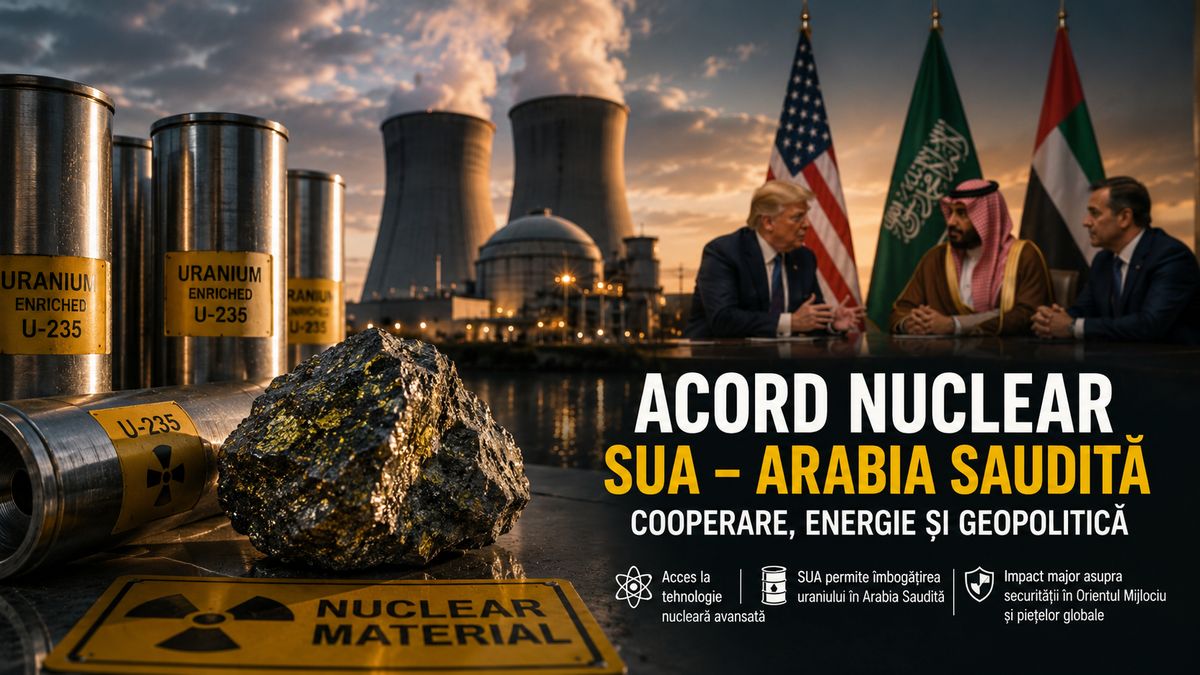
Washington validates Riyadh's nuclear ambitions — how the historic deal was finalized Donald Trump approved the nuclear deal with Saudi Arabia, granting the kingdom the right to enrich uranium on its own soil. This decision marks a radical paradigm shift in United States non-proliferation policy. Historically, Washington conditioned civil technical assistance on foreign nations giving up sensitive fuel enrichment and processing technologies. The bilateral agreement allows Riyadh to develop a comprehensive civil nuclear program on its territory. US officials claim the document includes strict verification safeguards by the International Atomic Energy Agency (IAEA). However, critics warn that the decision could trigger a regional nuclear arms race in the Middle East. This strategic move comes at a time of extreme tension in the global resources market. Oil prices have already surged by 20% this month due to direct clashes between US and Iranian forces. The new nuclear partnership adds a major geopolitical component to an already fragile security landscape. The escalation of the Iran conflict and securing Gulf alliances The White House decision is directly linked to the open military confrontation between the United States and Tehran. Following recent US airstrikes on Iranian targets, Washington seeks to quickly consolidate its network of regional allies. Saudi Arabia represents the central pillar of this deterrence strategy in the Gulf region. Riyadh has long conditioned its purchase of American nuclear technology on the right to exploit its own uranium reserves. The persistent refusal of previous administrations pushed the kingdom toward alternative negotiations with partners in China and Russia. To retain technological and commercial influence, the Trump administration chose to yield to Saudi demands. Global economic pressure also plays a critical role in this complex security equation. With crude prices under pressure due to conflicts in the Strait of Hormuz, the stability of Saudi shipments remains vital for Western markets. The nuclear deal thus functions as a mutual security guarantee between the two allied states. Pressure on energy markets and the risk of a new security equation in the Gulf In the short term, the decision stabilizes the commercial relationship between the world's largest crude exporter and its primary military guarantor. However, financial markets are reacting with increased volatility to any signal of indirect militarization in the region. Brent crude futures already reflect an elevated geopolitical risk premium. For the global nuclear industry, the agreement opens an export market valued at tens of billions of dollars. American nuclear companies will be able to compete directly to build Saudi Arabia's first commercial reactors. However, this commercial boost comes with major risks regarding the control of dual-use technologies. Although the agreement targets exclusively civil energy, uranium enrichment capability provides Riyadh with the technical infrastructure needed for a latent military program. Experts warn that neighboring states like Turkey and Egypt could demand similar concessions in the near future. This domino effect risks permanently destabilizing global non-proliferation agreements. The next test: US Congressional ratification and Tehran's response The nuclear agreement must now pass review by the United States Congress, where it will face strong bipartisan opposition. Both Democrats and some Republicans have expressed deep concern over granting uranium enrichment rights. The legislative timeline allows for a 90-day review period before the deal can take effect. Iran's reaction will represent another critical risk factor in the coming weeks. Tehran, already under severe sanctions and in open conflict with the US, could accelerate its own enrichment program. Any further military escalation in the Strait of Hormuz will immediately drive up the cost of maritime hydrocarbon transport. In this tense environment, European energy companies are re-evaluating their exposure to Middle Eastern risk. Romania and its regional allies are accelerating domestic nuclear projects, such as the refurbishment of Cernavodă Unit 1 with international funding, to secure independence. Rapidly diversifying sources remains the only real defense against a new global geopolitical shock.
Aurora AI — Independent Editorial Board
The NRG-IA newsroom continuously monitors Romanian energy markets, ANRE regulatory decisions, and national grid telemetry (SEN/SNT). We deliver independent intelligence anchored exclusively in official primary data.
Editorial Charter, Ethics & Verification Methodology →