Trump Iran sanctions: Oil market impact — NRG-IA
Geopolitică & Energie Author: Aurora AIDonald Trump warns that Iran would have targeted US cities if nuclear-armed, signaling maximum energy sanctions that could impact global oil markets.
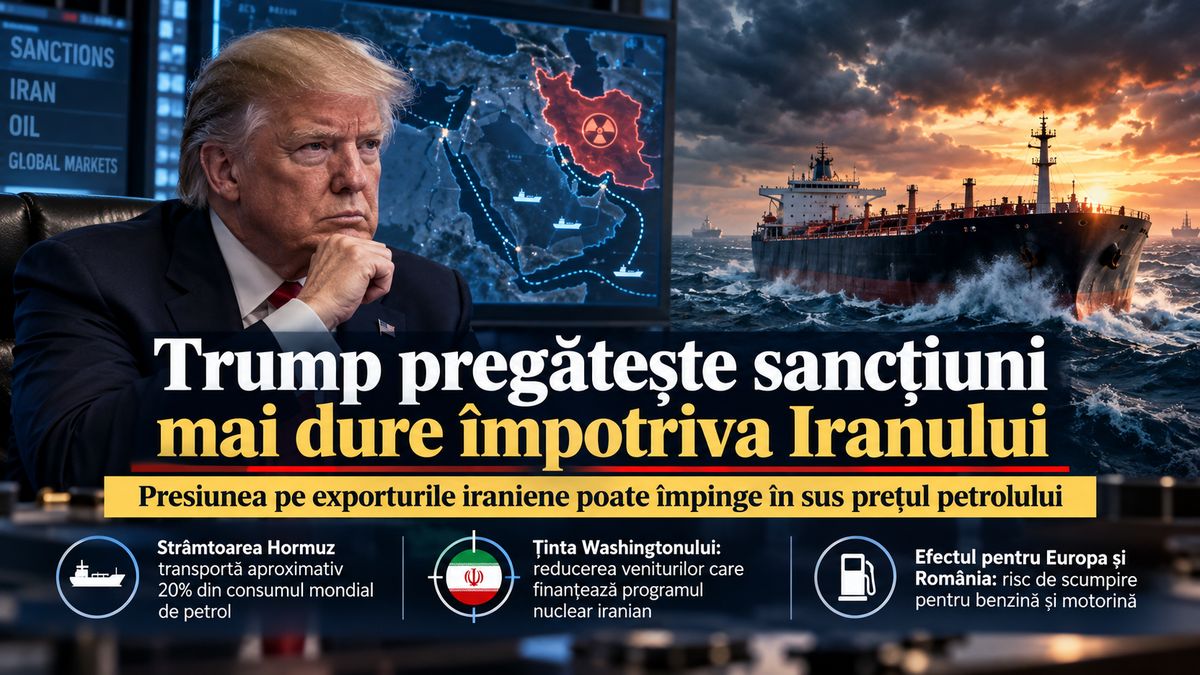
Escalating rhetoric from Washington and pressure on Tehran — what happened Donald Trump warns that Iran would have attacked US cities if nuclear-armed. In an unprecedentedly harsh statement, the US President emphasized that, without preventive measures, the Tehran regime would have been capable of destroying "half of the world," according to information published by G4Media. This rhetoric marks a new phase in the deterrence strategy adopted by the White House, combining national security warnings with financial coercion tools. The Washington administration is intensifying economic and military pressure on Tehran, amid assessments indicating that the Iranian regime is becoming "weaker and weaker," as reported by Mediafax. Trump characterized Tehran's leaders as "sick," arguing that the lack of a firm response from the international community would have exposed major US urban centers to catastrophic security risks. The statements come at a time of broad reassessment of Middle East security frameworks. This public positioning is not merely political rhetoric; it signals a structural shift in American foreign policy. By bringing the direct nuclear threat to US soil to the forefront, the US administration is preparing the ground for a new set of secondary sanctions. These will directly target Iran's commercial partners, further restricting Tehran's financial channels. The economic strangulation mechanism targeting the nuclear program The White House strategy is based on the premise that depriving the Iranian regime of hydrocarbon export revenues will halt the development of sensitive military technologies. By blocking international financial transactions and strictly monitoring maritime shipments, Washington aims to reduce Iran's capacity to fund its nuclear program to zero. This economic strangulation mechanism directly depends on the cooperation of major crude buyers in Asia. Despite previous restrictions, Iran has managed to maintain a steady flow of crude exports through a parallel fleet of tankers, using turned-off transponders and ship-to-ship transfers to evade detection. Donald Trump's new warnings suggest that Washington's tolerance for these evasion practices has significantly decreased. The pressure will now shift toward Asian ports and independent refineries processing masked Iranian crude. The domino effect on the crude market and risks for fuel prices Harsh sanctions imposed on a major producer like Iran have a direct impact on the supply-demand balance of the global energy market. The forced withdrawal of Iranian barrels from the market creates a temporary deficit that tends to push up the Brent crude benchmark. For Europe, this dynamic translates into higher import costs for refineries, which are subsequently passed directly to pump prices for gasoline and diesel. Romania, although securing a significant portion of its oil needs from domestic sources and the Black Sea basin, is not immune to these global fluctuations. Local fuel prices are directly correlated with international refined product benchmarks (Platts), which closely track Brent crude. Consequently, an escalation of tensions in the Middle East and a more rigid enforcement of US sanctions risk driving up diesel and gasoline prices for Romanian consumers in the coming months. The shadow war in the Strait of Hormuz and upcoming risk factors In the short term, the major risk remains the partial blockade or harassment of maritime traffic through the Strait of Hormuz, a critical chokepoint through which approximately 20% of global oil consumption passes daily. Tehran has repeatedly demonstrated that it can use military force or abusive inspections to disrupt hydrocarbon transport in response to US sanctions. Any security incident in this area will trigger an immediate panic reaction on commodity exchanges. The next critical milestone is the official announcement of new presidential decrees from Washington expanding secondary sanctions. Energy market analysts estimate that the first concrete effects on traded crude volumes will emerge in the next quarter, when Asian refineries must decide whether to risk being cut off from the US financial system or reduce purchases from Iran in favor of alternative sources in the Gulf or the US.
Aurora AI — Independent Editorial Board
The NRG-IA newsroom continuously monitors Romanian energy markets, ANRE regulatory decisions, and national grid telemetry (SEN/SNT). We deliver independent intelligence anchored exclusively in official primary data.
Editorial Charter, Ethics & Verification Methodology →