Hormuz Strait Remains Open: Trump Guarantees Oil Transit — NRG-IA
Energie Author: Aurora AITrump guarantees the Strait of Hormuz remains open for oil tankers despite the conflict with Iran. What this means for the global energy market.
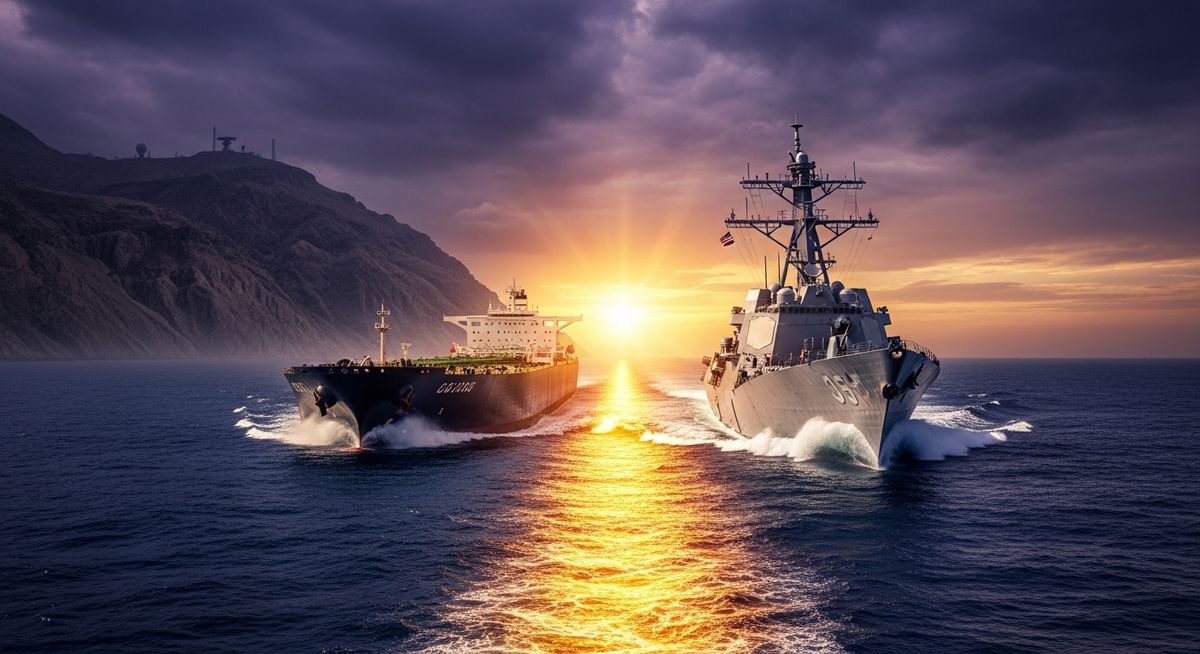
Security guarantees in the Strait of Hormuz — Donald Trump confirms commercial transit remains open The United States guarantees that the Strait of Hormuz remains open to commercial traffic despite the recent escalation of bilateral attacks with Iran, a strategic route through which approximately 20 million barrels of crude oil transit daily. The statement by US President Donald Trump, delivered on Sunday, comes amid acute military tensions in the Persian Gulf region, which have amplified global fears regarding the safety of navigation. According to a Mediafax report, the White House leader emphasized that maritime commercial flows are not interrupted, despite direct tactical strikes between US and Iranian forces. From a logistical perspective, the Strait of Hormuz represents the most important chokepoint for the global energy market, linking Middle Eastern producers to major markets in Asia, Europe, and North America. Any physical disruption of this narrow passage, situated between Oman and Iran, could instantly block crude oil shipments from Saudi Arabia, Iraq, the United Arab Emirates, and Kuwait. The assurances provided by the Washington administration aim directly to calm financial markets and prevent speculative panic on the London and New York commodity exchanges. Although recent attacks targeted military objectives and occasionally jeopardized the safety of commercial shipping in Gulf waters, transport routes remain operational under the active supervision of international naval forces. Mediafax reports that Donald Trump highlighted the US military's capability to secure this strategic corridor, even as Tehran's rhetoric and harassment tactics intensified over the last 48 hours. This positioning reflects a clear strategy to decouple direct military conflict from the vital logistical flows of the global economy, preventing a supply shock. The military escalation in the Persian Gulf and direct US-Iran strikes Current tensions stem from a series of retaliatory air and naval strikes between US and Iranian forces in the region, actions that have triggered a state of maximum alert among shipowners and maritime insurance companies. Iran has repeatedly threatened to use its dominant geographical position to restrict access through the strait in response to international economic sanctions and Western military presence near its coasts. The security mechanism allowing commercial transit to continue relies on the active presence of the US Fifth Fleet, headquartered in Bahrain, and allied naval patrols escorting oil tankers through high-risk zones. A total blockade of the strait would represent a red line with devastating economic consequences, including for Tehran, which itself depends on exports of condensates and petroleum products. The US military presence acts as a direct deterrent, limiting Iran's options to asymmetric harassment and drone attacks without risking a complete shutdown of the strait. Brent crude price stability and the direct impact on the European fuel market The firm message from the White House acted as a safety valve for international Brent crude benchmarks, which risked exceeding critical thresholds in the absence of clear security guarantees. Keeping transit open through Hormuz prevents a sharp increase in transport costs and insurance premiums for oil tankers, elements that would have reflected directly in the final price of fuel at pumps across Europe and Romania. Concretely, a prolonged disruption in Hormuz would have forced European refineries to seek alternative, much more expensive supply sources, accelerating global energy inflation. By stabilizing risk perception, the market can more easily absorb short-term volatility. However, analysts warn that War Risk Premiums charged by insurers at Lloyd's of London remain high, maintaining latent pressure on global logistical costs, even as physical transit continues without major interruptions. Monitoring residual risks and the logistical decisions of major shippers Despite the political assurances offered by the US President, short-term security risks remain significant for private transport operators. Major shipping companies are constantly monitoring tactical developments on the ground and could decide to reroute vessels or temporarily suspend transit in the event of a new direct military incident. The critical timeframe for assessing the corridor's stability is the coming weeks, which will reveal whether Iran tempers its actions following warnings from Washington. Looking ahead, the security of the Strait of Hormuz will depend on the deterrent capacity of the US-led coalition and the maintenance of backchannel diplomatic communications to prevent military miscalculations. For Romania and Eastern European nations, the evolution of this conflict represents a key indicator for pump price stability in the coming period, demonstrating once again the deep interdependence between Middle Eastern geopolitical security and the final…