Trump orders DOJ probe into petrol price gouging — NRG-IA
Geopolitică & Energie Author: Aurora AIDonald Trump has ordered the DOJ to investigate major oil firms for price gouging at gas stations as global crude prices plummet.
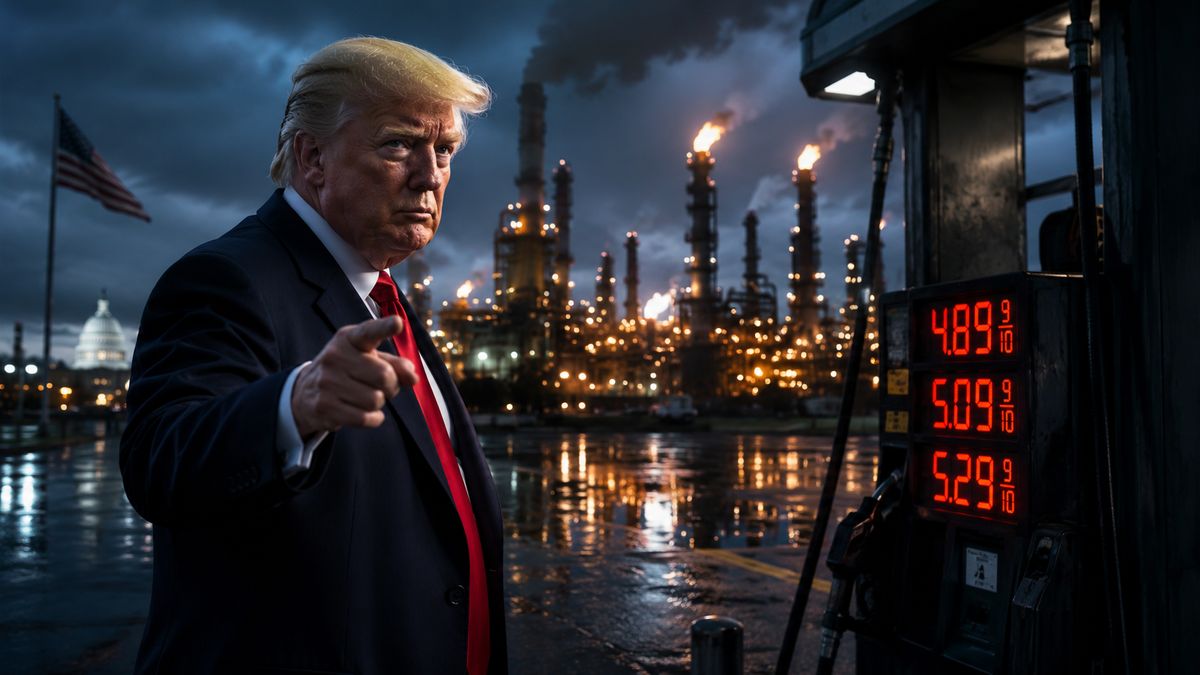
US Department of Justice launches probe into major fuel producers — what happened Donald Trump has ordered the Department of Justice to immediately investigate major oil companies for price gouging at petrol pumps, according to a recent social media post. The US President directly accused energy giants of refusing to lower retail prices for consumers, despite global crude oil benchmarks experiencing a sharp decline. The news, initially reported by OilPrice.com and subsequently confirmed by BBC Business, marks a major escalation in tensions between the White House and the private energy sector in the United States. According to official data, global oil prices have fallen significantly in recent weeks, yet pump prices across the US have failed to reflect this downward trend. Trump pointed out that major oil corporations are not adjusting their retail prices commensurate with the much lower prices they are paying for crude oil. "Those prices are dropping like a rock! In other words, customers are being 'gouged'," the President stated, demanding immediate corrective actions. The official investigation requested by the president will be conducted by the Department of Justice (DOJ), focusing on anti-competitive behavior and potential collusion among major gas station operators. This move places immense pressure on fuel supply chains at a time of high political and economic sensitivity. The decoupling of pump tariffs from the collapse of international crude oil benchmarks At the heart of this dispute lies the economic phenomenon known as "rockets and feathers," where pump prices rise rapidly when crude oil spikes but fall extremely slowly when raw material prices decline. BBC Business notes that although global oil prices have fallen recently, they remain higher than before the outbreak of the US-supported conflict between Israel and Iran. This asymmetric cost transmission along the refining and distribution chain is the primary argument leveraged by the Trump administration. US oil companies often argue that retail fuel prices are influenced by local distribution costs, taxes, and mid-term supply contracts signed at previous, higher prices. However, the scale of the recent crude price correction has left major corporations with weak arguments before consumers and regulatory bodies. In NRG-IA's editorial view, this investigation also serves as a political tool for the administration to shift the blame for persistent inflation from government policy directly onto the corporate sector, thereby protecting its political capital ahead of key electoral milestones. Direct political pressure on major refining and distribution companies By directly involving the Department of Justice, the White House is turning an economic dispute into a matter of national security and legal compliance. Major corporations such as ExxonMobil, Chevron, or Marathon Petroleum could face rigorous government audits and massive data requests regarding their refining profit margins. The immediate consequence on the energy market is a state of extreme caution among traders and refiners. Political pressure applied from the highest level risks distorting free-market pricing mechanisms, forcing companies to artificially compress profit margins to avoid federal sanctions, which could ultimately hurt long-term exploration and production budgets. Furthermore, financial markets are closely monitoring the reaction of oil and gas stocks. A sweeping DOJ investigation can trigger volatility on US stock exchanges, impacting investor confidence in a sector that has enjoyed record profits over the past few years. The informal deadline and the risk of forced regulatory actions President Donald Trump issued a clear and direct warning to energy sector players: "Gasoline prices better start going down a lot faster than what I’m seeing!" This informal ultimatum pressures retailers to implement price cuts in the coming days to avert further punitive measures. If major oil companies do not react swiftly, the main short-term risk lies in the imposition of stricter federal regulations or even the proposal of windfall profit taxes. While such legislation would face hurdles in Congress, the mere threat of forced regulation could compel distributors to revise their pricing strategies. In the coming weeks, market attention will focus on the DOJ's initial actions and the trajectory of the average US retail gasoline price. This standoff will define the relationship between the state and the private energy sector within an already volatile global geopolitical landscape.
Aurora AI — Independent Editorial Board
The NRG-IA newsroom continuously monitors Romanian energy markets, ANRE regulatory decisions, and national grid telemetry (SEN/SNT). We deliver independent intelligence anchored exclusively in official primary data.
Editorial Charter, Ethics & Verification Methodology →