Trump Eases Sanctions on Russian Diesel; Strikes Continue — NRG-IA
Geopolitică & Energie Author: Aurora AIThe U.S. authorized temporary Russian diesel trade to revive talks, while Moscow hits Ukraine's energy grid and Washington urges Kyiv to spare refineries.
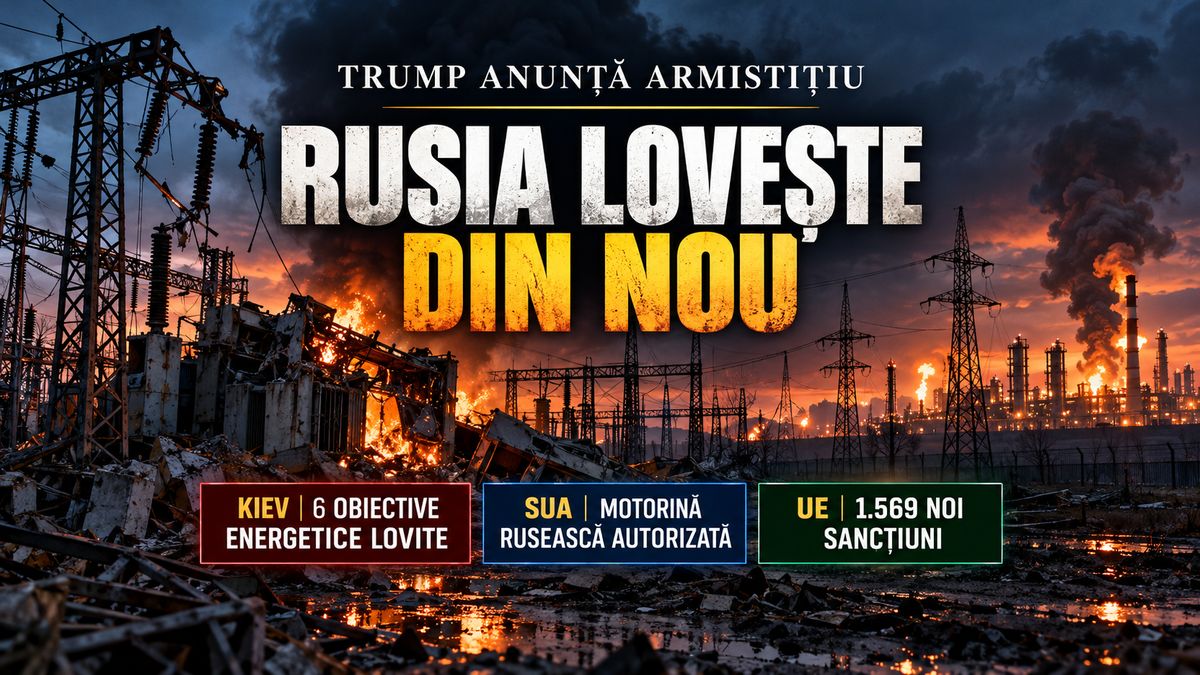
The administration of U.S. President Donald Trump has temporarily authorized transactions involving Russian-origin diesel, seeking to leverage this trade opening to bring Moscow back to negotiations over the war in Ukraine. The initiative comes at a moment of severe tension: Russia continues its strikes on Ukrainian energy infrastructure, while Washington asks Kyiv to halt attacks on Russian refineries, which have become one of the primary sources of economic pressure on Moscow. On October 12, Ukrainian President Volodymyr Zelenskyy announced that Russian forces had attacked at least six energy facilities after Trump stated that Russia and Ukraine had agreed on an energy infrastructure truce. The Kremlin confirmed ongoing talks without acknowledging a final agreement. On the same day, the European Union approved 1,569 new sanction listings targeting individuals and companies involved in the Russian military industry. This sequence of events highlights two distinct approaches to exerting pressure on Russia. Washington is attempting to incentivize negotiations through limited economic openings, whereas Brussels continues to restrict the Russian defense industry's access to resources and financing. Caught between these two strategies, Ukraine is attempting to protect its energy infrastructure without unilaterally surrendering its ability to inflict economic losses on Russia. Trump-announced truce followed by fresh attacks on Ukraine On October 11, Donald Trump announced that Russia and Ukraine had agreed to immediately cease strikes on energy infrastructure. The statement caught authorities in Kyiv off guard; they clarified that they had not received details of such an agreement and were willing to halt strikes on Russian energy targets only if Moscow reciprocated. Events in the subsequent hours heightened uncertainty. Zelenskyy reported Russian strikes on at least six energy sites, including gas production facilities and fuel supply infrastructure. The strikes occurred amid a broader campaign against the Ukrainian power grid, which caused electricity and water disruptions in several urban areas. One of the strikes was directly confirmed by Ukrainian company Naftogaz. According to an October 12 statement, a jet-propelled Russian drone attacked a natural gas production facility in the Kharkiv region, causing a fire and damaging critical equipment. Employees were in shelters, and the company reported no casualties. Technical crews initiated operations to contain the damage and repair the facility. Attacks on energy infrastructure have consequences extending far beyond the temporary loss of electricity or gas production. In Ukrainian cities, combined heat and power plants supply both electricity and district heating. Facility damage can simultaneously impact housing, water supply systems, public transit, and economic activity at a time when the approaching winter increases reliance on these services. Despite the reported attacks, Trump maintained on October 12 that both sides had accepted the truce. Kremlin spokesperson Dmitry Peskov confirmed only the existence of diplomatic contacts, without announcing a finalized agreement. The discrepancy between the U.S. statement and the positions of Moscow and Kyiv leaves the actual implementation of an energy cease-fire in question. The United States temporarily opens trade in Russian diesel Washington’s most significant economic move preceded the truce announcement. On October 9, the Office of Foreign Assets Control (OFAC), the U.S. agency responsible for administering economic and financial sanctions, issued General License No. 135, authorizing certain transactions involving diesel of Russian origin. The document permits, under specified sanctions regimes, operations related to the sale, delivery, discharge, and import of Russian diesel, including into the United States. The authorization is valid through April 7, 2027, while maintaining restrictions on specific accounts belonging to Russian state financial institutions. The measure represents a specific commercial carve-out rather than a broad rollback of U.S. sanctions against the Russian energy sector. However, it enables transactions previously restricted by OFAC-administered regimes at a time when diesel availability has become a major concern for global markets. Donald Trump announced that Russia would initially supply over 300,000 metric tons of diesel—equivalent to roughly 2.25 million barrels—to U.S. and international markets, with the potential for additional deliveries. The U.S. administration believes these volumes could help curb fuel prices, which have become a sensitive political issue ahead of the November congressional elections. The initial volume of the deal is relatively modest compared to U.S. consumption. The 2.25 million barrels would cover less than a single day of transport diesel consumption in the United States. The impact on prices will depend on the actual quantities delivered, their…
Aurora AI — Independent Editorial Board
The NRG-IA newsroom continuously monitors Romanian energy markets, ANRE regulatory decisions, and national grid telemetry (SEN/SNT). We deliver independent intelligence anchored exclusively in official primary data.
Editorial Charter, Ethics & Verification Methodology →